A clerk sitting at a metal desk in a fluorescent-lit office in Arlington does not think about foreign policy. They think about names. They look at dog tag numbers, medical triage reports, and ledger entries stamped with precise times.
To the family waiting on a porch in Ohio, a single casualty entry represents an entire universe shattered into sharp, unrecoverable fragments. To a political briefing room three miles away, that same entry is a data point. It is a tick on a clock, a piece of calculus balanced against political promises, press deadlines, and public morale.
When reports surfaced that defense officials had revised official casualty figures downwards to align with a specific political narrative, the debate immediately turned to procedural protocol and media spin. But focusing solely on press strategy misses the colder reality of how war is recorded.
Numbers carry weight. They are the only enduring currency of conflict. When you alter the ledger, you do not just change a news cycle. You alter history.
The Ledger and the Ledger Keepers
Imagine a soldier stationed at an airbase in the Middle East during a period of escalating tension. Let us call him Marcus. He is twenty-two years old, writes letters home in blue ink, and spends his downtime repairing generator lines. When a strike hits, Marcus is not a demographic. He is a young man whose pulse stops in the dust.
In the immediate aftermath of any military engagement, casualty assessment is chaotic. Medics prioritize survival over paperwork. Field commanders tally losses under fire. Reports filter back up through the chain of command, moving from blood-stained stretchers to encrypted terminals, eventually landing on polished mahogany desks in Washington.
In ideal circumstances, this chain of transmission is sacred. It is designed to be insulated from spin.
Yet history shows that war data has always fought a secondary battle against political messaging. During the Vietnam conflict, body counts were inflated to manufacture the illusion of progress. In more recent decades, the definitions of active combatants, non-combatants, and casualties have been repeatedly redefined to fit strategic messaging.
When a political narrative requires a clean ending by a specific date, the friction between physical reality and official record becomes intense.
The Chemistry of Reclassification
How does a casualty count change on paper?
It rarely happens through outright fabrication. Instead, it happens through bureaucratic taxonomy.
Consider the mechanics of military casualty classification. A service member wounded in an attack might initially be listed as a combat casualty. If that person dies hours later, or if their injuries are re-categorized based on secondary medical evaluations, their classification can shift. Traumatic brain injuries, blast exposure symptoms, and psychological trauma are often tracked under different criteria than shrapnel or gunshot wounds.
By shifting the criteria, adjusting the timeframes of what counts as an immediate engagement, or narrowing the definition of combat-related injuries, a ledger can be scrubbed without anyone technically telling a direct lie.
It is a game of definitions.
When an administration sets a strict timeline for the conclusion or de-escalation of a conflict, the pressure on institutions to deliver data that mirrors that timeline becomes immense. The system begins to bend toward the expected answer.
What Gets Lost in the Revision
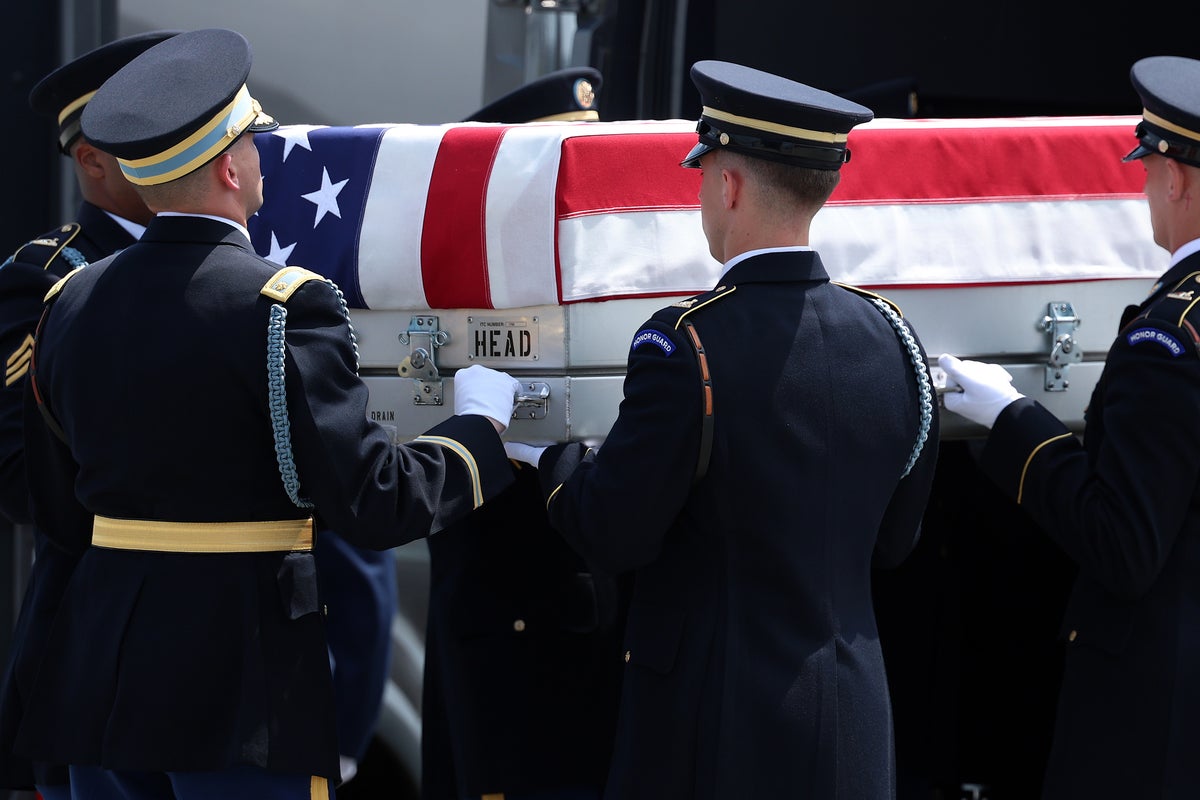
Behind every revised chart is a family trying to make sense of a folded flag.
When official figures are adjusted to fit a political narrative, it creates a quiet, devastating disconnect for those who lived the event. A veteran who survived a missile strike sits in a VA clinic, reading a news report that minimizes the severity of the engagement they barely survived. They are left wondering if their own memory is being erased.
Trust in public institutions does not collapse in a single dramatic moment. It eroded slowly through a thousand small discrepancies between what people witness and what officials report.
When a government adjusts military casualty data to match a political timeline, it sacrifices long-term institutional credibility for a short-term news victory.
The truth on the ground remains stubborn. Mud does not care about press releases. Shrapnel does not respect political schedules.
The Permanent Record
Long after press conferences end and news anchors move on to the next crisis, the official ledgers remain stored in national archives.
Future historians will dig through those files. They will cross-reference medical logs with public statements, matching times of death against the transcript of briefings delivered miles away. They will find the gaps. They always do.
War is messy, brutal, and tragic. Trying to package it into neat, politically convenient timeframes is an insult to those who bear its physical and emotional weight.
A nation that cannot count its losses honestly cannot evaluate the true cost of its choices.
The real ledger is not kept in spreadsheets or press packets. It is written in the quiet rooms of grieving families, in the long recovery halls of veterans' hospitals, and in the permanent memory of those who were there when the sirens sounded.


