The New York Knicks are marching toward a championship, but the seats at Madison Square Garden are increasingly filled by people who can afford the tickets rather than those who carried the franchise through decades of dysfunction.
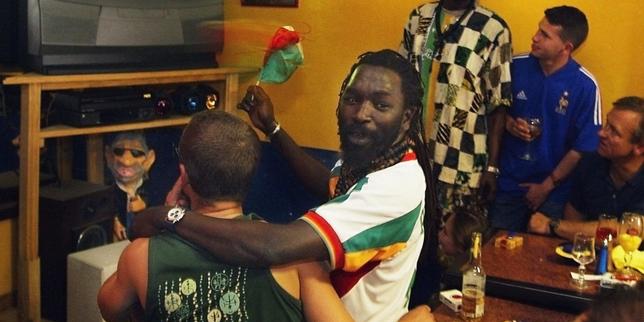
Sportswriting loves a trope about the departed fan. We have seen countless iterations of the sentimental essay lamenting a grandmother, a father, or a lifelong friend who endured thirty years of draft busts and baseline turnovers, only to pass away just before the team hoisted the Larry O'Brien trophy. These stories serve a purpose. They offer comfort, framing fandom as a lifelong covenant that transcends mortality. You might also find this similar article insightful: The Night Paris Stood Still and Dakar Forgot to Sleep.
The reality of modern professional basketball is far colder than that.
When a historic franchise finally wins after decades of misery, it does not just break a curse. It rewrites the entire economic and cultural fabric of its city. The tragedy of the long-suffering fan who did not live to see the championship is not just a spiritual loss. It is a symptom of a broader, systemic displacement. While we mourn those who died waiting, we are ignoring the living fans who are actively priced out of the celebration. As extensively documented in recent coverage by ESPN, the results are significant.
The Myth of the Romantic Drought
Sports culture romanticizes the struggle. The narrative dictates that the decades spent watching the likes of Andrea Bargnani or Jerome James were a necessary penance, a tax paid to ensure that the eventual triumph would taste sweet.
This is a lie designed to keep arenas full during rebuilding years.
The twenty-year drought suffered by the Knicks was not a grand narrative arc. It was a failure of corporate governance. When a team operates under poor ownership and short-sighted management, the fan base serves as an involuntary hedge fund. They inject capital through high ticket prices, television ratings, and merchandise sales, receiving an inferior product in return.
When the turnaround happens, the reward is not a shared victory. The reward is a bill.
Consider the economic trajectory of a championship run. As a team moves from the lottery to the playoffs, ticket prices do not rise incrementally. They skyrocket. The generational fan who sat in the upper 400 section through the lean years finds themselves replaced by corporate clients and high-net-worth individuals who can absorb a four-hundred percent increase in resale value. The emotional equity built up over thirty years is immediately liquidated by the franchise to maximize game-day revenue.
The departed fan did not just miss the parade. They were spared the realization that the team they loved had outgrown them.
The Corporate Cleansing of Madison Square Garden
Madison Square Garden is often called the Mecca of basketball, a title that implies a holy site accessible to all pilgrims. Today, it operates more like an exclusive country club with a basketball court in the center.
The transformation of the fan base is a deliberate corporate strategy.
Professional sports teams have transitioned from community institutions into high-yield entertainment properties. To understand why the local fan is vanishing, look at the shifting architecture of the arena itself. The multi-million-dollar renovations of the past decade did not add more seats for the working-class fan from Queens or the Bronx. They added luxury suites, premium clubs, and experiential lounges designed to attract corporate spending.
The Death of the Local Loudmouth
The distinct acoustic identity of New York basketball was built by a specific demographic. It was the collective voice of people who grew up on city asphalt, who understood the nuances of defensive rotations, and who were not afraid to boo a lazy superstar.
That voice is being quieted.
When ticket prices require a second mortgage, the crowd dynamic changes. The arena bowl becomes a theater rather than a stadium. The noise is replaced by a polite, ambient hum, punctuated only when the jumbotron instructs the audience to clap. The corporate attendee is there to entertain clients or to be seen on social media. They do not have a visceral, gut-wrenching connection to the outcome of a Tuesday night game in January.
This shift creates an empty atmosphere.
A team might win fifty-five games and steamroll through the postseason, but they do so in front of a rotating gallery of tourists and executives. The players notice. Several former stars have commented on how the energy in modern arenas feels sterile compared to the raw, intimidating basements of the 1990s. The franchise wins the trophy, but it loses its soul along the way.
The Phantom Demographic
Every long championship drought creates a phantom demographic of fans who gave their entire lives to a team and received nothing but frustration in return.
These are not the celebrities sitting courtside. These are the people who adjusted their work shifts to catch the fourth quarter, who bought the cheap hats outside Penn Station, and who defended the team in barrooms and barber shops across the tri-state area.
Knicks Average Ticket Price vs. Median NYC Income (Hypothetical Index)
======================================================================
Year    Ticket Price Index    Income Index    The Gap
----------------------------------------------------------------------
2000    100                   100              0
2010    165                   112             +53
2020    280                   125             +155
2026    420                   138             +282
The table illustrates a widening chasm. While local wages grow at a modest pace, the cost of participating in the live sports experience increases exponentially. The team becomes a luxury good, exported to the highest bidder while the local population watches from afar.
The Media Gaze and Sentimental Distractions
Mainstream sports media relies heavily on nostalgia to mask this economic displacement. By focusing on the emotional stories of deceased relatives or elderly fans who finally got their wish, the broadcast avoids the uncomfortable conversation about who is actually in the building.
It is an effective distraction.
If the audience is weeping over a montage of a grandfather who loved Patrick Ewing, they are not looking at the empty rows of the lower bowl that remain vacant until halftime because the corporate ticket holders are still eating prime rib in the Delta Sky360° Club. The sentimentality softens the hard edges of sports capitalism. It suggests that the love of the fan is what matters, even when the franchise has made it clear that only their money does.
The Cost of the Destination
Winning is expensive, and the bill always comes due for the consumer.
To sustain a championship roster in the modern era, a front office must navigate a punitive salary tax system. This requires ownership to spend hundreds of millions of dollars beyond the salary cap. That money is not absorbed by billionaires out of the goodness of their hearts. It is extracted directly from the fan ecosystem.
- Regional Sports Networks: Cable fees are inflated to ensure the broadcast rights cover player contracts, making it harder for cord-cutters to watch games legally.
- Merchandise Inflation: A standard jersey now costs more than a week of groceries for a struggling family, turning team allegiance into a status symbol.
- Concession Hikes: The price of a hot dog and a beer at a major league venue has become a joke with a punchline that hurts the wallet.
This creates a paradox where the closer a team gets to a championship, the harder it becomes for the average person to participate in the journey. The fan is relegated to a passive observer, watching a billionaire’s vanity project unfold through a screen, while the physical space of the arena is occupied by those who view the team as an asset rather than an identity.
Reclaiming the Narrative
We must stop treating sports franchises as romantic entities. They are entertainment conglomerates that utilize civic pride as an emotional shield against criticism.
The fan who died before the Knicks won a championship did not miss a holy event. They missed a commercial climax. Their love for the team was real, but that love was a one-way street. The franchise did not know their name, and if they had lived to see the finals, they likely would have been priced out of the building anyway.
The true tragedy is not that people die before their teams win. The tragedy is that professional sports no longer have room for the people who kept them alive during the dark ages. The championship parade will roll down Broadway, the confetti will fall, and the executives will toast to their profit margins, while the real architects of New York basketball culture watch from the sidewalk, excluded from the house they helped build.