The waiting room smells like floor wax and cold rain.
A young mother sits in the corner, rocking a carrier with one foot while scrolling through her phone with the other hand. Her baby is four months old. Too young for the first routine shot. Across the aisle, a toddler coughs—a dry, barking sound that makes three different parents look up from their screens at the exact same second. Nobody panics. Nobody runs for the exit. We have spent the last quarter-century living inside an invisible fortress, and when you live inside thick stone walls long enough, you forget what the wolves outside actually look like.
That fortress just cracked.
Health officials across North America have officially stripped both the United States and Mexico of their measles elimination status. On paper, it reads like a dry bureaucratic downgrade, the kind of administrative footnote buried beneath election coverage and market ticker tapes. In reality, it marks the collapse of a twenty-six-year triumph in the United States—a shield maintained unbroken since the year 2000—and an even longer victory across Mexico, which had held the virus at bay since the mid-1990s. The entire Pan-American region, once celebrated as the first place on Earth to banish endemic transmission of this ancient killer, has lost its clean slate.
Gone.
To understand what that bureaucratic phrase actually means for the mother rocking the carrier in that rain-slicked waiting room, we have to look past the spreadsheets and trace the path of a virus that does not care about borders, politics, or our short collective memory.
The Arithmetic of an Invisible Fire
Most people think of measles as a relic from black-and-white photographs, a minor childhood nuisance involving a blotchy red rash, a few days of chicken soup, and a week off from school. That benign memory is the direct result of a vaccine so successful it erased the trauma that made it necessary in the first place.
Let us construct a hypothetical scenario to see how the biology actually works when the shield drops. Picture a crowded international terminal at a major hub—say, Dallas or Mexico City—on a Tuesday afternoon. A traveler steps off a long-haul flight, feeling slightly run-down, blaming the recycled cabin air and a lack of sleep. They have a mild fever and watery eyes. They do not know it yet, because the telltale rash will not appear for another four days, but they are already shedding millions of viral particles with every breath. They buy a bottle of water, walk past a gate where families are boarding a regional flight, and catch a cab home.
Two hours later, that traveler is long gone, miles away on the highway. Yet the virus remains behind in the terminal air, suspended in microscopic droplets, waiting patiently for someone to inhale.
Measles is not like influenza, and it is not even like the early variants of the coronavirus. Epidemiologists measure contagiousness using a metric called the basic reproduction number, or R0, which estimates how many people one sick person will infect in a completely unprotected population. Seasonal flu hovers around one or two. Measles sits between twelve and eighteen. If you walk into a room with ten unvaccinated people and one person carrying measles, nine of those ten will walk out infected. It is, without exaggeration, one of the most contagious human pathogens ever identified by medical science.
Because it spreads with such terrifying efficiency, keeping it out requires a mathematical wall. Public health experts call it herd immunity, though a better analogy might be a firebreak cut through a dry forest. If ninety-five percent of the trees are soaked in flame retardant, a stray spark hits wet bark and dies out before it can jump to the next trunk. Drop that coverage down to ninety-one or ninety-two percent—just a few percentage points, barely noticeable in a casual conversation at a school pickup line—and suddenly the dry trees are standing close enough together for the fire to leap across the canopy.
For years, both the United States and Mexico hovered right near that ninety-five percent threshold, buoyed by strong public health campaigns and routine pediatric care. Then came the slow erosion. Pandemic lockdowns disrupted millions of routine well-child visits, leaving a generation of toddlers behind on their schedules. In Mexico, supply chain bottlenecks and shifting healthcare funding created patchy gaps in rural clinics and urban outskirts alike. Across the United States, a swelling tide of medical distrust and online misinformation turned routine childhood immunization from a quiet civic norm into a loud ideological battleground.
By the time the outbreaks began sustaining themselves—passing from person to person inside local communities for more than twelve consecutive months, the strict clinical definition that triggers the loss of elimination status—the firebreak was already full of holes.
What Happens Inside the Body
I still remember the first time a senior infectious disease specialist walked me through the clinical progression of a severe measles case. I had gone into the interview expecting a routine public health update, armed with questions about vaccination rates and border screenings. Instead, I left staring at my notebook with a cold knot in my stomach, realizing how badly my own casual assumptions had underestimated the adversary.
We tend to focus on the skin because the rash is what we can see. In truth, the rash is merely the visible smoke from a fire burning deep inside the immune system.
When the virus enters the respiratory tract, it does not just settle in the throat. It hunts down the very cells your body uses to remember past infections—the memory T-cells and B-cells that act as your immune system’s historical archive. Think of your immune system as a seasoned security guard who has spent years memorizing the faces of every local troublemaker: strep throat, ear infections, stomach bugs, seasonal viruses. Measles walks into the security office, wipes the hard drives clean, and walks back out.
Scientists call this phenomenon immune amnesia. For months, and sometimes up to three years after recovering from a measles infection, a child’s body essentially forgets how to fight off other everyday illnesses it had already conquered. A routine bout of pneumonia or an ordinary ear infection that a healthy seven-year-old would shrug off in forty-eight hours can suddenly turn life-threatening.
And that is assuming the initial infection passes without immediate complications. Roughly one in five unvaccinated people who catch measles will end up in a hospital bed. One in twenty children will develop pneumonia, the leading cause of measles-related death in young patients. One in every thousand will suffer acute encephalitis—a swelling of the brain that can leave a survivor permanently deaf, intellectually disabled, or battling lifelong seizure disorders. And for every thousand children infected, one to three will die, even with the best modern intensive care medicine can offer.
There is nothing mild about those odds when your own child is the one rolling the dice.
The Borderless Corridor
To understand why the United States and Mexico lost their statuses together, you have to stop looking at the Rio Grande as a barrier and start seeing it as the spine of a single, deeply intertwined human ecosystem.
Every single day, hundreds of thousands of people cross back and forth between the two nations. Families live split between El Paso and Ciudad Juárez, between San Diego and Tijuana, between Laredo and Nuevo Laredo. Truck drivers haul produce north while factory workers commute south; tourists fly from Chicago to Cancún while business executives shuttle between Monterrey and Houston. A pathogen that takes root in a neighborhood in Jalisco or Chihuahua does not need a passport to reach a suburban daycare in Texas or California, and a cluster flaring up in an under-vaccinated pocket of the American Midwest can easily board a southbound flight before local doctors even recognize the early symptoms.
In the late twentieth century, this geographic intimacy was actually the region’s greatest strength. Public health leaders in Washington, Ottawa, and Mexico City recognized early on that neither country could stay safe alone. During the 1990s, Mexico launched massive, door-to-door vaccination brigades—Semanas Nacionales de Salud—that sent nurses trekking into mountain villages and dense city barrios alike, pushing immunization rates past ninety-five percent and halting domestic transmission years ahead of its northern neighbor. The United States followed suit, tightening school entry requirements and funding free vaccine programs for low-income families, finally declaring endemic measles defeated at the turn of the millennium.
For two decades, that cross-border partnership held. Cases still arrived from Europe, Asia, or other regions where the virus remained endemic, sparking brief, frightening flare-ups. But because the surrounding populations were overwhelmingly immunized, public health teams could trace every contact, ring-fence the exposure, and snuff out the transmission chains within weeks.
Now, the ring-fencing is failing. Local health departments—already hollowed out by burnout, budget cuts, and political hostility following the COVID-19 years—are finding themselves outpaced by a virus that moves faster than contact tracers can dial phone numbers. When an outbreak stretches past a full calendar year of continuous local spread, the World Health Organization and the Pan American Health Organization have no choice. They strip the certification.
Navigating the Noise
If you are a parent reading this, feeling a sudden spike of anxiety as you mentally flip through your child’s pediatric records, take a breath. It is completely reasonable to feel overwhelmed right now. Over the past few years, ordinary families have been caught in the crossfire of shouting matches between cable news pundits, wellness influencers selling unregulated supplements, and exhausted doctors trying to compress decades of immunology into a fifteen-minute clinic appointment. When trust fractures, fear rushes in to fill the vacuum, and fear makes it hard to tell genuine risk apart from manufactured outrage.
Let us strip away the noise and look at what the science actually says, plainly and honestly.
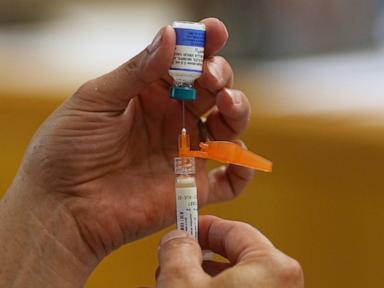
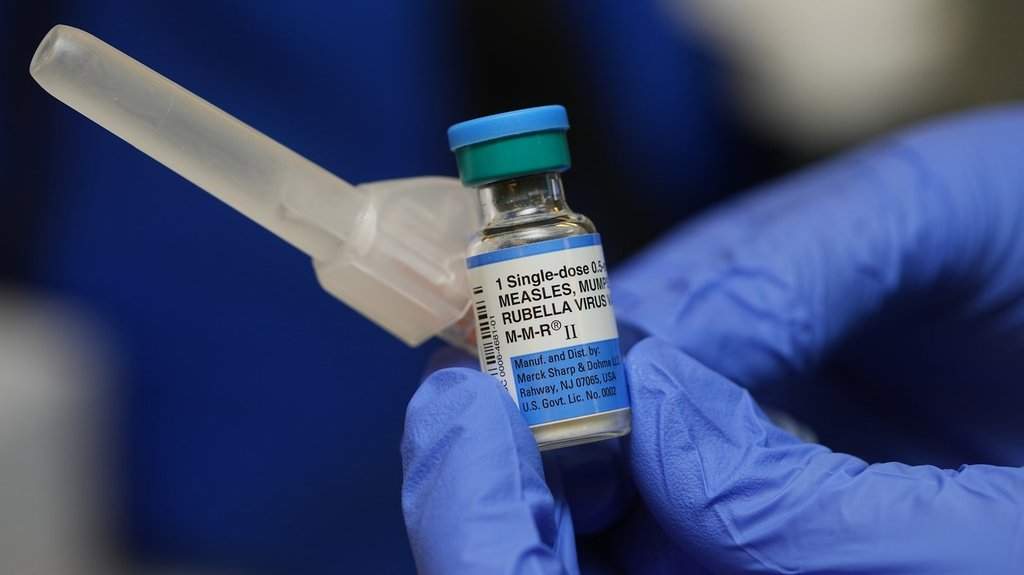
The MMR vaccine—which protects against measles, mumps, and rubella—is not an experimental technology rushed out during a crisis. It has been administered to hundreds of millions of children around the globe for more than half a century. Two doses provide roughly ninety-seven percent protection against measles, and that protection typically lasts a lifetime. Even a single dose, usually given around twelve months of age, offers ninety-three percent immunity.
Are there side effects? Yes, as with any active medical intervention. A sore arm, a low-grade fever, maybe a faint temporary rash a week later as the immune system builds its defenses. Serious allergic reactions occur in roughly one out of every million doses. Compare that one-in-a-million risk against the one-in-a-thousand risk of brain swelling from the wild virus itself, and the math becomes blindingly clear.
Yet knowing the math does not automatically solve the vulnerability of the people who cannot take the shot.
Think back to that four-month-old baby in the waiting room. Babies under twelve months are generally too young for the routine MMR vaccine because lingering maternal antibodies can interfere with how the shot works, though doctors sometimes administer an early dose at six months if a family is traveling internationally or living inside an active outbreak zone. Alongside those infants stand children undergoing chemotherapy for leukemia, adults living with organ transplants, and people with severe immune deficiencies.
These neighbors cannot build their own armor. They survive entirely on ours.
The Choice Ahead
Reclaiming elimination status is not impossible, though it will not happen by accident, and it will not happen overnight. To earn that designation back, both the United States and Mexico must prove they have interrupted endemic transmission and kept their territories free of continuous local spread for at least twelve consecutive months, backed by aggressive surveillance and rapid outbreak response.
That work does not begin in a government committee room in Geneva or Washington. It begins in mundane, quiet moments across thousands of communities. It looks like a school nurse in Guadalajara or Phoenix patiently calling parents to help them track down missing immunization records without judgment or lecture. It looks like local clinics staying open on Saturday mornings so hourly workers do not have to choose between a paycheck and their toddler’s booster shot. And it looks like neighbors having honest, compassionate conversations with hesitant friends—acknowledging their worries about their kids’ safety while gently pointing them back toward the hard-won evidence that kept an entire generation alive.
We spent decades forgetting what measles looks like because the people who came before us worked tirelessly to make it invisible. They remembered the hospital wards, the darkened bedrooms meant to protect inflamed eyes from the light, and the small graves that appeared every spring like clockwork. They built a wall out of science and solidarity so their grandchildren would never have to know that grief.
The wall is down, and the wind is blowing through the gap.
Down the hall in that quiet clinic, a nurse calls a name, opens a heavy wooden door, and smiles at the mother holding the infant carrier. Outside, the rain keeps falling, washing over sidewalks and highways that connect two nations bound by blood, history, and shared air—waiting to see whether we will rebuild the shelter before the storm settles in to stay.