The winter wind howling through the concrete corridors of Moscow carries more than just snow. It carries a heavy, unspoken anxiety. Somewhere in the vast expanse of the Russian Federation, a refinery worker stares at a pressure gauge that refuses to rise. Oil, the very lifeblood that built modern Russia’s formidable geopolitical posture, is slipping through the Kremlin's fingers.
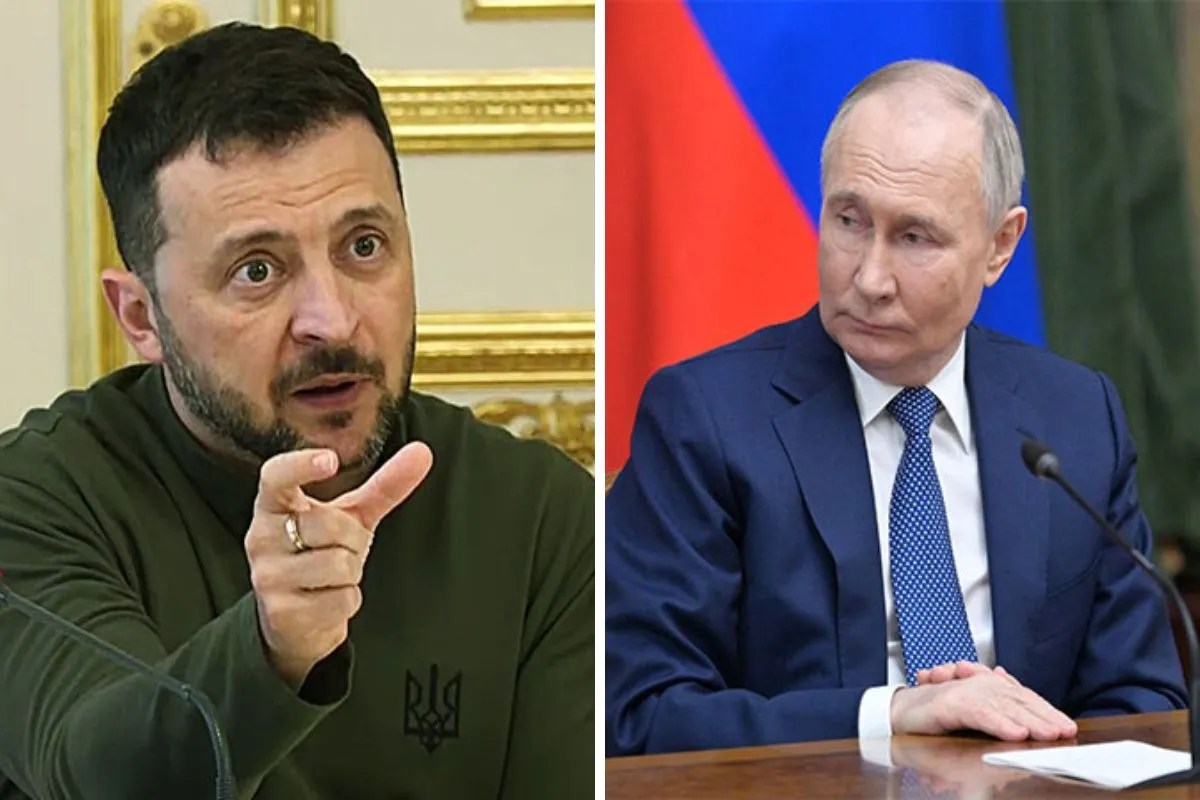
Far across the front lines, a man in a faded olive-green sweater watched this economic erosion unfold. Ukrainian President Volodymyr Zelensky did not deliver a standard diplomatic briefing. He delivered a psychological strike. His target was not just Vladimir Putin, but the very legacy of the man who created the modern Russian state.
The Weight of an Inherited Empire
To understand the sting of Zelensky’s words, we have to look back to New Year's Eve in 1999. Boris Yeltsin, bloated by illness and the crushing weight of a collapsing superpower, stood before a television camera. He looked tired. He apologized to the Russian people for the dreams that had slipped away. Then, he introduced his chosen successor: a quiet, sharp-eyed former KGB officer named Vladimir Putin.
Yeltsin believed he was handing over a key to stability. He thought he was saving Russia.
Zelensky’s recent taunt cuts directly into that historical wound. He openly wondered if Yeltsin’s ghost is currently looking down, filled with deep regret over the man he chose to inherit the state. It is a powerful narrative maneuver. By invoking Yeltsin, Zelensky strips away the illusion of Putin’s inevitability. He reframes the current master of the Kremlin not as a historic savior, but as a tragic mistake.
The core of this political theater is not just rhetoric. It is about resources.
Consider the reality of Russia's current economic engine. For decades, the bargain was simple: Russia provides the energy, and the world provides the cash. That cash built the military. It funded the oligarchs. It kept the average citizen complacent. But drone strikes have systematically targeted Russia’s oil refining infrastructure, hitting the country exactly where it hurts most.
Russia is now scrambling for the very oil it used to weaponize against Europe.
When the Well Runs Dry
Imagine standing in front of a massive, burning industrial complex in Ryazan or Nizhny Novgorod. The heat is intense enough to melt paint. This is not just a loss of property; it is a loss of capability. Refineries are not simple machines. They are complex labyrinths of high-pressure pipes, catalysts, and specialized technology that Russia cannot easily replace under heavy international sanctions.
Every drone that penetrates Russian airspace and strikes a distillation column chips away at the regime's foundation.
The strategy behind these strikes is cold and calculated. Ukraine is not trying to match Russia soldier for soldier in a war of attrition. Instead, they are choking the engine. Without refined fuel, tanks stall. Without oil revenue, the state cannot pay the steep bonuses required to recruit new soldiers. The economic illusion begins to crack.
Zelensky’s taunt is designed to accelerate that internal cracking.
By mocking Putin’s inability to protect Russia's primary economic asset, Zelensky addresses the deep-seated fears of the Russian elite. The oligarchs did not sign up for a isolated, cash-strapped nation. They signed up for a global superpower that could flex its muscles while enjoying European villas. Now, they watch their primary source of wealth burn, unable to stop cheap, remotely piloted aircraft from flying hundreds of miles across the border.
The Illusion of Invincibility
Power in Moscow relies heavily on perception. The moment a leader appears weak or incapable of protecting the state's core interests, the foundations begin to wobble. Yeltsin was forced out precisely because he lost control of the narrative and the economy.
Now, Putin faces a mirror image of that crisis.
The irony is thick. Putin spent two decades presenting himself as the ultimate strategist, the man who corrected the chaotic mistakes of the 1990s. Yet, his policies have led to a scenario where Russian cities face fuel shortages and the state must contemplate importing gasoline.
The contrast between the two leaders is stark. One sits behind an absurdly long table in a gilded Kremlin room, increasingly isolated from the reality of his crumbling infrastructure. The other speaks from a starkly lit bunker, using psychological warfare to highlight the logistical failures of his adversary.
This war will not be decided solely by territorial gains on a map. It will be decided by endurance, logistics, and the collapse of political willpower. When the oil stops flowing smoothly, the machinery of control begins to seize up. The ghost of Boris Yeltsin remains a reminder that in Moscow, power can vanish just as quickly as it was given.