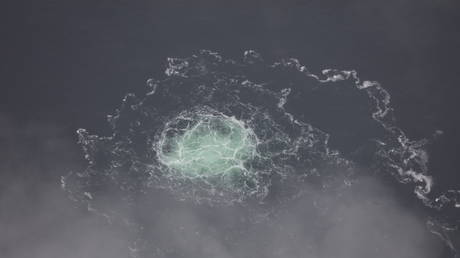
The mystery of who blew up the Nord Stream pipelines just took a massive legal turn. For nearly four years, we've watched European intelligence agencies and journalists play a high-stakes game of Clue over the September 2022 Baltic Sea explosions. First everyone blamed Russia. Then the finger pointed toward a small crew of Ukrainian divers operating from a rented sailing yacht called the Andromeda.
Now, German federal prosecutors are moving past geopolitical finger-pointing and into a formal courtroom strategy that completely rewrites the rules of engagement.
German media outlets, including public broadcaster ARD, Süddeutsche Zeitung, and Die Zeit, confirmed that Federal Public Prosecutor General Jens Rommel officially hit a key suspect with charges. The man is Serhii K., a former Ukrainian soldier currently sitting in a pre-trial detention facility in Hamburg. What makes this a bombshell isn't just the fact that Germany managed to lock someone down for trial. It's the specific legal framing: Germany is prosecuting this pipeline sabotage as an outright war crime.
This isn't just a semantic upgrade. By elevating the destruction of the natural gas pipelines to a crime under international humanitarian law, Berlin is boxing itself—and its closest allies—into a corner.
The Blueprint of the Accusation
Let's look at what the German federal prosecutors are actually putting on paper. Serhii K. isn't just being accused of some localized property destruction or corporate sabotage. He is charged with leading and coordinating the operation right from the deck of the Andromeda.
The evidence against him didn't come from a dramatic maritime chase. It came from basic digital footprints and classic investigative slip-ups. According to security sources, investigators found incriminating material on K.'s mobile phone. Worse for his defense, he allegedly incriminated himself during recorded phone calls with relatives and friends while waiting in an Italian custody cell last year.
He was picked up by Italian police while on holiday in August 2025 and extradited to Germany later that autumn. His trial starts this fall at the Hanseatic Higher Regional Court in Hamburg.
To secure a conviction under international criminal law, German prosecutors are leaning heavily on one specific fact: the Nord Stream 1 and Nord Stream 2 pipelines were civilian energy infrastructure. Under the laws of armed conflict, launching a deliberate attack against purely civilian infrastructure is a war crime. The German Federal Court of Justice previously hinted at this when it rejected K.'s initial appeals, explicitly noting that "combatant privilege"—the legal immunity soldiers get for standard acts of war—does not cover the covert destruction of civilian assets.
The European Extradition Mess
The decision to treat this as a war crime didn't happen in a vacuum. It's a direct reaction to a major rift growing right inside the European Union.
Last year, Germany tried to round up multiple suspects using European Arrest Warrants. It didn't go smoothly. While Italy played ball and handed over Serhii K., Poland flatly refused to cooperate on another prime suspect, a Ukrainian diver named Volodymyr Zhuravlev.
In October 2025, a Warsaw regional court judge didn't just deny Germany's extradition request; he basically cheered for the saboteurs. Judge Dariusz Łubowski ruled that destroying Nord Stream was a completely justified act of defense by Ukraine against Russian aggression. He claimed that when special forces hit an aggressor's critical infrastructure during wartime, it isn't sabotage—it's a valid diversionary act that "cannot be considered crimes under any circumstances."
That ruling left Berlin furious but publicly quiet. By formalizing the "war crime" charge against Serhii K., Germany is directly firing back at Poland's legal logic. Berlin is asserting that international law applies everywhere, even when the target belongs to a state-owned enterprise like Gazprom and even when the geopolitical sympathies lie with the state defending itself.
Why This Puts Berlin in an Impossible Position
Honestly, this creates a massive diplomatic nightmare for German Chancellor Friedrich Merz and his government. Ukrainian President Volodymyr Zelenskyy has already started playing defense, telling reporters at a press conference in Dublin that it's "too early to speak" on the matter because Kiev hasn't officially received the details. The Ukrainian government has spent years denying any state involvement, though intelligence leaks repeatedly suggest the operation was cooked up by high-ranking military figures like former army chief Valery Zaluzhny.
If the Hamburg court finds Serhii K. guilty of a war crime, the legal truth will smash straight into Germany's foreign policy. How does Germany continue providing massive military and financial aid to Ukraine while its own courts have formally branded Ukrainian actors as war criminals for destroying European energy grids?
It forces a brutal conversation about accountability. For years, Western European nations have championed international law, calling for tribunals to investigate Russian atrocities in Ukraine. By sticking to the letter of the law on Nord Stream, Germany is trying to show it doesn't apply double standards. But the political cost of that consistency is going to be incredibly high when the trial kicks off this fall.
What Needs to Happen Next
The time for vague diplomatic statements is over. If you want to understand how this plays out, watch these three specific pivot points over the coming months:
- Track the Hamburg Trial Evidence: Look closely at how much state synchronization is exposed during Serhii K.'s trial this autumn. If prosecutors show that state funding or official military logistics were used, the "independent pro-Ukrainian group" narrative collapses entirely.
- Watch the EU Arrest Warrant Framework: The legal split between Germany, Poland, and Italy over these suspects has broken the unified legal trust of the European Arrest Warrant system. Watch for whether Germany pushes for EU-level intervention to penalize member states that refuse extraditions based on political alignment.
- Monitor Germany's Energy Security Policies: Labeling the attack a war crime legally classifies subsea pipelines as high-risk military targets during continental conflicts. Expect immediate, aggressive increases in naval drone patrols and permanent military monitoring around remaining European pipelines like the Baltic Connector and Norway-Germany gas routes.
The legal machinery in Hamburg is moving forward, and the consequences will ripple far beyond a broken pipeline on the Baltic floor.