The microphone feedback hums in the back of your teeth before the words even land.
Anyone who has ever watched a live political broadcast from the edge of a cramped newsroom—or stood behind a stage curtain watching a principal go off-script—knows that specific, cold drop in the stomach. You hear a name. You hear a statistic. And in the half-second before the crowd reacts, your brain frantically cross-references the geography, the diplomatic cables, and the sheer, unvarnished absurdity of what was just said out loud.
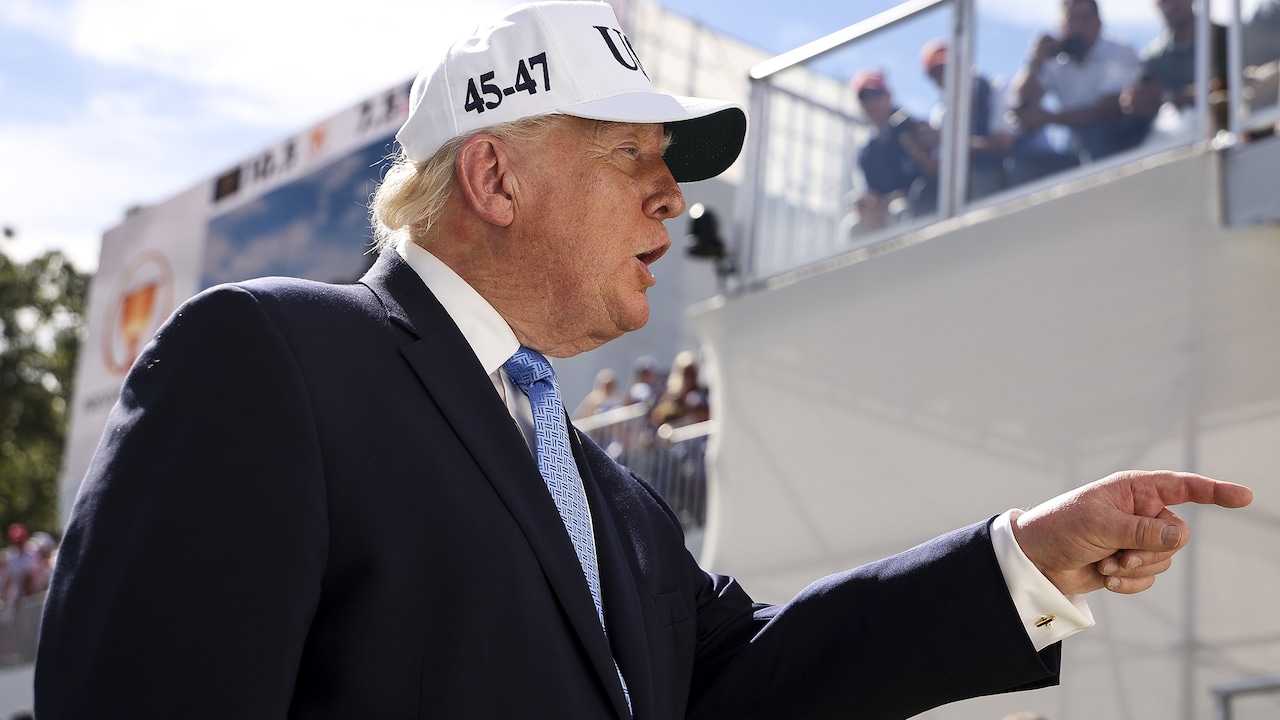
That exact tremor rippled from Washington to Brasília and New Delhi when Donald Trump stepped up to tout a recent polling victory, showered effusive praise on India, and accidentally stapled those accolades onto a political landscape in Brazil. On the surface, it looked like a classic teleprompter stumble, the kind of late-night comedy fodder that burns hot on social media for forty-eight hours and vanishes by Monday morning.
Look closer, though.
When a figure commanding the global megaphone confuses two of the world's largest democracies—nations separated by an ocean, distinct histories, and fiercely guarded sovereignties—the slip isn't just a punchline. It is an X-ray of how modern power views the Global South, how national pride absorbs casual erasure, and how fragile the bridge between domestic applause lines and international consequence actually is.
The Anatomy of a Viral Slip
To understand why this specific gaffe stung so sharply, you have to strip away the partisan noise and look at the mechanics of the moment.
In the high-velocity environment of campaign rallies and unscripted press remarks, numbers are currency. Approval ratings, crowd sizes, and international poll numbers get tossed into the air like confetti to prove an indisputable point—that the speaker's brand of populism is winning everywhere, all at once. During the remarks in question, Trump reached for a set of favorable polling numbers meant to illustrate surging populist momentum abroad. He praised India, invoking its massive democratic scale and leadership, while citing polling dynamics that actually belonged to Brazil's polarized electorate.
Two giants. One sentence. Completely scrambled.
For the political press corps, the reaction was instantaneous. Fact-checkers fired up their keyboards. Clips were isolated, looped, and captioned with varying degrees of disbelief. Critics seized on the moment as evidence of foreign policy carelessness, arguing that someone who treats distinct sovereign nations as interchangeable props cannot be trusted with the delicate machinery of global alliances. Supporters, predictably, waved it off as harmless verbal shorthand—a minor mix-up in the middle of an energetic riff that still captured a broader emotional truth about populist solidarity.
Yet both reactions miss what happens on the ground when the microphone turns off.
What It Feels Like to Be a Footnote
Consider a hypothetical scenario, grounded in the real daily routines of diplomats who actually have to clean up these messes.
Picture a mid-level foreign service officer sitting at a desk in Brasília at seven in the morning, coffee cooling beside a stack of trade briefs. Or picture an analyst in New Delhi, scrolling through international wires before a briefing on semiconductor supply chains and regional security. Neither of these people is thin-skinned. Diplomacy, by definition, is the art of absorbing friction without flinching.
Still, there is a particular exhaustion that comes with realizing your country—home to hundreds of millions of people, complex constitutional struggles, and hard-won economic leverage—is being treated as background scenery for someone else's domestic rally.
Brazil and India are not interchangeable widgets in a global political machine. Together, they represent well over 1.6 billion human beings. Brazil is the beating economic and ecological heart of South America, a nation navigating intense internal polarization, Amazonian preservation battles, and its own high-stakes electoral cycles. India is the world's most populous democracy, a nuclear-armed technological powerhouse balancing delicate border tensions, massive infrastructure transformation, and a fiercely independent foreign policy that refuses to bow automatically to Washington, Beijing, or Moscow.
When a Western leader praises India while reading Brazil's poll numbers, the subtext hits harder than the error itself. It whispers that beyond the borders of North America and Western Europe, the details don't really matter. As long as the applause line lands in the arena, the map can be folded any which way.
I have sat in rooms where international journalists and policy wonks casually conflate regional rivals or misstate basic electoral timelines, and the shift in the room's temperature is always unmistakable. Politeness stays intact. Smiles remain fixed. Yet a quiet, hardening resolve settles behind the eyes of the people whose home just got mislabeled. You realize you aren't being engaged as an equal partner; you are being used as a mirror.
Why India and Brazil Carry Such Heavy Symbolic Weight
Why did Trump reach for India and Brazil in the first place? Because in the contemporary political imagination, both countries occupy massive symbolic real estate.
For years, Trump has cultivated a conspicuous warmth toward Indian Prime Minister Narendra Modi, staging stadium-sized spectacles like "Howdy, Modi!" in Houston and "Namaste Trump" in Ahmedabad. Those events weren't mere diplomatic formalities; they were masterclasses in visual politics, designed to project mutual strength, nationalist pride, and personal chemistry. Praise for India rolls easily off Trump's tongue because, in his narrative framework, India represents a booming, unapologetically assertive civilization that respects strong leadership.
Brazil occupies a strikingly similar space in that same mental map. During Jair Bolsonaro's presidency, Washington and Brasília shared an ideological kinship that earned Bolsonaro the nickname "Trump of the Tropics." Even after Bolsonaro left office and Brazil's political pendulum swung back toward Luiz Inácio Lula da Silva, Brazil's polling numbers and street-level political battles remained a favorite benchmark for American conservatives looking to prove that right-wing populism remains a potent, resilient force across the Americas.
Here is the trap, though. When you view foreign nations primarily through the lens of your own domestic political tribe, their distinct realities blur together.
Think of it like a musician playing a familiar chord progression in the wrong key. The rhythm feels right to the person holding the guitar. The crowd in the front row nods along because they recognize the beat. Only the people who actually wrote the song—and the ones living inside its lyrics—notice that the notes are all wrong.
The Invisible Cost of Casual Geography
Does a single verbal stumble rewrite a trade agreement or tank a defense pact overnight? No. Foreign ministries are far too pragmatic to blow up bilateral relations over a poorly delivered talking point. New Delhi will continue negotiating defense procurement, technology transfers, and Quad security frameworks with Washington regardless of who is at the podium. Brasília will continue managing agricultural exports, energy partnerships, and hemispheric diplomacy based on cold, hard national interest.
The real damage is quieter, slower, and infinitely harder to measure on a spreadsheet.
Trust in international relations is built in millimeters and lost in leaps. Every time a major American political figure muddles basic facts about strategic partners, it hands a silent, effortless victory to rival powers. Diplomats in Beijing and Moscow do not even need to launch a disinformation campaign when Washington's own political theater broadcasts indifference to detail. They simply clip the video, translate the subtitles, and let the footage circulate quietly through business forums and editorial pages from São Paulo to Mumbai.
The message requires no commentary: Look at how carefully we study your markets, your languages, and your politics—and look at how little effort they put into telling you apart.
There is also a domestic cost that rarely gets discussed. Voters deserve leaders who respect their intelligence enough to get the world right. When public discourse treats factual accuracy as an optional accessory—something to be shrugged off as long as the "vibe" of the statement feels emotionally satisfying—the public slowly loses its grip on how the world actually works. Complexity gets flattened into slogans. Nuance becomes suspect.
Living Inside the Echo Chamber
Part of what makes these moments so riveting—and so unsettling—is how quickly our modern media ecosystem digests them.
Within minutes of the Brazil-India mix-up, the digital trenches were dug. One side treated the clip as a smoking gun of cognitive decline or catastrophic incompetence. The other side treated it as a badge of authenticity, proof that their leader speaks from the gut rather than reading sanitized scripts written by Washington consultants.
Both instincts are predictable, and both keep us trapped on the surface of the story.
Human beings misspeak. Exhaustion, teleprompter glitches, rapid-fire speaking styles, and the sheer sensory overload of modern campaigning trip up presidents, prime ministers, and CEOs alike. Pretending that a single verbal slip disqualifies someone forever—or pretending that geography is an elitist technicality—turns serious civic evaluation into a team sport where nobody actually watches the game.
What matters isn't the slip itself. What matters is the habit of mind underneath it.
Does a leader surround themselves with people empowered to correct errors and insist on precision? Does the political culture reward curiosity about the rest of the planet, or does it treat foreign nations solely as props for domestic applause? When you listen closely to how politicians talk about places like India and Brazil, you aren't just hearing their foreign policy. You are hearing how much respect they hold for reality when nobody in the room is grading the paper.
The Echo That Lingers After the Applause
Long after the news cycle moves on to the next outrage, the raw video sits in digital archives, stripped of context and immune to spin.
Somewhere in a bustling café in Bengaluru, a software engineer scrolls past the clip between meetings, raises an eyebrow at the screen, and shakes her head before locking her phone. Thousands of miles away, a shopkeeper in Curitiba watches the same twenty-second snippet on an evening broadcast, catching the familiar mention of his country's polls tangled up with a nation halfway across the globe.
Neither of them is furious. Neither of them is surprised. They simply file the moment away in that quiet, permanent ledger where citizens of the world keep track of who actually sees them—and who is only looking at their own reflection.