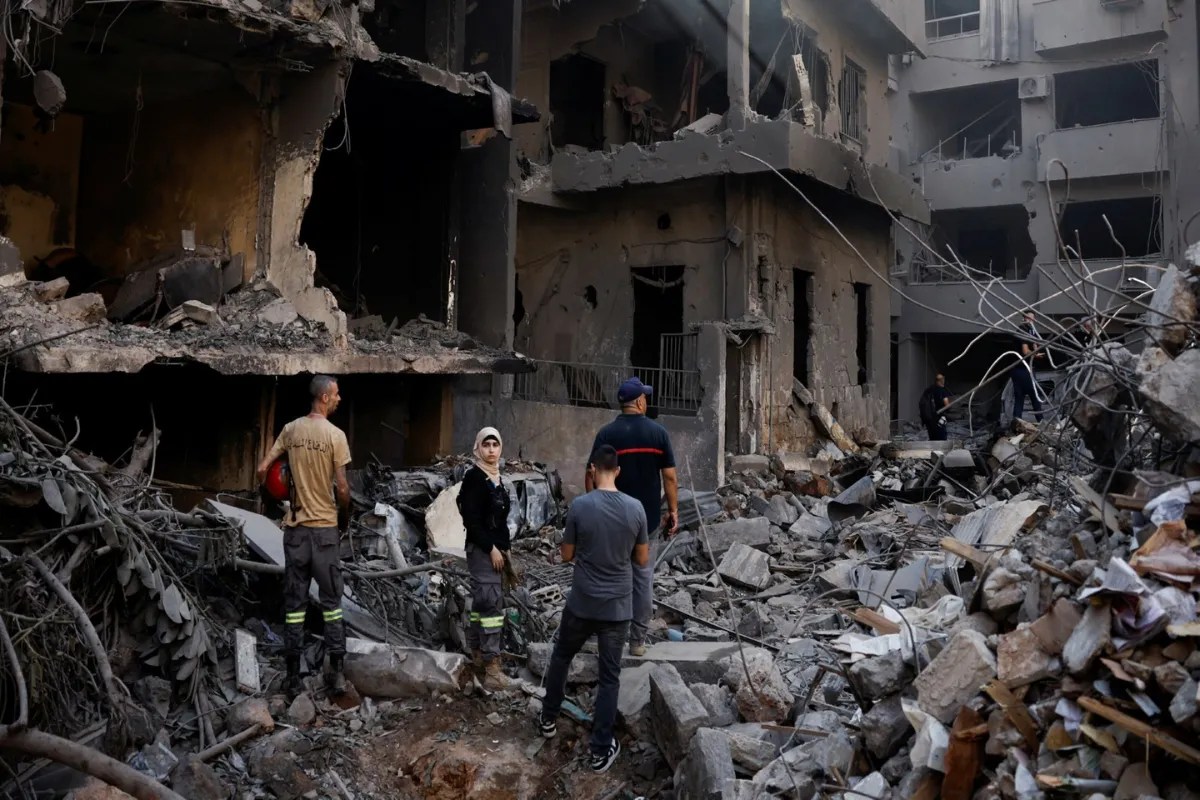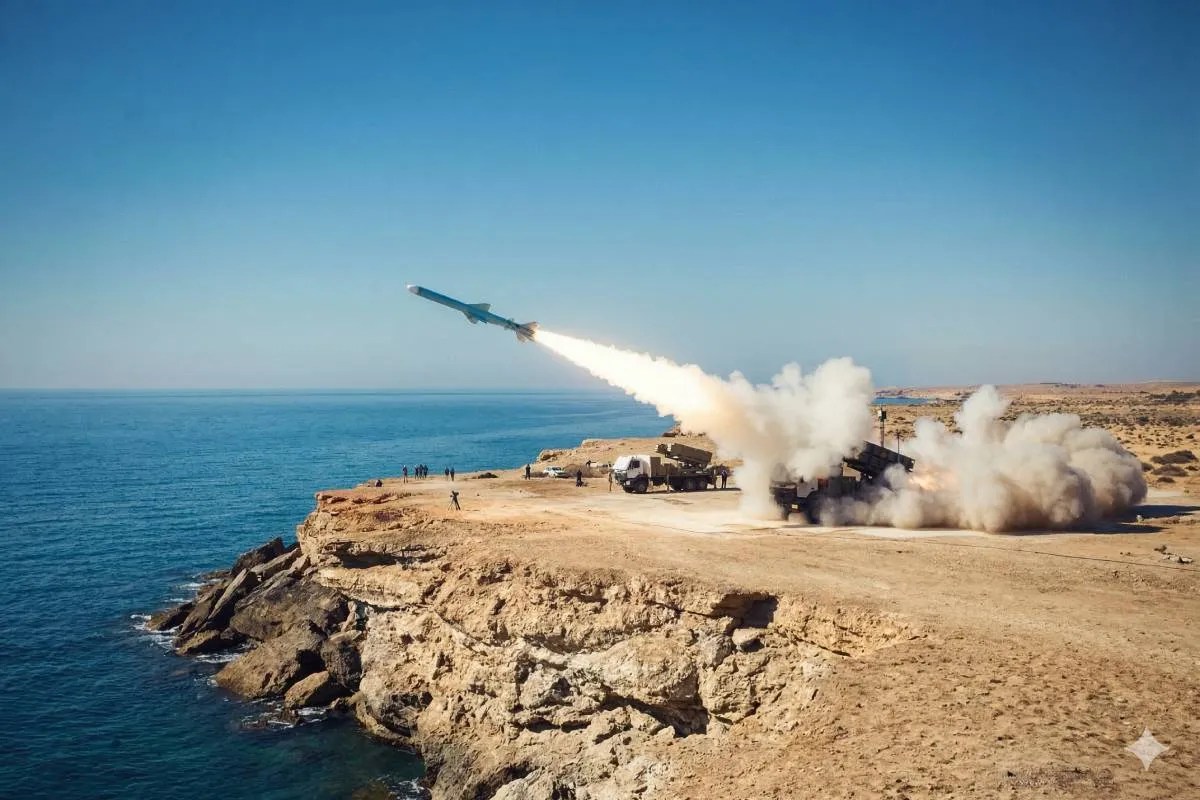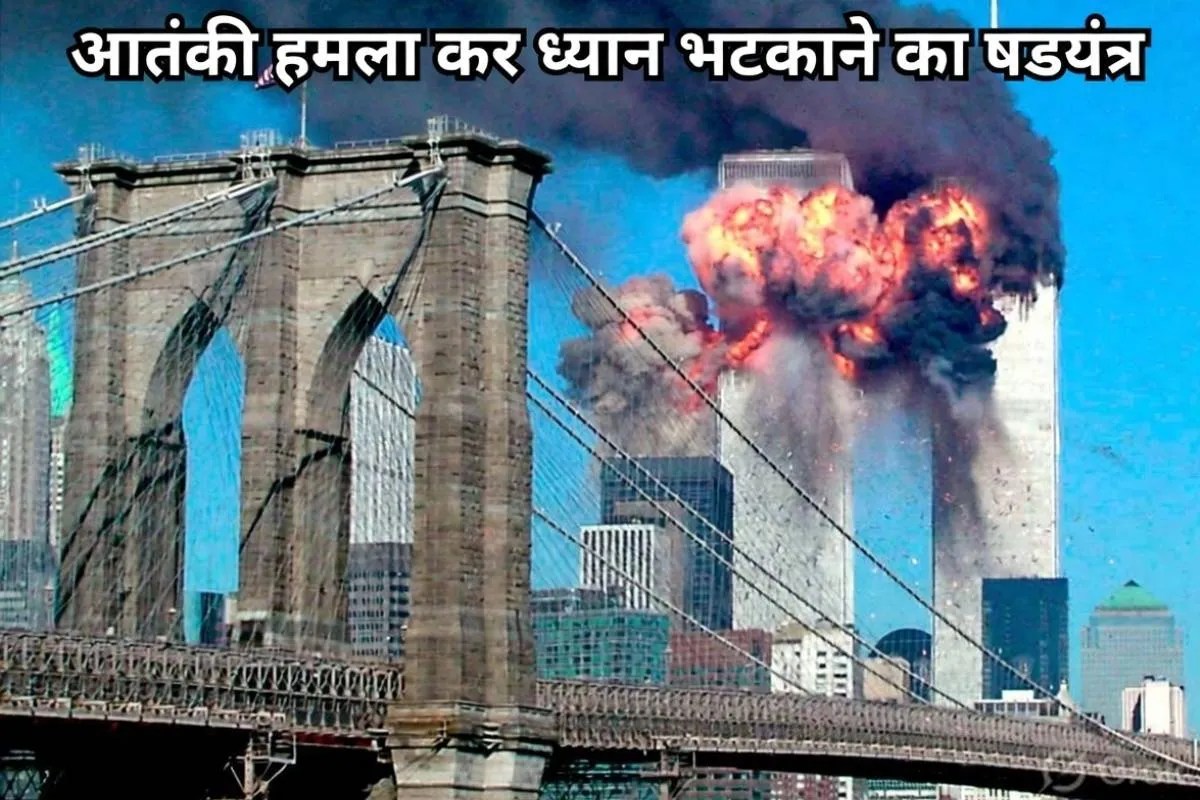
The concept of a "false flag" operation has transitioned from a fringe conspiratorial trope into a formalized tool of psychological warfare and strategic signaling. When Iranian intelligence or state-affiliated media outlets disseminate warnings of an impending "9/11-style" attack on United States soil, they are not merely predicting a tactical event; they are engaging in a preemptive narrative strike designed to constrain American kinetic options. This maneuver relies on the Logic of Attribution Dissonance, where the goal is to pre-contaminate the information environment so that any future flashpoint—regardless of its actual origin—is viewed through a lens of skepticism and manufactured causality.
The Tripartite Framework of Kinetic Signaling
To understand the current friction between Washington and Tehran, one must move beyond the sensationalism of "impending doom" and analyze the three pillars that support modern state-sponsored threat signaling. In related updates, we also covered: The Sabotage of the Sultans.
- The Information Deterrence Pillar: By publicly "revealing" a supposed internal US plot, Iran attempts to raise the political cost of any future American military escalation. If an incident occurs after such a claim, a significant portion of the global domestic and international audience will reflexively point to the "prediction" as evidence of an inside job. This creates a friction point for US policymakers who must then spend political capital debunking theories rather than executing a unified response.
- The Proxy Synchronization Pillar: Threats of this nature often serve as a "Go/No-Go" signal to non-state actors within the "Axis of Resistance." High-level rhetoric about major attacks provides the ideological cover for smaller, distributed kinetic actions (drone strikes, maritime interferences) by suggesting that the "Great Satan" is already in a state of internal collapse or conspiratorial planning.
- The Domestic Consolidation Pillar: For the Iranian regime, the specter of a massive US-led "False Flag" serves to justify internal security crackdowns and the mobilization of the Revolutionary Guard. It frames the US not as a rational state actor, but as a chaotic entity willing to sacrifice its own citizens, thereby delegitimizing Western democratic models to a domestic audience.
The Mechanics of Narrative Contamination
The assertion that the US would orchestrate a mass-casualty event on its own soil ignores the Bureaucratic Inertia and Leakage Probability inherent in Western governance. In a data-driven risk assessment, the "Cost Function of a False Flag" for a democratic administration is prohibitively high.
- Institutional Redundancy: Unlike a centralized autocracy, the US security apparatus is fragmented across the FBI, CIA, NSA, and DHS. Orchestrating a "9/11-style" event would require horizontal cooperation across agencies that are legally and culturally incentivized to monitor and report each other.
- The whistleblower Variable: In an era of ubiquitous digital footprints and decentralized communication, the probability of a covert operation of this scale remaining undetected approaches zero over a five-year horizon. The "operational noise" generated by such a plot would be visible in SIGINT (Signals Intelligence) and financial flows long before execution.
When Iran claims to have "horrific revelations," they are leveraging Information Asymmetry. They do not need to provide proof; they only need to provide a plausible-sounding sequence of events that aligns with existing distrust in government institutions. This is a low-cost, high-leverage strategy. NPR has provided coverage on this fascinating topic in extensive detail.
Asymmetric Escalation and the 9/11 Analog
Comparing modern threats to the September 11 attacks is a deliberate choice intended to trigger a specific psychological "threat-memory." However, the technical landscape of 2026 makes a physical replication of those tactics nearly impossible due to hardened cockpit doors, advanced behavioral biometrics, and integrated global no-fly databases.
Instead, the real risk lies in Digital Kinetic Convergence. A "9/11-level" impact in the current era would not necessarily involve falling buildings, but rather the systemic collapse of critical infrastructure.
- The Grid as a Target: A synchronized cyber-physical attack on the Eastern Interconnection or the Texas Interconnection (ERCOT) would yield a casualty count and economic disruption exceeding the 2001 attacks without the need for a single physical explosive.
- The Financial Liquidity Trap: Deleting or corrupting the ledger of a major clearinghouse would freeze global trade, causing a "False Flag" of economic proportions that would be far harder to attribute than a physical missile or plane.
The Strategic Bottleneck: Attribution in a Multi-Polar World
The primary challenge for US intelligence is not just preventing an attack, but managing the Attribution Lag. In the immediate aftermath of a high-impact event, the first 48 hours are a "Grey Zone" where misinformation flourishes.
Tehran’s strategy utilizes this lag. By seeding the "False Flag" narrative early, they ensure that during the critical 48-hour window, the US administration is forced to defend its own legitimacy rather than identifying the perpetrator. This is the Paralysis of Suspicion. If the US identifies an Iranian proxy as the culprit, the "False Flag" narrative is already positioned to counter-claim that the evidence was planted.
This creates a recursive loop of verification:
- Event occurs.
- US points to Actor A.
- Actor A points to the "pre-warning" given months prior.
- Public trust degrades, delaying the military or diplomatic response.
Structural Vulnerabilities in Public Perception
The success of Iranian "revelations" depends on the current state of Information Entropy in the West. The fragmentation of media and the rise of algorithmic echo chambers mean that "Strategic Gaslighting" is more effective than it was twenty years ago.
The "Cost of Verification" has risen. For the average citizen, verifying the claims of a foreign intelligence agency versus their own government requires a level of technical and historical literacy that is increasingly rare. This creates a vacuum filled by "Alternative Analysis," which often defaults to the most sensationalist conclusion.
Quantitative Risk Assessment: Probability vs. Impact
A clinical analysis of the US-Iran flashpoints suggests that a "9/11-style" event is statistically improbable, but High-Frequency, Low-Impact (HFLI) attacks are almost certain.
- Factor 1: Maritime Chokepoints: The Strait of Hormuz remains the most potent lever for Iranian influence. A "False Flag" narrative here—such as a "self-inflicted" tanker explosion blamed on Iran—is a more realistic tactical scenario than a mainland US attack.
- Factor 2: Judicial Retaliation: Iran’s rhetoric often centers on the "legal and revolutionary right" to avenge the 2020 killing of Qasem Soleimani. This suggests targeted assassinations are the preferred Iranian modality, rather than indiscriminate mass-casualty events.
The Technological Counter-Narrative
To neutralize the "False Flag" rhetoric, the US and its allies must shift from Reactive Debunking to Proactive Transparency. This involves the deployment of "Open-Source Intelligence" (OSINT) as a diplomatic tool. By declassifying and releasing raw telemetry and signal data in real-time during a crisis, the US can decrease the "Attribution Lag" and shrink the window in which "False Flag" narratives can take root.
The second limitation of the current US strategy is the reliance on traditional media. In the event of a crisis, the "narrative battlefield" is TikTok, Telegram, and X. If the state does not occupy these spaces with verifiable, high-density data, the Iranian state-media claims will dominate the "first-impression" cycle.
Strategic Realignment: The Next Move
The objective of the "False Flag" claim by Iran is to create a Constraint Map for the US executive branch. If the US believes that any action it takes will be viewed as a staged provocation, it may hesitate during a genuine moment of crisis.
To counter this, the strategic play is not to ignore the claims, but to formalize the "False Flag" accusation into a measurable metric of state-sponsored disinformation. By quantifying the frequency and inaccuracy of these "revelations" over time, the US can diminish their "Shock Value" and treat them as routine background noise rather than credible intelligence signals.
The focus must remain on the Infrastructural Hardening of Attribution. This involves placing "Black Box" monitoring on critical civilian infrastructure and ensuring that the data generated by these systems is cryptographically signed and independently verifiable. When the "Truth" can be mathematically proven through immutable logs, the "False Flag" as a psychological weapon loses its operational utility.
The current geopolitical friction is not a prelude to a physical 9/11; it is a full-scale engagement in the War of Perceptual Causality. The winner will not be the one who hits the hardest, but the one who maintains the most coherent and verifiable account of why the hit occurred. Moving forward, the US must treat "Narrative Defense" with the same budgetary and tactical rigor as "Missile Defense," recognizing that a breach in the public's trust is as damaging as a breach in its airspace.