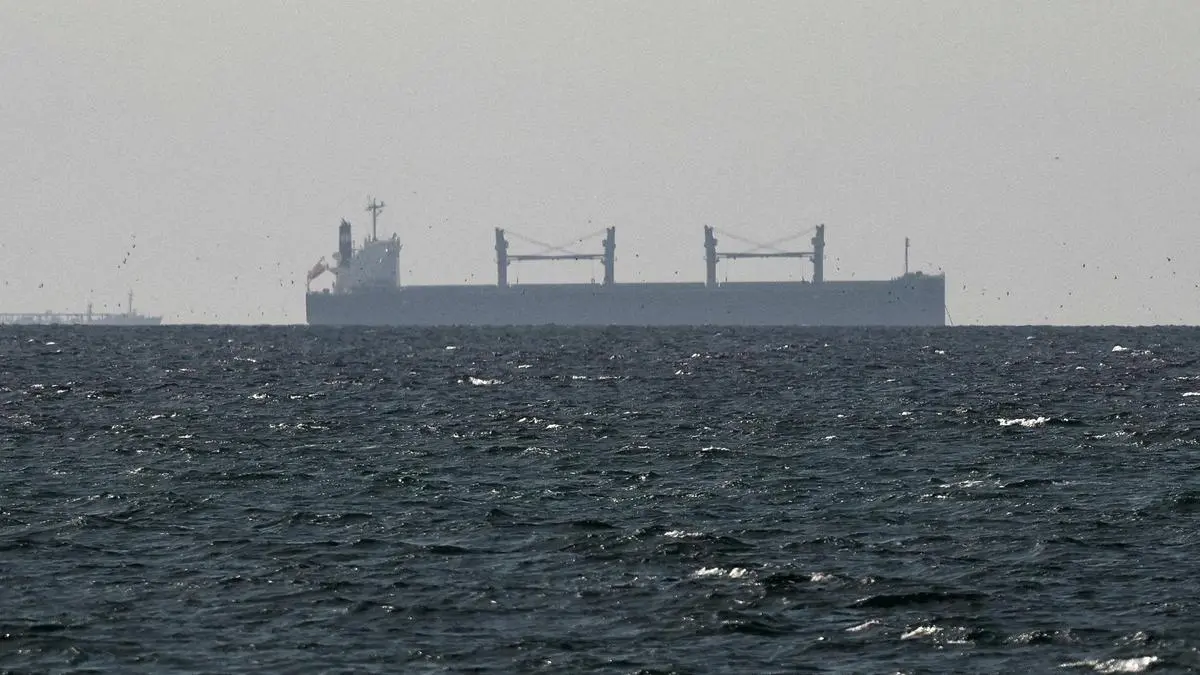
The re-imposition of a maritime blockade in the Strait of Hormuz represents a shift from diplomatic signaling to physical asset denial. While the stated objective often centers on nuclear non-proliferation or regional stability, the operational reality is an exercise in economic attrition. By restricting the transit of Iranian petroleum and related petrochemicals, the United States is not merely applying "pressure"; it is attempting to de-capitalize a state actor in real-time. This strategy rests on the assumption that the logistical cost of bypassing the blockade exceeds the sovereign threshold for economic survival.
The Three Pillars of Maritime Interdiction
To understand the current blockade, one must move beyond political rhetoric and examine the functional mechanics of naval containment. The effectiveness of this operation is measured by three distinct variables: Meanwhile, you can read related events here: Why Russia is Escalating Attacks on the Izmail Port and Global Shipping.
- Detection Latency: The speed at which "dark" vessels (those with disabled AIS transponders) are identified via synthetic aperture radar (SAR) and satellite imagery.
- Enforcement Consistency: The physical presence of naval assets capable of boarding or diverting vessels without triggering a full-scale kinetic escalation.
- Third-Party Compliance: The degree to which secondary markets—primarily refineries in East Asia—refuse "laundered" or ship-to-ship (STS) transferred crude to avoid secondary sanctions.
The primary friction point in this blockade is not the physical closing of the 21-mile-wide navigable channel, but the sophisticated game of cat-and-mouse involving the "ghost fleet." Iran’s primary counter-measure involves disabling Automatic Identification Systems (AIS) and utilizing aging tankers as floating storage units. The blockade’s success hinges on whether the U.S. can increase the risk premium of these shipments to the point where the cost of insurance and "black market" logistics renders the oil unprofitable at the wellhead.
The Cost Function of Regional Deterrence
Maintaining a blockade is an expensive endeavor for both the enforcer and the target. For the United States, the cost is measured in deployment fatigue and opportunity cost. Every carrier strike group (CSG) or destroyer squadron stationed in the Persian Gulf is an asset not deployed in the Indo-Pacific or the Mediterranean. To see the bigger picture, check out the detailed article by The New York Times.
For Iran, the cost function is more existential. It is defined by the Foreign Exchange Gap. Iran requires a specific volume of daily oil exports (historically estimated between 1 million and 1.5 million barrels) to fund its domestic subsidies and military-industrial complex. When the blockade pushes exports below this threshold, the resulting currency devaluation triggers hyperinflation. This is the intended "transmission mechanism":
- Step 1: Naval interdiction reduces export volume.
- Step 2: Shortage of hard currency (USD/EUR) causes the Rial to collapse.
- Step 3: Imported goods prices spike, creating internal political instability.
- Step 4: The state is forced to choose between funding regional proxies or maintaining domestic order.
This logic assumes that the Iranian leadership will prioritize regime survival over regional influence. However, history suggests that under extreme pressure, state actors may instead choose horizontal escalation—attacking soft targets such as desalination plants, commercial shipping in the Red Sea, or energy infrastructure in neighboring states to force a global price spike that makes the blockade politically untenable for Western democracies.
The Asymmetric Imbalance of Power
The blockade introduces an asymmetric risk profile. The U.S. and its allies are defending a globalized system of free trade, while Iran is utilizing a localized denial-of-service strategy.
The Narrowing Corridor of Diplomacy
Simultaneous to the blockade, the "eyeing of more talks" functions as a strategic hedge. Diplomacy in this context is not an alternative to the blockade but a product of it. The blockade serves as the Best Alternative to a Negotiated Agreement (BATNA) for the United States. By worsening Iran's baseline reality, the U.S. intends to make any proposed deal look favorable by comparison.
The risk of this approach is the "Sunk Cost Trap." If Iran invests heavily in underground nuclear infrastructure or hardened military positions to withstand the blockade, they become less likely to negotiate away those assets. The physical blockade may inadvertently signal to Tehran that only a nuclear deterrent can provide permanent security against maritime strangulation.
Market Volatility and the Energy Premium
Global oil markets currently discount the risk of a total Hormuz closure, betting instead on a "leaky" blockade where some volume always escapes. The Hormuz Risk Premium—the extra dollar amount added to a barrel of Brent crude due to geopolitical tension—typically fluctuates between $3 and $8. If the blockade moves from "monitoring" to "active seizure," this premium could jump to $20+, threatening global GDP growth.
The second limitation of this strategy is the resilience of the Chinese "Teapot" refineries. These small, independent refineries often operate outside the reach of the traditional dollar-based financial system. As long as these entities are willing to process Iranian crude, the blockade remains a sieve rather than a wall.
Strategic Recommendation: The Pivot to Digital and Physical Denial
The blockade must evolve beyond hull-to-hull interceptions. To achieve the stated policy goals without triggering a regional war, the strategy must transition into a hybrid containment model:
- Cyber-Kinetic Integration: Target the financial clearinghouses that facilitate the insurance of the ghost fleet. Without P&I (Protection and Indemnity) insurance, no legitimate port will allow these vessels to dock, regardless of the blockade's physical presence.
- Sanction Synchronicity: Coordinate with the EU and G7 to ensure that the "shadow fleet" has no legal harbor for repairs or refueling in international waters.
- The "Energy Bridge" Provision: To prevent a global price shock, the U.S. must coordinate with other OPEC+ members to ensure spare capacity is brought online the moment Iranian volumes drop. This prevents Iran from benefiting from the very price spikes their own scarcity creates.
The end state of this blockade is not the surrender of the Iranian state, but the forced realignment of its economic priorities. Success is defined by the moment the Iranian budget can no longer sustain both a nuclear program and a stable domestic economy. If the U.S. can maintain the blockade's integrity through the next two fiscal quarters without a kinetic explosion, the pressure on Tehran to return to the negotiating table with significant concessions will reach its historical peak. The play is now a war of patience, where the depth of the U.S. Treasury is pitted against the durability of Iranian ideological resolve.