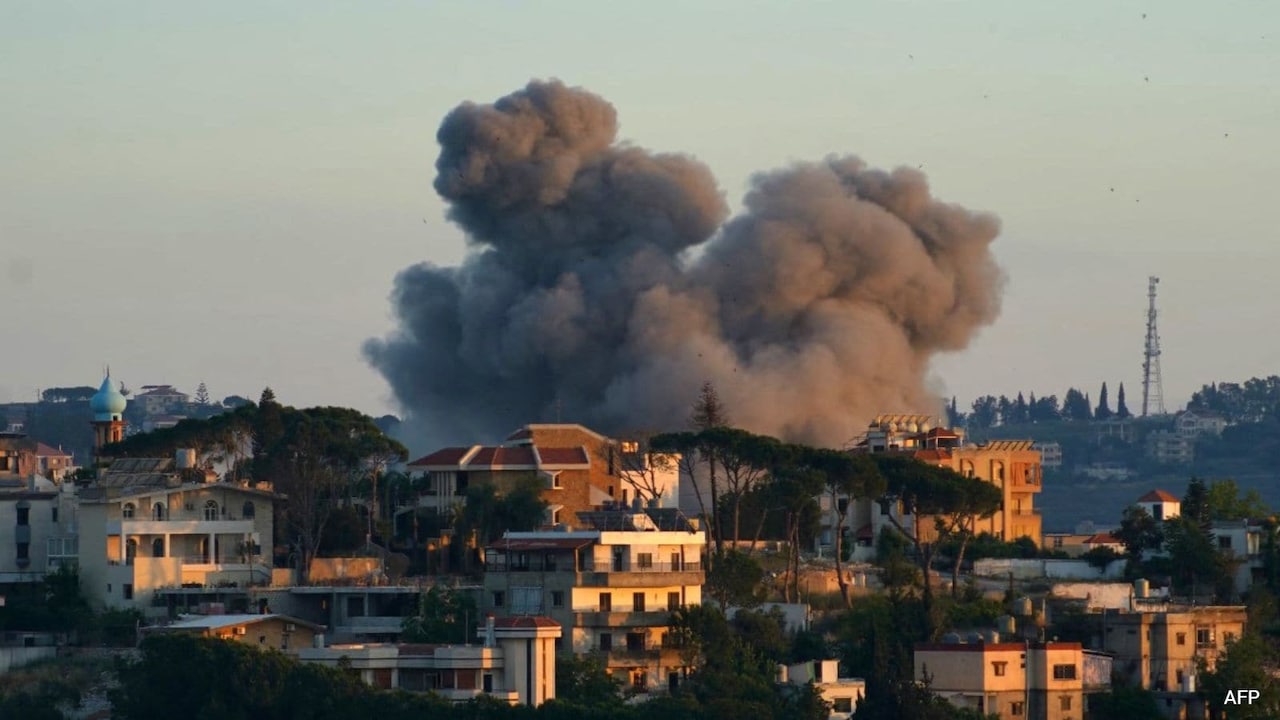
The interaction between localized kinetic operations and high-level multilateral diplomacy operates on a principle of asymmetric leverage. When non-state actors and sovereign states engage in escalating cycles of violence, the diplomatic space required for broader strategic agreements, such as non-proliferation pacts or sanctions-relief frameworks, systematically shrinks. The ongoing military friction between Israel and Hezbollah in Lebanon serves as a primary case study in how tactical execution can derange the strategic calculus of global superpowers, specifically regarding the viability of a United States-Iran diplomatic settlement.
Understanding this dynamic requires abandoning the vague notion of "regional instability" and instead examining the concrete feedback loops that connect tactical strikes to international policy bottlenecks.
The Escalation Triad: Deterrence, Degradation, and Entanglement
The military engagements in Lebanon are governed by three distinct strategic objectives that operate simultaneously. Each objective carries specific costs and distinct risk profiles that alter the broader Middle East security architecture.
1. The Deterrence Equilibrium
State and non-state adversaries establish geographic and operational boundaries through a calibrated application of force. When one party alters the intensity, range, or target selection of its strikes, the opposing party faces a structural compulsion to respond proportionally to prevent the establishment of a new, unfavorable status quo. This equilibrium is highly unstable because it relies on the subjective interpretation of signaling by both command structures.
2. Operational Capacity Degradation
Beyond mere signaling, kinetic campaigns seek to structurally diminish the adversary’s logistical and material capacity. This involves targeting command-and-control centers, ammunition supply chains, and specialized personnel. The objective is to shift the net military balance so significantly that the adversary loses the capability to mount a sustained counter-offensive, regardless of their political will.
3. Superpower Entanglement
Local conflicts rarely remain localized when the combatants rely on external patrons for material, financial, and diplomatic backing. For Israel, security guarantees and hardware replenishment from the United States are critical operational inputs. For Hezbollah, the Islamic Republic of Iran provides the foundational funding, doctrine, and missile technology. Consequently, every localized kinetic action automatically imposes a political and strategic cost on the respective global patrons, drawing them deeper into the immediate crisis and limiting their diplomatic flexibility elsewhere.
The Friction Mechanics: Why Kinetic Actions Freeze Diplomatic Tracks
The assumption that global powers can isolate high-level diplomatic tracks—such as a revived Joint Comprehensive Plan of Action (JCPOA) or a successor framework between Washington and Tehran—from active regional conflicts overlooks three structural friction points.
The Domestic Political Constraint Function
In representative democracies and complex authoritarian regimes alike, foreign policy is bounded by domestic validation. For the United States executive branch, negotiating a sanctions-relaxation or non-proliferation agreement with Iran becomes politically untenable while an Iranian-backed proxy is actively trading heavy fire with a primary US ally. The domestic opposition can easily frame diplomatic engagement as a concession to aggression, thereby raising the domestic political cost of the negotiation above the anticipated strategic utility of the deal.
The Proxy Control Dilemma
Principal-agent theory explains the recurring breakdowns in these diplomatic architectures. While Iran acts as the principal provider of resources to its regional network, it does not exert absolute, real-time operational control over every tactical decision made by proxy leadership. Conversely, Washington cannot dictate every defensive or preemptive measure taken by Jerusalem. When local actors initiate high-consequence operations based on immediate survival or localized objectives, they effectively hijack the diplomatic agenda of their global patrons. The principal is forced to defend or validate the agent's actions to preserve its regional credibility, destroying the trust required to maintain a separate bilateral negotiation track.
The Verification and Sequencing Bottleneck
Any durable international accord relies on verifiable sequence steps: step A of sanctions relief occurs only after step B of enrichment reduction is confirmed. Active kinetic conflict introduces massive variables into this sequence. If an infrastructure node or a logistics corridor used by a proxy is struck, the retaliatory calculus alters the timeline. The stability required to monitor, verify, and enforce a complex non-proliferation or security agreement cannot exist in an environment where primary logistics chains are under active bombardment.
Strategic Cost Accounting: The Price of Continued Attrition
The continuation of strikes produces quantifiable structural shifts that permanently alter the baseline for future negotiations. These shifts are not merely temporary disruptions; they represent a fundamental recalculation of regional risk profiles.
- Asymmetric Depletion Ratios: Air defense systems, precision-guided munitions, and early-warning assets are consumed at rates that stress Western and regional manufacturing capacities. The economic and material drain shifts defense postures from proactive deterrence to reactive supply-chain management.
- Hardening of Adversary Postures: Protracted conflict strips away moderate political factions within all participating states. As the human and economic toll rises, leadership structures are forced to adopt zero-sum objectives, rendering intermediate compromises structurally impossible to sell to their respective populations.
- The Intelligence Collection Deficit: As military forces pivot toward active combat operations, intelligence assets are redeployed from long-term proliferation monitoring to immediate target acquisition and battle damage assessment. This shift reduces the fidelity of verification mechanisms needed to assure compliance with global treaties.
The Strategic Path Forward
To break the cycle of escalating friction, diplomatic and military planning must decouple immediate crisis management from long-term architectural goals. The illusion that a grand bargain can be struck while the periphery is ablaze must be discarded in favor of a sequential, localized stabilization framework.
The primary requirement is the establishment of verified, non-negotiable de-escalation corridors that separate proxy forces geographically from sovereign borders, combined with explicit, back-channel communication lines between Washington and Tehran that remain operational irrespective of tactical engagements. Only by suppressing the localized feedback loops can the strategic space be cleared to address the core proliferation and security issues that threaten global stability. The immediate priority must be the imposition of structural caps on tactical violence, or the broader diplomatic architecture will remain permanently unviable.