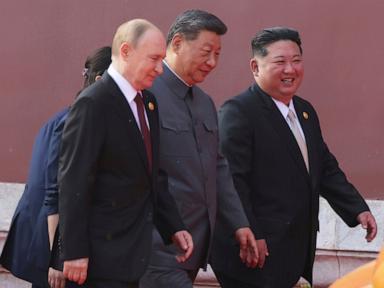
The state visit of Chinese General Secretary Xi Jinping to Pyongyang cannot be understood through the lens of mere diplomatic protocol or historical sentiment. It represents a calculated realignment of bilateral leverage designed to counteract shifting economic and security pressures in the Indo-Pacific. While general reporting framing the visit focuses on the optics of bilateral friendship, an objective strategic audit reveals a transactional exchange. Beijing and Pyongyang are optimizing a mutual dependency function to maximize their respective bargaining positions against Washington.
The timing of this summit is dictated by two intersecting variables: the stagnation of US-North Korea denuclearization talks following the Hanoi summit and the intensification of US-China trade friction. By analyzing this state visit through game theory and structural realism, we can isolate the core strategic drivers, the economic mechanisms at play, and the calculated risks assumed by both regimes. For an alternative view, consider: this related article.
The Triangulation Framework: Asymmetric Interdependence
The relationship between China and the Democratic People's Republic of Korea (DPRK) operates under a structural framework of asymmetric interdependence. China accounts for over 90% of North Korea's total trade volume, establishing an absolute economic dependency. However, Pyongyang possesses a distinct form of reverse leverage: the threat of systemic instability, regime collapse, or uncontrolled nuclear escalation on China’s northeastern border.
This dynamic yields a highly specific utility function for Beijing during this summit, broken down into three core pillars: Further analysis on this matter has been shared by Reuters.
- The Geopolitical Buffer Value: Beijing’s primary security directive remains the preservation of North Korea as a physical buffer zone blocking US forces stationed in South Korea. The absolute red line for Chinese strategic planners is a collapsed DPRK leading to a unified, US-aligned Korean Peninsula.
- The Diplomatic Counterweight: By visibly reinforcing its alignment with Pyongyang, Beijing signals to Washington that any comprehensive solution to East Asian security architectures is impossible without Chinese acquiescence. The DPRK serves as a high-yield diplomatic asset that China can activate to dilute US pressure on unrelated fronts, such as technology tariffs and maritime disputes in the South China Sea.
- The Non-Proliferation Boundary: While China requires a stable DPRK, it simultaneously rejects a fully unchecked, highly provocative nuclear neighbor that justifies increased US military deployments—such as THAAD missile batteries—in the region. The summit serves as an enforcement mechanism to keep Pyongyang's provocations within a tolerated, manageable threshold.
For Kim Jong Un, the calculus is equally transactional. The stagnation of direct negotiations with the United States left Pyongyang economically isolated and vulnerable to the enforcement of tightening UN sanctions. By securing a public endorsement from Xi Jinping, the DPRK alters the psychological architecture of the sanctions regime without requiring immediate material concessions from Washington.
The Economic Transmission Channels and Sanctions Enforcement
The primary operational constraint governing the Sino-North Korean relationship is the United Nations Security Council (UNSC) sanctions framework, which China formally endorses but practically modulates. The summit acts as a signaling mechanism for how China intends to manage these economic transmission channels moving forward.
[US Economic Pressure] ──> [China Modulates Sanctions Enforcement] ──> [DPRK Regime Stability]
The economic survival of the DPRK relies on specific, often covert, supply chains and resource transfers controlled by Beijing. The structural components of this economic lifeline involve three primary vectors.
Crude Oil and Petroleum Allocations
Under UNSC Resolution 2397, caps are placed on North Korea's imports of refined petroleum (500,000 barrels per year) and crude oil (4 million barrels per year). China supplies the vast majority of this volume via the Dandong-Sinuiju pipeline. While Beijing maintains official compliance with the caps, the opacity of pipeline telemetry allows China to adjust the flow rate based on Pyongyang's geopolitical alignment. This creates an immediate energy lever that can sustain or suffocate the North Korean domestic economy.
Cross-Border Labor and Remittance Flows
The UNSC mandate required the repatriation of all North Korean overseas laborers. Historically, tens of thousands of DPRK citizens in China’s northeastern provinces (Liaoning and Jilin) generated hundreds of millions of dollars in hard currency directly for the regime. The summit signals a shift toward gray-market optimization, where laborers are reclassified under short-term trainee or tourism visas, bypassing the explicit text of the sanctions while restoring a vital liquidity pipeline to Pyongyang.
Illicit Trade Architecture and Sanctions Fatigue
The efficacy of international sanctions degrades over time due to enforcement fatigue. By hosting high-level talks, China implicitly signals to its provincial authorities and state-owned enterprises that enforcement metrics along the 800-mile border can be relaxed. This relaxation manifests in increased ship-to-ship transfers of coal in the Yellow Sea and the unrecorded flow of consumer goods, agricultural inputs, and construction materials across the Yalu River.
The Tactical Playbook: Strategic Sequencing
The summit represents a masterclass in strategic sequencing by Beijing. By inserting himself directly into the center of the Korean Peninsula dynamic immediately prior to major international forums like the G20 summit, Xi Jinping reshapes the bargaining table.
The mechanics of this sequencing follow a specific progression:
- Isolate the Target: Following the failure of the US-DPRK Hanoi summit, North Korea was left without a clear diplomatic path forward, facing prolonged economic strangulation.
- Re-establish the Patronage Link: China steps in to fill the diplomatic vacuum, demonstrating to Kim Jong Un that his economic survival and regime security are ultimately guaranteed by Beijing, not Washington.
- Create a Dual-Track Negotiating Vulnerability: Xi Jinping arrives at future bilateral meetings with the US President holding a distinct advantage. He can offer either the stabilization of North Korean behavior or the systematic undermining of the US-led maximum pressure campaign as a variable in broader trade negotiations.
This creates a structural bottleneck for US foreign policy. Washington’s strategy relies on the strict segregation of issues—treating the denuclearization of North Korea and bilateral trade friction with China as completely independent vectors. The structural reality reinforced by this summit is that these vectors are inextricably linked through Chinese implementation capability.
Structural Constraints and Strategic Risk Profiles
An objective assessment must acknowledge the inherent limitations and vulnerabilities built into the Sino-North Korean axis. This is not a seamless ideological alliance; it is a marriage of geographic necessity plagued by historical mistrust.
| Strategic Variable | Chinese Objective | North Korean Objective | Inherent Friction Point |
|---|---|---|---|
| Nuclear Weapons Status | Denuclearization / Non-proliferation | Permanent de facto Nuclear State Status | Pyongyang views its arsenal as non-negotiable for regime survival; Beijing views it as a magnet for US regional military build-up. |
| Economic Reform | Controlled, Chinese-style market liberalization | Centralized command economy with localized gray markets | China desires a self-sustaining DPRK to remove the financial burden; Kim fears liberalization creates domestic political vulnerability. |
| External Alignment | Managed tension to maximize Chinese leverage over the US | Direct, unmediated bilateral relationship with the US | Pyongyang seeks to play Washington off Beijing to escape Chinese hegemony; Beijing fears being bypassed entirely. |
The primary risk for Beijing is the loss of escalatory control. While North Korea can be used to apply pressure to the US alliance network, Pyongyang has a history of executing missile tests or nuclear detonations at moments that disrupt Chinese diplomatic timelines. If Kim Jong Un interprets China's public backing as a blank check for provocations, he may trigger an accelerated militarization of Japan and South Korea, directly harming China's long-term regional hegemony goals.
Conversely, the risk for Pyongyang is the permanence of its asymmetric dependency. Relying entirely on Beijing for economic insulation means that if US-China relations normalize or shift unexpectedly, North Korea can instantly be traded away or leveraged by Beijing as a minor concession in a grand bargain between superpowers.
The Operational Play: Exploiting the Enforcement Disconnect
The strategic trajectory following this summit will not be defined by sweeping public declarations of denuclearization, but by the quiet recalibration of border infrastructure and trade volumes. The immediate operational play for corporate and sovereign strategists is to monitor the micro-indicators of sanctions elasticity along the Sino-North Korean border.
The critical metrics to track include the volume of commercial truck traffic across the New Yalu River Bridge, the pricing of fuel commodities in North Korean markets, and the frequency of non-AIS compliant maritime traffic in the Bohai Gulf. These physical data points will reveal the true velocity of the economic concessions offered during the talks, serving as an early-warning matrix for the next phase of Indo-Pacific geopolitical confrontation. Washington will be forced to choose between expanding secondary sanctions against major Chinese financial institutions—a move that would trigger a severe escalation in the trade war—or tacitly accepting a degraded sanctions regime that leaves North Korea permanently entrenched as a de facto nuclear state under the security umbrella of Beijing.