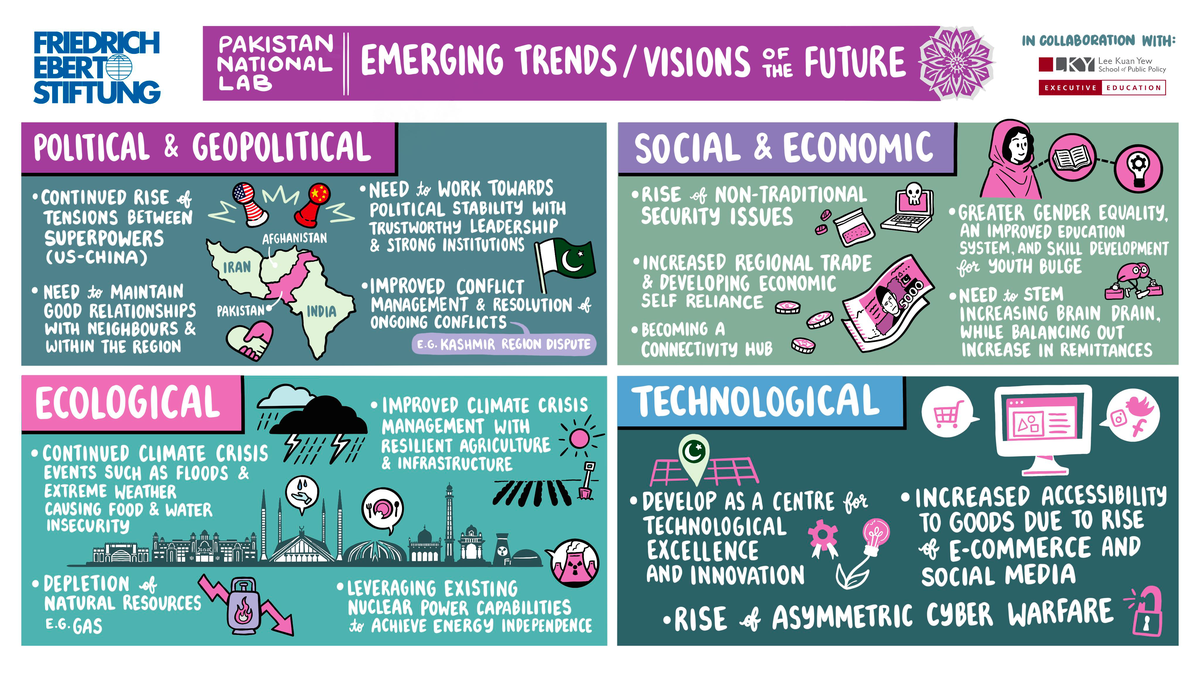
Pakistan is attempting to position itself as the primary diplomatic bridge between a fractured Middle East and a wary Washington. This maneuver, recently highlighted by seasoned diplomats like former High Commissioner Ajay Bisaria, signals a desperate push for relevance. Islamabad wants to prove it can still play the role of "the indispensable messenger." However, the reality on the ground suggests that this is less about altruistic peacemaking and more about survival. Pakistan is currently navigating a crushing economic crisis and a precarious relationship with the United States. By offering to mediate the escalating tensions in West Asia, specifically between Iran and the Arab bloc or acting as a backchannel for American interests, Islamabad is hunting for a strategic bailout.
The core problem is that mediation requires trust from all sides. Pakistan currently lacks the political capital to satisfy the competing demands of Riyadh, Tehran, and Washington simultaneously. Every move toward one risks alienating the others. For a closer look into this area, we recommend: this related article.
The High Cost of the Messenger Role
Historically, Pakistan has benefited from its geography. It sat at the crossroads of the Cold War and the War on Terror, extracting "rent" in the form of military aid and diplomatic cover. Those days are over. Washington has shifted its gaze toward the Indo-Pacific, and the Gulf monarchies are no longer willing to write blank checks without seeing structural economic reforms.
When Islamabad offers to mediate, it is essentially trying to revive its old business model. The "messenger" role is a play for time. If Pakistan can make itself useful in the West Asia conflict, it hopes the U.S. will overlook its deepening ties with China or its inability to curb domestic militancy. It is a high-stakes gamble. To get more context on this development, extensive reporting is available on TIME.
The difficulty lies in the internal contradictions of Pakistani foreign policy. The country shares a volatile border with Iran, yet it is financially beholden to Saudi Arabia. In the past, Islamabad tried to maintain a "neutral" stance in the Saudi-Iran rivalry, but neutrality often looks like indecision to those footing the bills. When the Yemen war broke out, Pakistan's refusal to send troops strained its relationship with the UAE and the Saudis. Now, as the conflict in Gaza and the broader regional tensions threaten to boil over, the pressure to choose a side has never been higher.
Chasing Washington’s Approval
Islamabad is acutely aware that its path to economic recovery runs through the International Monetary Fund (IMF). The U.S. holds the keys to those funds. By positioning itself as a conduit for American interests in the Middle East, Pakistan hopes to earn enough goodwill to ease its debt burden.
This is not a new strategy. During the 1970s, Pakistan played a crucial role in facilitating the secret opening between the U.S. and China. It wants to replicate that success in the 21st century. But the world has changed. The U.S. now has direct lines to most regional players. It does not necessarily need a middleman who brings as much baggage to the table as Pakistan does.
Furthermore, the American security establishment remains skeptical. The memory of the chaotic withdrawal from Afghanistan is still fresh. Many in D.C. view Pakistan not as a partner, but as a source of instability that must be managed rather than empowered. For Pakistan to be a successful mediator, it must first convince the West that it can manage its own internal security. That is a tall order when the Pakistani Taliban (TTP) is launching regular attacks and the political climate in Islamabad remains a powder keg.
The Iran Complication
Tehran is the wild card in Pakistan’s mediation dreams. The two nations recently traded missile strikes, a shocking escalation that laid bare the fragility of their relationship. While they have since moved to "normalize" ties, the underlying distrust remains. Iran views Pakistan’s close military relationship with the U.S. and Saudi Arabia with deep suspicion.
If Pakistan leans too far into its role as a U.S. messenger, it risks blowback from Iran. This could manifest as increased border skirmishes or Iranian support for separatist movements in Balochistan. Conversely, if Pakistan gets too close to Tehran, it risks triggering U.S. sanctions or losing the support of the Gulf states.
Financial Desperation as a Diplomatic Driver
The primary driver of this diplomatic push isn't grand strategy—it is the empty treasury. Pakistan's foreign exchange reserves have frequently dipped to levels that barely cover a few weeks of imports. Inflation has gutted the middle class. In this environment, foreign policy becomes an extension of the finance ministry.
Every diplomatic mission is essentially an investment pitch. When Pakistani officials travel to Doha, Riyadh, or Washington, they aren't just talking about regional peace; they are talking about "Special Investment Facilitation Councils" and selling off state assets. The mediation talk provides a prestigious veneer to what is essentially a desperate search for liquidity.
The danger is that regional powers can see through the desperation. If Saudi Arabia or the UAE sense that Pakistan is only mediating to secure a loan, the mediation loses its weight. It becomes a transaction rather than a transformation of regional dynamics.
The Failure of Symmetrical Diplomacy
Pakistan has long tried to balance its relationships in a way that yields the most benefit for the least commitment. This "symmetrical diplomacy" is failing because the regional players are demanding more than just words. They want alignment.
The Abraham Accords changed the math in the Middle East. As several Arab nations normalized ties with Israel, the old blocks shifted. Pakistan, with its own internal religious sensitivities, cannot easily follow suit. This leaves it on the periphery of the new regional order. By trying to be a mediator, it is trying to force its way back into the center of a conversation that has moved on without it.
The military's role in this cannot be overstated. In Pakistan, the generals historically dictate foreign policy, especially concerning the U.S. and the Middle East. The current military leadership is trying to signal that it is a "responsible" actor that can stabilize the region. However, the domestic crackdown on political opposition and the suppression of dissent have tarnished the image of the "stable" partner they are trying to project.
Internal Instability Undermines External Ambition
You cannot project power abroad when you are losing control at home. The political polarization in Pakistan is at an all-time high. A government seen by many as lacking a genuine mandate struggles to speak with authority on the international stage.
When a Pakistani envoy speaks about mediating between giants, the first question they face behind closed doors is often about the stability of their own capital. If the government could fall next week, or if the streets are about to erupt in protest, their promises of mediation carry little weight. Peace-making requires a level of institutional continuity that Pakistan has struggled to maintain.
The irony is that the very act of trying to please everyone—the U.S., the Saudis, the Iranians, and the domestic populace—often results in pleasing no one. It creates a vacuum of leadership.
The Mirage of the Indispensable State
Pakistan’s leaders are haunted by the fear of becoming irrelevant. They remember a time when the world's eyes were constantly on them, for better or worse. Today, as the world focuses on the tech war between the U.S. and China or the conventional war in Ukraine, Pakistan finds itself competing for attention.
The mediation push is a frantic attempt to grab the spotlight. It is an assertion that Pakistan still matters in the global security architecture. But mattering requires more than just being a messenger. It requires being a model of stability, or at the very least, an actor with clear, reliable interests.
The "messenger" role is inherently subservient. It suggests that Pakistan is not a player in its own right, but a tool to be used by others. While this might bring short-term financial relief, it does nothing to address the long-term structural decline of the country’s influence.
Navigating the West Asia Minefield
The conflict in West Asia is not a single fire that can be extinguished by a single mediator. It is a complex web of religious, territorial, and existential rivalries. Pakistan's history of utilizing proxy groups and its own internal sectarian divisions make it a flawed candidate for the role of an honest broker.
If Islamabad truly wants to play a role in regional peace, it must first achieve a level of internal economic and political coherence that makes it a partner worth having. Until then, its diplomatic overtures will be viewed for what they are: a desperate plea for a seat at a table where it can no longer afford the stakes.
The bridge Islamabad wants to build is currently standing on a foundation of sand. Every attempt to reinforce one pillar risks collapsing another. The international community is watching, but they are not waiting for Pakistan to lead the way. They are waiting to see if Pakistan can even lead itself out of its current tailspin.
The era of the strategic rent-seeker is closing. Diplomacy without a productive economy and internal stability is just performance art. Pakistan's leaders must decide if they want to be genuine architects of peace or continue as couriers for powers that view them as a secondary concern.