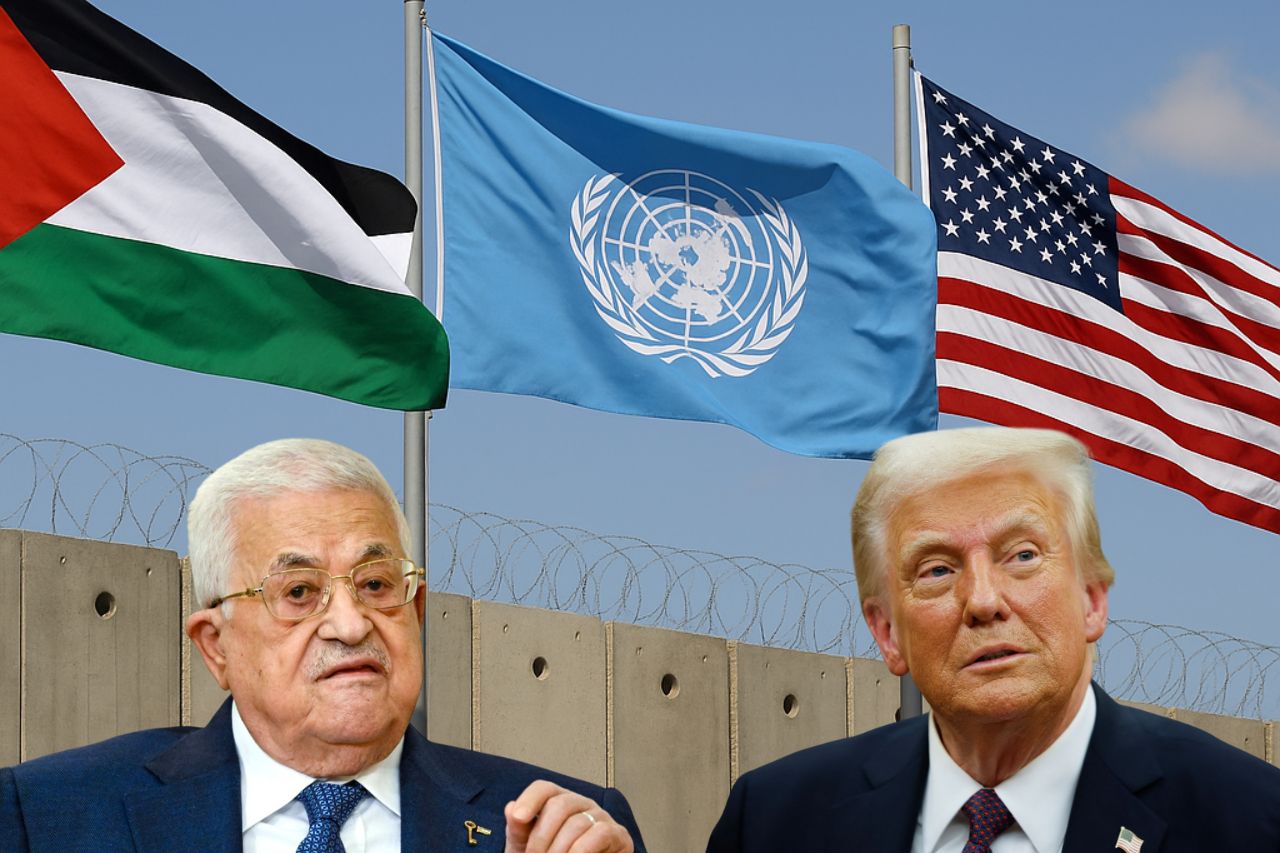
The deployment of a Vice President to a conflict-adjacent diplomatic theater is rarely a sign of strength; it is a defensive rebalancing of a deteriorating strategic position. In the current context of US interventionism and proxy war management, the mission to salvage war goals represents a critical inflection point where the cost of engagement is beginning to outpace the political utility of the objective. This specific diplomatic surge is governed by three underlying variables: the erosion of the "Security Guarantee" premium, the logistics of attrition in a fractured alliance, and the diminishing marginal returns of symbolic presence.
The Triad of Strategic Friction
To understand the Vice President’s mission, one must look past the optics of the "frontline" visit and analyze the structural pressures forcing this move. The administration is currently operating within a Triad of Strategic Friction that limits its freedom of action.
- Domestic Political Decoupling: There is a widening gap between executive war goals and legislative appetite for continued funding. When the Vice President is dispatched, the primary audience is often not the foreign ally, but the domestic skeptic. The mission serves as a physical proof of "active management" to justify further budget allocations.
- The Credibility-Commitment Trap: The US has staked its global reputation on a specific outcome. As that outcome becomes statistically less likely due to battlefield realities, the administration must increase its "visible commitment" to prevent a collapse in ally morale. This creates a feedback loop where the more a goal slips, the more high-level personnel must be risked to pretend it is still attainable.
- Regional Hegemonic Fatigue: Middle-tier powers in the vicinity of the conflict are recalculating their own risk-reward ratios. They are no longer accepting US directives as default policy. The Vice President’s task is to arrest this "realignment drift" before it reaches a tipping point where local partners begin seeking independent back-channel settlements with the adversary.
The Mechanics of Escalation Management
Success in this diplomatic context is not defined by a peace treaty, but by the stabilization of a "managed stalemate." The US strategy rests on a Containment Cost Function. This function dictates that for every unit of adversary advancement, the cost to return to the status quo grows exponentially rather than linearly.
The Vice President is attempting to manipulate two specific levers:
Defensive Elasticity
This involves providing just enough support to ensure the ally does not collapse, while withholding enough to prevent a direct escalation with the primary adversary. This is a high-wire act of calibration. If the Vice President promises too much, they risk a direct kinetic confrontation that the US public is unprepared for. If they promise too little, the ally may pivot to a "scorched earth" or desperate negotiation strategy that undermines US regional interests.
Intelligence-Policy Alignment
A significant portion of frontline diplomacy involves synchronizing what the ground commanders see with what the White House press office says. Discrepancies here create "narrative debt." When the Vice President meets with local leadership, the goal is to reconcile these datasets. If the local commanders report a deficit in munitions that contradicts the administration’s public "we have provided everything needed" stance, the Vice President must either adjust the flow of hardware or find a way to reframe the deficit as a "strategic transition."
Measuring the Efficacy of High-Level Surges
Diplomatic visits are often mischaracterized as purely ceremonial. In reality, they are a form of Political Liquidity. By showing up, the Vice President "spends" a portion of their political capital to buy time. However, this capital is finite and subject to rapid depreciation if not backed by tangible shifts in resource allocation.
The efficacy of this specific mission can be measured through three KPIs:
- The Procurement Velocity: Does the visit result in an immediate clearing of legislative or bureaucratic bottlenecks regarding weapon systems? If the "thin ice" mentioned in reports refers to a lack of materiel, the visit is a failure unless shipments accelerate within 14 days of the return flight.
- Coalition Cohesion Index: Do regional partners issue joint statements that mirror US rhetoric, or do they remain silent? Silence from neighbors is a signal that the Vice President’s "salvage" attempt failed to provide the security assurances those neighbors require to stay in the US orbit.
- Adversary Response Latency: How does the opposition react? If the adversary increases kinetic pressure during or immediately after the visit, it indicates they perceive the Vice President’s presence as a sign of desperation rather than a projection of power.
The Bottleneck of Multilateralism
The "thin ice" metaphor accurately describes the precarious state of multilateral support. The US is no longer the sole arbiter of conflict resolution; it is now a coordinator of a reluctant committee. This creates a Coordination Bottleneck. Each partner in the alliance has a different "breaking point"—the level of economic or security pain they are willing to endure before seeking a separate peace.
The Vice President’s frontline presence is a tool to raise that breaking point. By physically appearing in the zone of conflict, they are attempting to shame or inspire wavering partners into maintaining the collective front. This is "High-Pressure Diplomacy," and it carries a significant risk: if the Vice President asks for a commitment that the partners cannot or will not give, the hollowness of US influence is laid bare on the world stage.
The Asymmetry of War Goals
A fundamental flaw in the current strategy—one the Vice President must navigate—is the asymmetry between the declared "idealistic" war goals and the "pragmatic" battlefield realities.
- Idealistic Goal: Total restoration of sovereignty and the total defeat of the adversary.
- Pragmatic Goal: A negotiated settlement that preserves a pro-Western corridor while conceding certain territorial or political realities.
The Vice President’s mission is likely an attempt to bridge this gap without admitting a retreat. This is known as Pivot Camouflage. By using aggressive rhetoric ("salvaging war goals") while privately discussing "sustainable positions," the administration hopes to manage the transition to a more limited objective without suffering a catastrophic loss of face.
The Risk of Symbolic Over-Extension
There is a distinct danger in sending the second-highest official in the US government to a "thin ice" scenario. In military terms, this is putting a "high-value asset" in a vulnerable position. If the situation on the ground continues to deteriorate despite the Vice President’s intervention, the administration has no further cards to play except the President themselves.
This leads to Strategic Exhaustion. When the highest levels of government are personally embroiled in the tactical minutiae of a salvage operation, they lose the ability to manage other global crises. The Vice President’s presence in this specific theater is a signal to every other global actor—from Beijing to Tehran—that the US is currently "pinned down" by this specific conflict.
The Calculus of Sustained Engagement
The "ice" is not thinning because of a lack of will, but because of a shift in the Global Resource Allocation Model. The US defense industrial base is struggling to meet the demands of a high-intensity kinetic conflict while simultaneously preparing for potential Pacific contingencies. The Vice President’s mission is partially an exercise in "Demand Management." They must convince the ally to do more with less, or at least to be more efficient with what they have.
This creates a tension between the ally's survival instinct and the US's global strategy. The ally wants maximum escalation to ensure their own security; the US wants "calibrated stability" to prevent a broader war. The Vice President is the arbiter of this tension.
Strategic Requirement: The Transition to Strategic Realism
The current trajectory suggests that symbolic visits have reached a point of zero marginal utility. To actually stabilize the front, the administration must move beyond "salvage" and toward "restructuring." This requires a shift in three specific areas:
- Defining the "End State" with Precision: The vague goal of "victory" must be replaced with a defined, defensible, and fundable geographic and political outcome.
- Decoupling Diplomacy from Optics: The Vice President’s next steps should focus on the unglamorous work of supply chain integration and regional intelligence sharing, rather than high-profile frontline photo opportunities.
- The Pivot to Regional Ownership: The US must shift from being the primary driver of the war goals to being the secondary supporter of a regionally-led security framework.
The Vice President’s mission will be judged not by the strength of their rhetoric on the frontline, but by whether they can secure a "Strategic Floor"—a point below which the situation will not be allowed to fall. If the mission fails to establish this floor, the "thin ice" will inevitably give way, leading to a forced and chaotic recalibration of US foreign policy in the region. The only viable path forward is to trade the "idealistic salvage" for a "realistic stabilization," focusing resources on what can be held rather than what has already been strategically compromised.