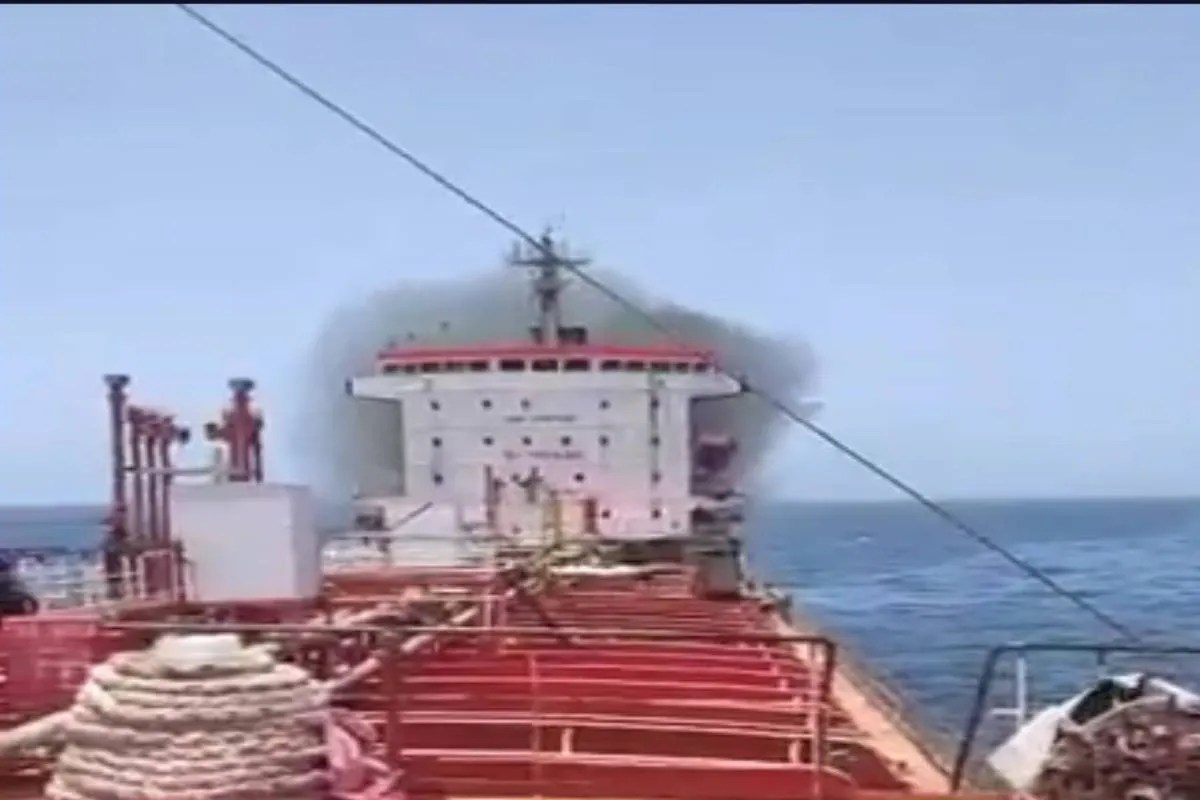
Seafaring used to be about navigating bad weather and long months away from home. Today, it's about dodging missiles in highly volatile shipping lanes. The terrifying reality of merchant navy life hit home again on Monday, June 8, 2026, when a massive fire broke out aboard the oil tanker MT Marivex near the coast of Oman, just south of the strategic Strait of Hormuz.
With 24 Indian seafarers trapped onboard a burning vessel, panic rippled through their families back home. The maritime sector held its breath. Thankfully, a swift, coordinated international operation led by the Oman Air Force extracted every single one of the 24 Indian nationals safely.
But while the immediate crisis is over, the details emerging from this incident expose a much darker, highly complex geopolitical game. This wasn't just a random mechanical failure or a routine maritime accident. The MT Marivex was caught in the middle of a literal enforcement war, raising massive questions about how safe our sailors really are when foreign-owned ships play fast and loose with international blockades.
The Drama on the Water: What Actually Happened to MT Marivex?
The MT Marivex, an unladen oil/chemical tanker flying the flag of Palau (and previously associated with Madagascar registries), was sailing in ballast condition—meaning it carried only water in its tanks to maintain stability rather than highly flammable cargo. Around 1:30 PM local time, a violent explosion ripped through the ship’s engine room, sparking a massive fire that disabled the vessel entirely.
The panic on board was captured in a harrowing audio SOS message transmitted by a desperate crew member. The sailor pleaded for immediate rescue, noting that the fire had rendered their standard lifeboats completely useless. In the audio, the crew member explicitly claimed the vessel had been struck by a missile attack in the engine room.
Because the incident occurred near the high-tension zone of the Strait of Hormuz—currently under an intense naval blockade amid escalating West Asia hostilities involving Iran, Israel, and western forces—early reports initially speculated about a rogue drone or regional militant strike. The truth, however, is far more bureaucratic and far more dangerous.
Running Blockades: The Blacklist Backstory
Information coming from maritime intelligence sources and confirmed by India's Ministry of Ports, Shipping and Waterways reveals that the MT Marivex was flying under a major warning banner. The ship is not Indian-owned. Instead, it was actively blacklisted and sanctioned by the US Treasury Department's Office of Foreign Assets Control (OFAC). OFAC targets vessels known for illegally moving sanctioned Iranian or Russian oil.
According to official sources, the vessel had spent the prior few days attempting to break through the US naval blockade of Iranian ports.
- On three separate occasions, the US Navy intercepted the vessel and issued stern warnings, forcing it to turn back.
- On its fourth attempt, on June 8, the ship attempted a stealth run. It entered Omani territorial waters and deliberately switched off its Automatic Identification System (AIS) transponders to slide past undetected.
The vessel was disabled during this high-stakes cat-and-mouse game. While the shipping ministry officially stated they are still verifying the exact physical cause of the fire, accounts point to an enforcement action that went kinetic, disabling the rogue vessel's engine room to stop it from running the blockade.
The Cost of Flying Convenient Flags
This incident brings a glaring, painful vulnerability in the global merchant navy to light: the exploitation of Indian seafarers by foreign entities. India supplies a massive percentage of the global maritime workforce. Young, skilled Indian men and women sign up to work on tankers, container ships, and bulk carriers to earn a living and see the world.
The problem is the system of "Flags of Convenience." Rogue shipping companies register their vessels in countries like Palau, Panama, or Madagascar to evade strict regulations, taxes, and oversight. When these shadow-fleet operators decide to break international blockades for massive under-the-table profits, they aren't the ones standing in the engine room when a missile hits. It’s the unsuspecting crew.
The Forward Seamen’s Union of India (FSUI) rightly raised alarm bells over this incident. Our sailors frequently find themselves trapped on blacklisted vessels, completely unaware of the political target painted on the hull they're working on. In the worst-case scenarios, they pay with their lives. Already, ten Indians have lost their lives in West Asian maritime crossfire since the region's geopolitical conflicts flared up heavily.
The Extraction: How the Crew Was Saved
The moment the SOS went out, India's maritime and diplomatic machinery kicked into overdrive. Opesh Kumar Sharma, a director in the federal shipping ministry, spearheaded an emergency interministerial coordination effort linking the Ministry of External Affairs, the Ministry of Defence, the Indian Navy, and the Indian Embassy in Muscat.
Because the ship was idling disabled in Omani territorial waters, the Oman Air Force launched a critical rescue mission. A military helicopter was deployed directly to the burning tanker, successfully evacuating all 24 Indian nationals from the deck before the fire could claim the superstructure.
The Indian Embassy in Muscat quickly turned to social media to express deep gratitude to the Omani government:
"We are thankful to the Omani authorities for their swift response and rescue of all the 24 crew members of Indian nationality onboard MT Marivex, and ensuring their safety."
The crew members are currently being looked after by consular officials and maritime authorities in Oman, receiving medical checks and basic necessities while arrangements are made to repatriate them back to India.
Protect Yourself: How Sailors Can Avoid the Shadow Fleet
If you are a merchant navy professional or have a family member working at sea, you can't rely blindly on crewing agencies anymore. The maritime landscape is too dangerous, and the rise of sanctioned "shadow fleets" means you could accidentally sign onto a floating target.
Take these immediate protective steps before signing any contract:
- Verify the IMO Number: Every ship has a unique International Maritime Organization (IMO) number. Run this number through maritime databases like Equasis or MarineTraffic to check its ownership history and flag changes. Frequent flag-hopping is a massive red flag.
- Check the OFAC Sanctions List: The US Treasury Department maintains a publicly searchable database of sanctioned vessels and entities. Search the ship's name and its parent company before signing. If it’s on the list, walk away.
- Review the Trade Routes: If an agency tells you a tanker is doing routine runs but its recent historical AIS data shows it lingering near high-risk zones with its transponders turned off, it is likely involved in smuggling or blockade-running.
- Insist on Reputable Recruitment Agencies (RPSL): Only find work through Directorate General of Shipping (DGS) approved Recruitment and Placement Services License holders in India. They face legal penalties if they place Indian nationals on illegal or dangerously uninsured vessels.