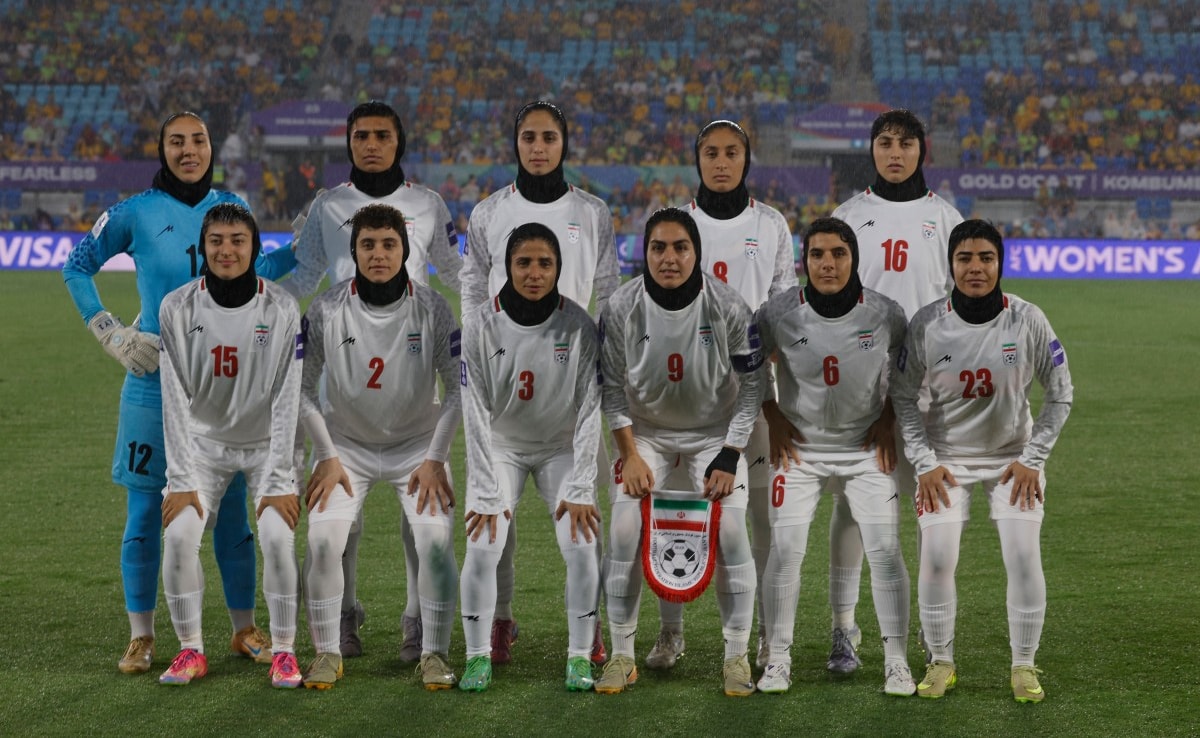
The repatriation of a professional athlete who previously sought political asylum is not a simple change of heart; it is a reversal of a high-stakes strategic commitment. When an Iranian woman footballer abandons an asylum claim in Australia to return home, she navigates a complex intersection of international law, state-sponsored prestige, and individual risk management. This decision represents a failure of the initial asylum thesis—that the cost of remaining abroad outweighed the benefits of returning—and signals a recalibration of the "Risk vs. Utility" matrix that governs elite athletes in restrictive political systems.
The Tri-Factor Framework of Athletic Defection
To understand why an athlete chooses to rescind an asylum application, one must first deconstruct the three primary drivers that lead to the initial exit. Defection is rarely a purely ideological act; it is an optimization strategy used when the following three variables reach a breaking point: Also making headlines lately: Why Trump Golf Trophies Always Spark a Massive Internet Firestorm.
- Professional Suffocation: The inability to compete at an international level due to domestic restrictions, dress codes (such as mandatory hijab), or gender-based funding disparities.
- Safety Deficit: Direct or indirect threats from state apparatuses resulting from perceived dissent or non-compliance with cultural mandates.
- Economic Opportunity: The delta between the earning potential in a sanctioned economy versus a Western market.
When an athlete like the fifth Iranian woman footballer in this cycle returns, it indicates that the "Host Country Experience" failed to satisfy these drivers, or that the "Home Country Re-entry Terms" were successfully renegotiated.
The Asymmetry of the Australian Asylum Process
Australia’s asylum framework (Subclass 866 - Protection Visa) is designed for humanitarian stability, not the preservation of elite athletic performance. For an Iranian footballer, the transition from a national team environment to the Australian domestic system involves a massive loss of "Status Capital." Further information into this topic are detailed by Yahoo Sports.
The Bureaucratic Friction Point
The Australian legal system requires "well-founded fear of persecution" as defined by the 1951 Refugee Convention. While an athlete may face systemic discrimination in Iran, the evidentiary burden to prove individual persecution is high. During the processing period—which can span months or years—athletes often exist in a professional vacuum. They lack access to high-performance coaching, elite-tier facilities, and the scout networks required to secure professional contracts in the A-League or overseas.
The Erosion of Narrative Value
In the immediate aftermath of a defection, an athlete possesses high "Narrative Value" for Western media and human rights groups. However, this value depreciates rapidly. Once the news cycle moves on, the athlete is left as a stateless individual competing against local talent who have systemic advantages, such as lifelong integration into the host country’s sports infrastructure.
The Mechanics of the Iranian Repatriation Strategy
The Iranian government utilizes a specific psychological and diplomatic toolkit to facilitate the return of high-profile defectors. This is not merely a matter of "forgiveness," but a calculated effort to neutralize a PR liability.
The Amnesty Architecture
The Iranian state often employs "Soft Power Re-entry." This involves intermediaries—often former coaches or family members—communicating "guarantees" of safety and professional reinstatement. By bringing an athlete back, the state achieves a dual objective:
- Narrative Neutralization: The return "proves" that the initial claims of persecution were exaggerated or the result of Western manipulation.
- Deterrence by Example: The returnee serves as a living example that life in the West is not the utopia promised, discouraging other teammates from following suit.
The Performance Penalty
Returning athletes face a "Trust Tax." While they may be allowed to play again, their movements, social media presence, and international travel are subjected to heightened surveillance. The state provides a path back to the pitch, but it is a path lined with conditional liberties.
The Economic Reality of the Female Athlete
The gendered nature of this defection cannot be ignored. Male Iranian footballers often have access to lucrative leagues in Europe or the Gulf, providing a financial safety net that allows them to sustain a defection indefinitely. Female footballers, conversely, operate in a market with significantly lower liquidity.
- Income Disparity: The average salary for a female footballer in Australia’s A-League is a fraction of the male equivalent. Without a pre-existing professional contract, a defecting female athlete faces immediate financial instability.
- The Sponsorship Gap: Professional athletes rely on brands. A defecting athlete is a "High Risk" asset. Western brands may be hesitant to sign an athlete whose legal status is in limbo, while Iranian sponsors are legally barred from supporting them.
When the financial cost of living in a high-inflation economy like Australia outweighs the professional gain of playing without a hijab, the logic of the return becomes mathematically sound, even if politically perilous.
Structural Bottlenecks in International Sports Governance
The FIFA and AFC (Asian Football Confederation) regulatory frameworks offer little protection for defecting athletes. Under FIFA's "Statutes on the Status and Transfer of Players," a player’s registration is often tied to their home federation.
- The ITC Barrier: To play professionally in a new country, an athlete needs an International Transfer Certificate (ITC). If the Iranian Football Federation (FFIRI) refuses to release the ITC on the grounds of a contract dispute or "disciplinary" issues, the athlete is legally barred from professional play.
- FIFA’s Neutrality Trap: FIFA’s insistence on being "apolitical" often works in favor of national federations. They rarely intervene in individual asylum cases unless there is a clear breach of FIFA’s own human rights statutes, which are notoriously difficult to trigger.
This creates a "Career Lock-in" where the athlete’s professional identity remains a hostage of the state they are attempting to flee.
Evaluating the Risks of Re-entry
The return of the fifth footballer highlights a pattern of "Consolidated Risk." The athlete is betting that the state's desire for a PR win outweighs its impulse for retribution. This is a gamble based on the following variables:
- Visibility as Shield: High-profile athletes are generally safer than unknown dissidents because their disappearance or imprisonment would spark international outcry.
- The "Repentance" Requirement: To be fully reintegrated, the athlete is often required to make public statements attributing their defection to "bad advice" or "emotional distress." This forced narrative is the price of re-entry.
- The Surveillance Tail: Even if reinstated to the national team, the athlete’s "Social Credit" within the squad is reset to zero. They are unlikely to be given captaincy or roles involving significant media interaction.
Strategic Forecast: The Professionalization of Defection
The trend of Iranian athletes defecting and then returning suggests that the current "Ad Hoc Defection" model is broken. For future athletes to successfully transition to Western leagues, a more structured "Athletic Pipeline" is required.
The Strategic Recommendation for International Sporting Bodies:
The current "wait and see" approach by FIFA and the IOC (International Olympic Committee) is insufficient. To prevent the cycle of defection and forced repatriation, these organizations must:
- Decouple Registration from State Control: Create an "Independent Athlete" registration category that allows players to bypass national federations if their human rights are being violated.
- Establish a Refugee Athlete Fund: Dedicated financial support to bridge the "Status Gap" between asylum application and professional signing.
- Standardize Sanctions for Federation Retaliation: If a national federation uses the ITC process as a tool of political coercion, they must face immediate suspension from international competition.
The return of this footballer is a signal that for many elite Iranian women, the current cost of freedom is the death of their career. Until the international sporting community lowers the "Entry Barrier" for defecting talent, the Iranian state will continue to win the war of attrition. The final move for any athlete in this position is no longer a matter of sport, but a cold calculation of survival in an environment where both the home and host countries have failed to provide a viable path forward.