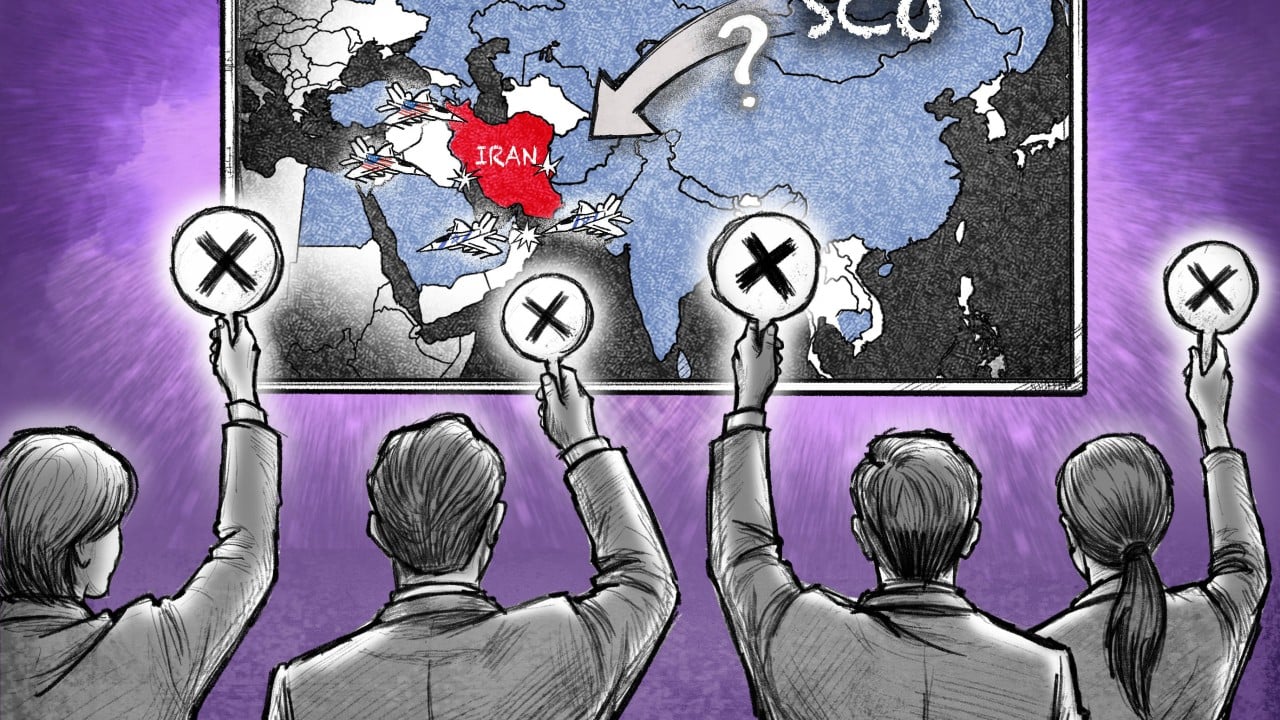
The assumption that Iran’s formal accession to the Shanghai Cooperation Organisation (SCO) establishes an Eastern counterweight to the North Atlantic Treaty Organisation (NATO) misinterprets the structural mechanics of Eurasian integration (Alizada, 2025; Mousavi, n.d.). Western strategic discourse frequently treats the SCO as a nascent military alliance designed to offer collective defense to its revisionist members (Cohen, n.d.; de Haas, 2007). This superficial comparison collapses when subjected to institutional and structural analysis. While NATO operates as a highly integrated, supranational collective defense mechanism governed by strict military interoperability and binding legal obligations, the SCO functions as a low-integration regional security regime optimized for regime preservation and localized threat management (Mousavi, n.d.; Shariatinia, n.d.).
Tehran’s full membership does not yield a multilateral security guarantee against external state aggression (Mousavi, n.d.; Shariatinia, n.d.). Instead, it binds Iran to an institutional framework designed by Beijing and Moscow to manage internal instability while explicitly precluding collective military projection (Cohen, n.d.; Mousavi, n.d.). Understanding the strategic limitations of this arrangement requires decoupling geopolitical rhetoric from the operational design of both organizations across three distinct structural dimensions.
The Institutional Architecture of Defensive Commitments
The core divergence between NATO and the SCO lies in the legal and operational architecture of their foundational charters. NATO’s structural utility derives from Article 5, a binding collective defense clause stipulating that an armed attack against one member state is considered an attack against all members. This clause is operationalized through a centralized, permanent command structure—Supreme Headquarters Allied Powers Europe (SHAPE)—and strict military interoperability standards that standardize equipment, logistics, communications, and doctrine across member states.
The SCO possesses no functional equivalent to Article 5 or a unified military command structure (Lukin, 2015; Mousavi, n.d.). The organization's foundational framework, outlined in the 2001 SCO Charter, focuses primarily on the containment of internal security vulnerabilities (de Haas, 2007; Mousavi, n.d.).
[NATO Structural Architecture] -> Centralized Command (SHAPE) -> Article 5 Binding Defense -> External Deterrence
[SCO Structural Architecture]  -> Decentralized Platform -> RATS (Anti-Terrorism) -> Internal Regime Stability
The primary security mechanism of the SCO is the Tashkent-based Regional Anti-Terrorist Structure (RATS), which acts as a clearinghouse for intelligence sharing, databases on non-state actors, and coordination regarding border security (Bailes, n.d.; de Haas, 2007). RATS is optimized to counter what Beijing defines as the "three evils": terrorism, separatism, and extremism (Cohen, n.d.; de Haas, 2007).
Consequently, the security obligations of SCO membership are inward-facing and defensive of the domestic status quo rather than outward-facing and deterrent of external adversaries (Mousavi, n.d.). Iran's permanent membership creates binding commitments strictly in the realm of counter-terrorism and intelligence sharing regarding non-state threats (Shariatinia, n.d.). It provides no legal mechanism, institutional pathway, or logistical framework for collective military intervention should Iran experience a conventional strike by an external power (Lukin, 2015; Shariatinia, n.d.).
Divergent Threat Perceptions and Power Dynamics
A military alliance requires a baseline alignment of core threat perceptions among its constituents. NATO was founded on, and has returned to, a unified consensus regarding the containment of Euro-Atlantic systemic rivals. The SCO, by contrast, is characterized by deep internal systemic rivalries and profoundly divergent foreign policy objectives (Cohen, n.d.). The organization functions as a forum for managing competitive dynamics between its primary hegemons, China and Russia, and between secondary members such as India and Pakistan (Bailes, n.d.; Lukin, 2015).
          [China] <--- Strategic Hedging / Geo-economics ---> [Western Markets]
             ^                                                      ^
             | (Intra-SCO Bilateral Tension)                        |
             v                                                      v
          [India] <--- Strategic Partnership / Quad -------> [United States]
             ^                                                      ^
             | (Regional Contestation)                              |
             v                                                      v
         [Pakistan] <--- Tactical Security Alignment ---------> [Regional Focus]
These structural cleavages directly impact Iran's strategic calculus. Tehran views the SCO through the lens of offensive realism, seeking an anti-hegemonic bloc capable of neutralizing Western diplomatic and economic isolation (Alizada, 2025; Mousavi, n.d.). However, the primary architects of the SCO do not share this absolute adversarial posture toward the West (Mousavi, n.d.):
- China's Strategic Hedging: Beijing views the SCO as an instrument to secure energy corridors, stabilize its Central Asian periphery, and project geo-economic influence via the Belt and Road Initiative (Cohen, n.d.; Lukin, 2015). China avoids assuming explicit defense obligations that could trigger premature conventional confrontation with the United States or disrupt its access to Western consumer markets (Cohen, n.d.; Mousavi, n.d.).
- India's Multi-alignment: New Delhi maintains active membership in the Quadrilateral Security Dialogue (Quad) alongside the United States, Japan, and Australia—a coalition explicitly designed to counter Chinese maritime projection in the Indo-Pacific.
The inclusion of these competing actors creates a structural veto over any attempt to weaponize the SCO into a cohesive anti-Western military bloc (Mousavi, n.d.; Shariatinia, n.d.). The SCO operates on a consensus-based decision-making model (Shariatinia, n.d.). Any initiative to transform the organization into an offensive or defensive alliance capable of shielding Iran from external pressure faces an immediate veto from members wishing to maintain stable economic and diplomatic relations with Western states (Mousavi, n.d.; Shariatinia, n.d.).
The Economic Asymmetry and Sanctions Bottleneck
A critical limitation of Iran's SCO integration is the divergence between institutional rhetoric and macroeconomic reality. Tehran historically anticipated that SCO membership would unlock alternative capital flows and bypass Western economic sanctions via regional integration (Alizada, 2025). The structural design of the Eurasian economic space, however, prevents the SCO from functioning as an effective sanctions-evasion mechanism.
While the SCO hosts major energy exporters (Russia, Iran, Kazakhstan) and major energy importers (China, India), economic cooperation within the bloc remains predominantly bilateral rather than institutionalized (de Haas, 2007; Lukin, 2015). Initiatives like the SCO Development Bank or an integrated SCO Energy Club have consistently stalled due to disagreements over funding structures and currency dominance (Lukin, 2015).
Furthermore, the integration of banking systems remains tethered to the global financial architecture. Chinese financial institutions and state-owned enterprises routinely prioritize compliance with secondary US sanctions over geopolitical solidarity with Tehran. This risk-averse behavior stems from a clear cost-benefit calculation: the penalty of exclusion from the clearing mechanisms of the global financial system far outweighs the marginal returns of deep capital investment in a high-risk, sanctioned economy like Iran's. Consequently, while SCO membership offers Iran elite-level diplomatic engagement, it fails to alter the underlying macroeconomic variables driving its domestic inflation, currency depreciation, and capital scarcity (Alizada, 2025).
Strategic Constraints on Iranian Proxy Warfare
A critical friction point that highlights the analytical failure of the "Eastern NATO" model is the fundamental incompatibility between Iran's regional military doctrine and the SCO’s foundational security principles (Mousavi, n.d.). Iran's asymmetric defense strategy relies extensively on its Forward Defense doctrine, executed via the Axis of Resistance—a decentralized network of non-state actors and proxy forces, including Hezbollah in Lebanon, the Houthi movement in Yemen, and various paramilitary groups in Iraq and Syria.
This operational reliance on non-state armed actors directly contradicts the foundational anti-separatist and anti-extremist legal commitments Iran signed to secure full SCO admission (Alizada, 2025; Lukin, 2015). The SCO’s primary legal frameworks explicitly target non-state violence, cross-border militancy, and any disruption to recognized state sovereignty (de Haas, 2007; Mousavi, n.d.).
This creates a clear structural contradiction for Tehran:
- Legal Scope: By entering the SCO security regime, Iran commits to a framework that delegitimizes irregular warfare and non-state militancy (Mousavi, n.d.; Shariatinia, n.d.).
- Operational Risk: Should an SCO consensus designate a Middle Eastern non-state group as extremist, Iran finds itself legally aligned with a document that pathologizes its own strategic assets (Mousavi, n.d.).
- Diplomatic Constraint: This institutional misalignment limits Iran's freedom of action, preventing it from utilizing the SCO as a legitimate platform to defend or export its asymmetric regional strategy (Mousavi, n.d.).
The Institutional Path Forward
For corporate strategists, sovereign risk analysts, and foreign policy planners, evaluating Iran's position within the SCO requires discarding binary cold-war analogies in favor of a granular, transactional matrix. The SCO is not a defense shield for Iran; it is a diplomatic forum that regulates regional competition while enforcing a baseline of internal stability among its members (Mousavi, n.d.; Shariatinia, n.d.).
Strategic planning must operate under the definitive forecast that Iran will remain conventions-bound but operationally isolated within Eurasia. Analysts should expect Iran to leverage its geographical location as a transit corridor—specifically through the International North-South Transport Corridor (INSTC) connecting Russia to the Indian Ocean via Iran—to generate non-sanctionable logistical revenue (Alizada, 2025).
However, when measuring geopolitical escalation risks, decisions must assume that if conventional kinetic conflict erupts between Iran and Western alignment networks, the SCO will remain institutionalized but operationally neutral (Lukin, 2015; Shariatinia, n.d.). Beijing and Moscow will continue to utilize bilateral vectors to manage their respective interests with Tehran, leaving the SCO to function precisely as designed: a regional security regime optimized for internal containment, not an alliance structured for external power projection (Cohen, n.d.; Mousavi, n.d.).
References
Alizada, N. (2025). The SCO'S Iran expansion in the regional equation. Codrul Cosminului, 31(1), 251-268.
Bailes, A. J. K. (n.d.). The Shanghai Cooperation Organization. SIPRI Policy Paper, (17).
Cohen, A. (n.d.). The dragon looks West: China and the Shanghai Cooperation Organization. The Heritage Foundation.
de Haas, M. (2007). The Shanghai Cooperation Organisation and the OSCE: Two of a kind? Helsinki Monitor, 18(3), 246-259. https://doi.org/10.1163/157181407782177194
Lukin, A. V. (2015). Shanghai Cooperation Organization: Looking for a new role. Russia in Global Affairs, 13(3).
Mousavi, M. A. (n.d.). Iran and the Shanghai Cooperation Organization. Iranian Review of Foreign Affairs, 4(1), 185-212.
Shariatinia, M. (n.d.). Iran's full membership in the SCO: Economic and security implications. Strategic Studies Quarterly, 25(4).
Cited by: 28 (Akiner, n.d.)
Cited by: 55 (Cohen, n.d.)
Cited by: 34 (de Haas, 2007)
Cited by: 20 (Mousavi, n.d.)
Cited by: 41 (Lukin, 2015)
Cited by: 4 (Shariatinia, n.d.)
Cited by: 247 (Bailes, n.d.)