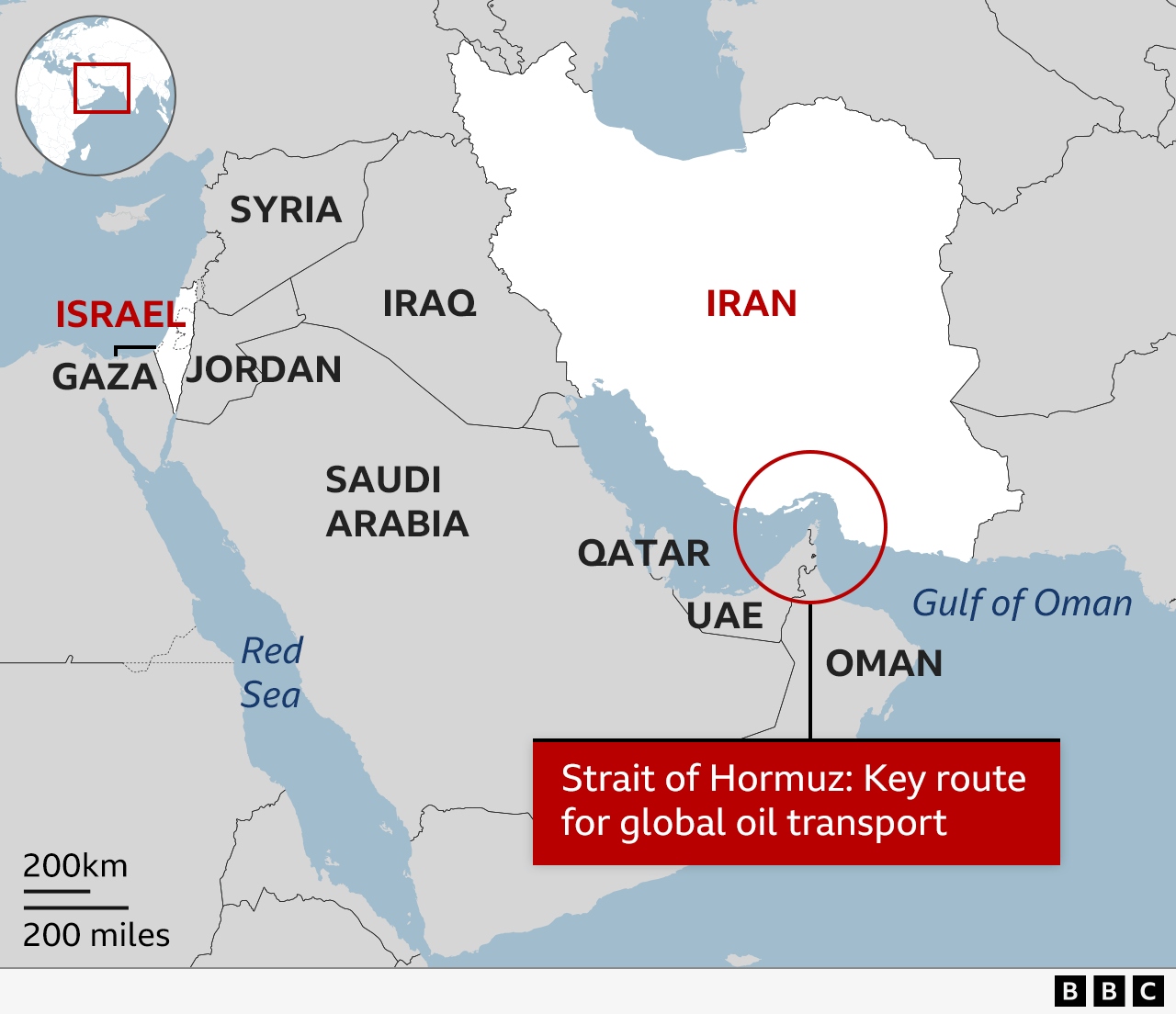
The proposal for a joint mission in the Strait of Hormuz, articulated through the lens of Ukrainian strategic interests, represents more than a localized security initiative. It is a calculated attempt to integrate Black Sea maritime security dilemmas into the broader framework of global energy transit stability. By advocating for international intervention in the Persian Gulf, the Ukrainian leadership seeks to establish a precedent for "multilateral maritime policing" that could, by extension or analogy, apply to the grain corridors of the Bosphorus and the Red Sea. The success of this strategy hinges on three variables: the mechanics of collective security across disparate maritime theaters, the economic cost-benefit analysis for participating nations, and the technological parity of asymmetric naval threats.
The Tri-Theater Security Correlation
The Strait of Hormuz handles approximately 20-30% of the world’s total consumption of petroleum liquids and nearly 20% of global liquefied natural gas (LNG). When Ukrainian strategic communication targets this specific chokepoint, it operates on the principle of geopolitical linkage. The objective is to demonstrate that the erosion of international law in one maritime domain—specifically the Black Sea—accelerates the degradation of security norms in others.
This linkage functions through a three-pillar mechanism:
- Normalization of Interdiction: If state or non-state actors successfully block or tax commercial shipping in the Black Sea without a unified kinetic response, it provides a blueprint for similar actions in the Persian Gulf.
- Resource Dilution: A mission in Hormuz forces a re-allocation of Western naval assets, potentially thinning the presence of Aegis-equipped destroyers and littoral combat ships available for European or Indo-Pacific contingencies.
- Diplomatic Reciprocity: Ukraine's call for a mission is an offer of political alignment. By supporting the security of oil-producing monarchies and Western energy consumers, Kyiv positions itself as a stakeholder in global stability rather than just a recipient of regional aid.
The Cost Function of Maritime Policing
Proposing a mission is a low-cost diplomatic maneuver; executing one involves a complex cost function that most observers fail to quantify. A mission in the Strait of Hormuz requires a sustained presence that can be broken down into specific operational expenditures.
Kinetic Readiness vs. Defensive Posture
The primary cost driver is the shift from "monitoring" to "active escort." In an escort scenario, the naval force assumes the risk profile of the commercial vessel. This necessitates:
- Ammunition Expenditure Ratios: The cost of an SM-2 or SM-6 interceptor ($2 million to $5 million) versus the cost of a one-way attack drone ($20,000 to $50,000). This fiscal asymmetry creates a structural deficit for the policing force.
- Maintenance Cycles: High-salinity, high-heat environments like the Persian Gulf accelerate hardware degradation, reducing the mean time between failures (MTBF) for radar arrays and propulsion systems.
- Opportunity Cost of Deployment: Every carrier strike group stationed near the UAE or Oman is one less unit available for the "Integrated Deterrence" strategy in the South China Sea.
Asymmetric Naval Power and the Technology Gap
The call for a joint mission must address the reality that traditional naval dominance no longer guarantees the safety of commercial hulls. The proliferation of Anti-Ship Cruise Missiles (ASCMs) and Uncrewed Surface Vessels (USVs) has flattened the hierarchy of maritime power.
Ukrainian forces have pioneered the use of low-cost USVs in the Black Sea to neutralize larger surface combatants. Ironically, the very tactics Ukraine uses to secure its coastline are the same tactics a mission in Hormuz would be designed to defeat. A joint mission would need to deploy a "Multi-Layered Defense Architecture" consisting of:
- Electronic Warfare (EW) Bubbles: To disrupt the GPS and data-link signals of incoming loitering munitions.
- Directed Energy Weapons (DEW): The only long-term solution to the cost-per-intercept problem. Laser systems, while currently limited by atmospheric conditions (humidity and dust in the Gulf), represent the only path to a sustainable defensive posture.
- Distributed Sensor Networks: Moving away from a single "high-value" radar platform toward a mesh of expendable sensors that can detect low-profile threats in a crowded littoral environment.
The Strategic Bottleneck of International Law
A mission in the Strait of Hormuz faces a different legal reality than operations in international waters. Large portions of the Strait fall within the territorial waters of Iran and Oman. Under the 1982 United Nations Convention on the Law of the Sea (UNCLOS), ships enjoy the right of "transit passage," but the deployment of a permanent "policing mission" within these waters without the consent of the coastal states is a legal quagmire.
This creates a bottleneck for the Ukrainian proposal. To be legitimate, the mission must either be UN-sanctioned (which is impossible given the current veto structures of the Security Council) or operate under a "Coalition of the Willing" framework that risks being labeled as an escalatory provocation. Kyiv’s strategy relies on the hope that the global economic pain of energy spikes will eventually outweigh the legal and diplomatic risks of a non-sanctioned mission.
Economic Interdependency and the Grain-Energy Swap
The underlying logic of Zelenskiy’s call is the "Unified Chokepoint Theory." If the world’s major economies—specifically those in the Global South that rely on both Ukrainian grain and Gulf oil—can be convinced that their food and energy security are two sides of the same coin, a new coalition emerges.
This coalition would not be based on democratic values or territorial integrity, but on transactional stability. For countries like Egypt, Indonesia, or India, the protection of the Hormuz mission is a prerequisite for their own domestic stability. By championing this, Ukraine attempts to pivot its narrative from a regional conflict to a global service provider of "security advocacy."
Operational Limitations and Tactical Risks
The primary risk of a joint mission in Hormuz is the "Cluttered Environment Problem." Unlike the open ocean, the Strait is one of the world's busiest shipping lanes. Discriminating between a legitimate fishing dhow, a commercial tanker, and a hostile fast-attack craft requires high-fidelity intelligence and rapid decision-making cycles.
- Detection Latency: In the narrowest parts of the Strait (about 21 miles wide), the reaction time for a missile launch from a coastal battery is measured in seconds.
- Rules of Engagement (ROE): A joint mission involving multiple nations (e.g., UK, France, Ukraine, Gulf states) would suffer from fragmented ROEs. If a French vessel is attacked, does a nearby Ukrainian or British asset have the legal authority and political backing to return fire? This lack of unity is exactly what asymmetric actors exploit.
Strategic Forecast: The Shift to Escort Logistics
The realization of a Hormuz mission will likely not take the form of a grand international armada. Instead, the strategic trend points toward a fragmented, modular approach. We should expect the emergence of "Private-Public Security Corridors" where commercial shipping companies hire specialized security firms that operate in tandem with national navies.
Ukraine’s involvement, while perhaps not kinetic in the Gulf, will focus on the export of asymmetric expertise. Kyiv has more recent, high-intensity experience in defending against and utilizing sea drones than any other nation. Their contribution to a Hormuz mission is not found in hull count, but in the data-driven optimization of littoral defense.
The final strategic move for stakeholders is to stop viewing these maritime theaters as isolated incidents. The security of the Bosphorus, the Red Sea, and the Strait of Hormuz are now a single, interconnected logistics problem. Future naval doctrine will shift from "Sea Control" (occupying a space) to "Functional Denial" (making it too expensive for an adversary to interfere). The mission in Hormuz, if it manifests, will be the first test case for this new era of distributed, high-attrition maritime policing. Governments must prioritize the deployment of autonomous counter-drone swarms and integrated EW suites over the commissioning of traditional, vulnerable surface vessels to maintain the flow of global commerce.