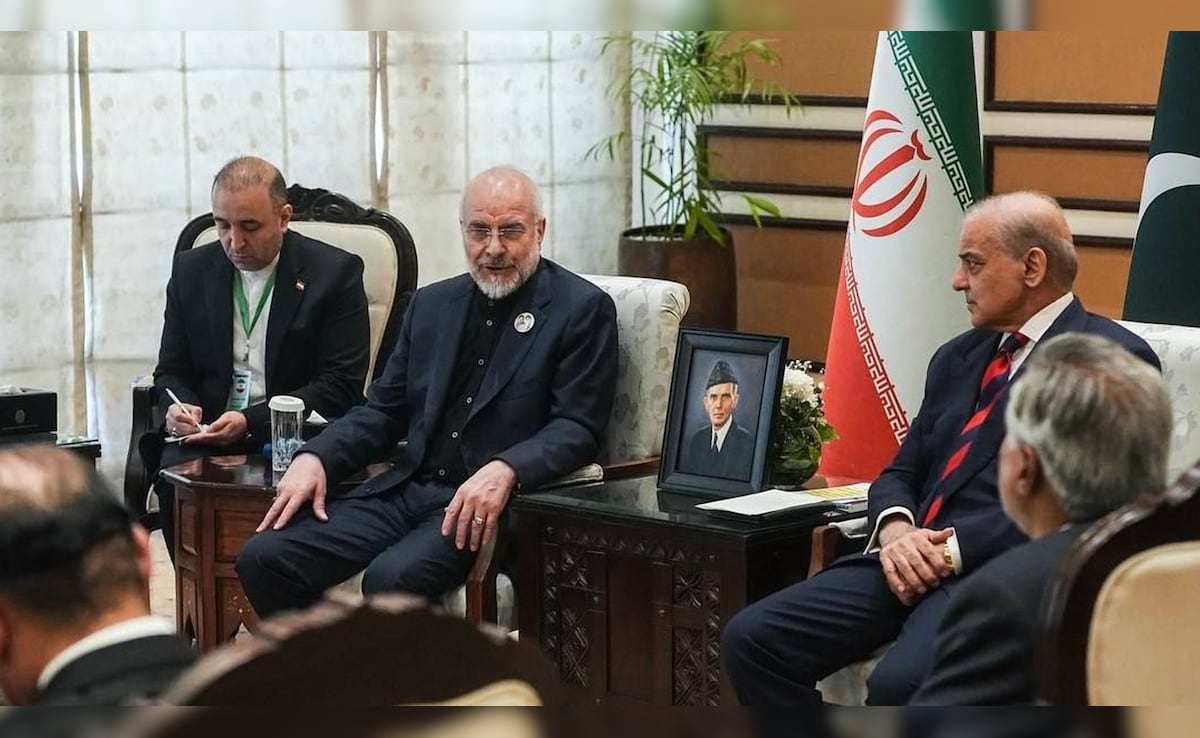
The strategic value of Pakistan’s engagement with Iran is not contingent upon the success of Western-led diplomatic resets; it is a realized gain rooted in a permanent shift toward regional multi-alignment. While conventional analysis views the Pakistan-Iran relationship through the lens of a potential U.S.-Iran nuclear breakthrough, this perspective overlooks a fundamental structural reality. Islamabad has successfully decoupled its bilateral security and energy interests from the volatility of the Joint Comprehensive Plan of Action (JCPOA) framework. This decoupling represents a "prize" already secured: the institutionalization of a "Middle Power Buffer" that allows Pakistan to navigate the competing pressures of Riyadh, Tehran, and Washington without total alignment with any single pole.
The Tri-Border Security Architecture
The primary dividend of current Pakistan-Iran relations is the formalization of a border management mechanism that mitigates the risk of a two-front insurgency. For decades, the Sistan-Baluchestan region served as a friction point, where non-state actors exploited the lack of bilateral coordination. The transition from mutual suspicion to a structured security protocols creates a localized stability that functions independently of global sanctions regimes.
The mechanics of this "security prize" operate through three distinct channels:
- Intelligence Synchronization: By establishing "border markets" and joint monitoring centers, both nations have increased the cost of operation for separatist groups. This is a functional necessity for Pakistan as it attempts to secure the western flank of the China-Pakistan Economic Corridor (CPEC).
- Strategic Neutrality: Pakistan’s refusal to join sectarian-aligned military blocs provides a guarantee to Tehran that Pakistani soil will not be used as a staging ground for external interventions. In exchange, Pakistan gains a degree of Iranian cooperation in monitoring border incursions that previously threatened the stability of Balochistan.
- Kinetic De-escalation: The January 2024 missile exchanges served as a stress test for this architecture. The rapid restoration of diplomatic ties and the subsequent high-level state visits demonstrated that both capitals prioritize the "status quo of stability" over ideological or proxy-driven escalation.
The Energy Imperative and the Sanctions Buffer
The Pakistan-Iran gas pipeline—long dismissed as a "ghost project" due to U.S. pressure—now serves a more sophisticated purpose as a tool of diplomatic leverage rather than just a literal energy conduit. Islamabad’s recent moves to begin construction on its side of the border represent a calculated risk-reward calibration.
The economic logic is driven by a domestic energy deficit that threatens industrial output and social stability. Pakistan faces an annual gas shortfall that oscillates between $1.5$ and $2.5$ billion cubic feet per day (bcfd). The IP pipeline offers a theoretical solution, but the real "prize" is the legal and political flexibility gained by demonstrating an intent to proceed.
Islamabad utilizes the threat of Iranian legal arbitration—potentially involving penalties up to $18$ billion—as a justification to Washington for seeking sanctions waivers. This creates a circular logic where Pakistan can point to its contractual obligations to Tehran to extract concessions from the West, while simultaneously pointing to Western sanctions to manage Iranian expectations regarding delivery timelines. This is not a failure of policy; it is the optimization of a constrained environment.
The Regional Connectivity Matrix
Pakistan’s strategic shift involves integrating Iran into a broader Eurasian connectivity logic that bypasses traditional maritime dependencies. The prize here is the diversification of transit routes. If the U.S.-Iran talks remain collapsed, Iran remains isolated from Western capital but becomes more deeply embedded in the "Belt and Road" and "International North-South Transport Corridor" (INSTC) ecosystems.
By strengthening ties now, Pakistan ensures its position as the maritime outlet for this landlocked or sanctioned interior. The competition between the ports of Gwadar and Chabahar is increasingly viewed by planners in Islamabad and Tehran as complementary rather than zero-sum. The objective is to create a "Twin Port" system that captures the flow of goods from Central Asia.
The structural benefits of this alignment include:
- Reduced Dependency on the Malacca Dilemma: Providing a terrestrial alternative for energy and goods flow that is immune to naval blockades.
- Market Expansion: Access to an Iranian consumer market of $88$ million people, which remains underserved due to Western withdrawal.
- Transit Rents: Positioning Pakistan as the primary gateway for Iranian goods heading toward Western China.
The Saudi-Iran Rapprochement as a Force Multiplier
The Beijing-brokered normalization between Saudi Arabia and Iran significantly lowered the "cost of entry" for Pakistan’s engagement with Tehran. Previously, every overture to Iran carried the risk of alienating the Gulf monarchies—Pakistan’s primary source of remittances and central bank deposits.
The current environment allows Pakistan to pursue a "Balanced Pivot." Since Riyadh is now engaged in its own de-escalation with Tehran, Islamabad’s bilateral cooperation with Iran no longer triggers the same level of suspicion in the Gulf. This removes the sectarian veto that has historically paralyzed Pakistani foreign policy in the Middle East. The prize is the restoration of Pakistan’s role as a regional mediator and a neutral bridge, a position that carries immense diplomatic capital in the OIC (Organization of Islamic Cooperation).
Constraints and Systemic Risks
This strategy is not without significant friction points. The primary limitation is the "Sanctions Trap." While Pakistan has secured the political prize of engagement, the economic prize remains largely hindered by the global financial architecture.
- Banking Paralysis: Without a functional payment mechanism that avoids the SWIFT system or U.S. dollar clearing, large-scale trade remains relegated to barter or informal "hundi" systems. This limits the scale of economic integration to the micro-level (border markets) rather than the macro-level (national infrastructure).
- The Washington Variable: A collapse in U.S.-Iran talks often leads to "secondary sanctions" or increased scrutiny from the Financial Action Task Force (FATF). Pakistan must constantly calibrate its engagement to stay just below the threshold that would trigger a return to the FATF "Grey List," which would devastate its fragile economy.
- The Afghan Factor: Both Pakistan and Iran share a deep concern regarding the stability of the Taliban-led administration in Kabul. However, their interests diverge on the management of specific ethnic proxies within Afghanistan. If the Afghan security situation deteriorates further, the "prize" of bilateral cooperation could be overshadowed by a renewed competition for influence in the Hindu Kush.
The Strategic Playbook
Pakistan’s current trajectory suggests a permanent transition toward "Strategic Autonomy" in the neighborhood. The endgame is not a choice between the U.S. and Iran, but the creation of a regional environment where Pakistan’s survival is not dependent on the whims of a single superpower.
To maximize this "already won" prize, Islamabad is moving toward a policy of functional incrementalism. This involves:
- Non-Dollar Trade Settlement: Finalizing the mechanisms for local currency trade or a "Clearing House" system to facilitate energy imports.
- Border Formalization: Completing the fencing and digital monitoring of the $900$-kilometer border to transition from a "security frontier" to an "economic corridor."
- Multilateral Integration: Utilizing its membership in the Shanghai Cooperation Organization (SCO) to wrap bilateral Pakistan-Iran projects in the protective layer of regional consensus.
The collapse of U.S.-Iran talks may actually accelerate this trend. In a world of "Maximum Pressure," Iran is forced to offer more favorable terms to its immediate neighbors to maintain its own economic lifelines. Pakistan, by maintaining an open door, positioned itself to be the primary beneficiary of Tehran's "Look East" policy. The prize was never the gas; it was the leverage.
Islamabad must now pivot from diplomatic posturing to the hard engineering of trade routes. The priority must be the completion of the initial $80$-kilometer stretch of the pipeline on the Pakistani side. This move satisfies the legal "force majeure" requirements to avoid Iranian penalties while simultaneously creating a physical reality that the next U.S. administration will have to negotiate around, rather than simply forbid. The window for this arbitrage is narrow, but the structural foundations are already in place.