Betrayal.
It is a word that hangs heavy in the air of Washington, clinging to the limestone columns of the Supreme Court and drifting down Pennsylvania Avenue toward the White House. When a president selects a nominee for the highest court in the land, the process looks, on the surface, like a rigorous academic vetting. Resumes are scrutinized. Past opinions are dissected. Interviews are conducted behind closed doors, filled with careful, measured exchanges about originalism, textualism, and the proper role of the judiciary.
Yet beneath the veneer of constitutional philosophy lies a very human expectation. Loyalty. Not necessarily a spoken pact—such explicit bargains are taboo in the upper echelons of American jurisprudence—but an unspoken assumption of alignment. You put someone in a black robe for life, and you expect them to see the world, at least broadly, the way you do.
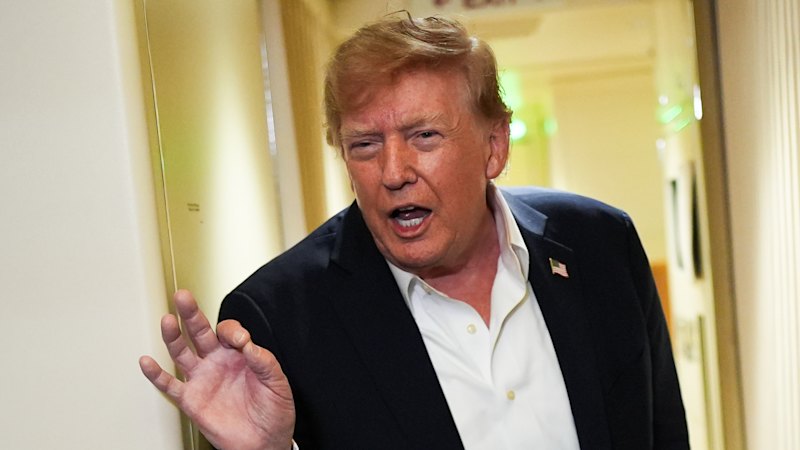
So when Donald Trump looked at the Supreme Court following an election ruling that did not go his way and declared that the justices were "not the people I interviewed," he was giving voice to one of the oldest, sharpest frustrations in American political history. According to public statements from Trump and contemporaneous reporting on his reactions to the Court's election-related decisions, the former president expressed deep dissatisfaction with the appointees he had placed on the bench—Neil Gorsuch, Brett Kavanaugh, and Amy Coney Barrett—suggesting that the individuals sitting in those leather chairs bore little resemblance to the candidates he had vetted in the Oval Office.
To understand why that moment resonates far beyond a single news cycle, you have to step away from the cable news chyrons and look at what actually happens when an appointment is made, and what happens the moment the Senate confirms it.
The Illusion of the Interview Room
Consider a hypothetical scenario that plays out, in various forms, every few years in the West Wing.
Picture a quiet room with heavy drapes. Across a polished table sits a federal appellate judge, dressed impeccably, speaking with calm precision about judicial restraint and the dangers of legislating from the bench. Across from the judge sits a president—ambitious, transactional, acutely aware of the political capital required to push a nomination through a divided Senate.
The president hears the words restraint and originalism and translates them through the prism of immediate political battles. If a judge believes in strict adherence to the rules, surely that judge will strike down what the president views as overreach by political opponents. If a judge respects tradition, surely that judge will protect the institutional structures the president favors.
The judge, meanwhile, is speaking a different dialect entirely. In the legal profession, adherence to process often means refusing to intervene even when the political stakes are sky-high. It means deferring to state legislatures, respecting procedural hurdles like standing, and declining to overturn certified results without overwhelming, indisputable statutory grounds.
Two people sit in the same room, use the exact same vocabulary, and walk away with completely different understandings of what was just agreed upon.
I have spent years watching political operatives and legal scholars talk past each other in precisely this way. To a political strategist, a court ruling is a scoreboard; you either win the point or you lose it. To a jurist steeped in federal procedure, a ruling is often an exercise in restraint—a refusal to even step onto the field if the rules of jurisdiction say the game belongs elsewhere. When those two worlds collide in the aftermath of a high-stakes election dispute, the resulting shock is genuine. The politician feels misled. The judge feels they are doing the exact job they promised to do.
The Architecture of Insulation
Why does this divide happen so reliably? The answer lies in the deliberate, almost stubborn design of Article III of the United States Constitution.
The Framers understood human nature intimately. They knew that if a judge's livelihood, salary, or continued employment depended on pleasing the executive who appointed them, the law would quickly become an extension of the president's will. So they built a wall around the judiciary. Life tenure. Protection against salary reduction. An impeachment threshold so high that no justice has ever been removed from the Supreme Court in over two centuries.
The moment the oath is administered, the umbilical cord is severed.
For a president accustomed to the private sector—or even the rough-and-tumble of executive branch politics, where cabinet secretaries serve at the pleasure of the president and can be fired with a single phone call—this sudden disappearance of leverage is jarring. In business, if you hire an executive and they make a decision that hurts your enterprise, you replace them. In the White House, if you appoint a justice and they rule against your interests, you can only watch from afar.
Legal historians often point out that this phenomenon is practically a rite of passage for American presidents. Dwight D. Eisenhower famously regretted appointing Chief Justice Earl Warren and Justice William Brennan after their rulings reshaped American civil rights and criminal procedure, reportedly calling the appointments his biggest mistakes. Richard Nixon watched in fury as the justices he appointed—including Chief Justice Warren Burger—unanimously ordered him to turn over the Watergate tapes, sealing the end of his presidency. George H.W. Bush appointed David Souter expecting a reliable conservative, only to watch Souter become a cornerstone of the Court's liberal wing.
In each instance, the pattern is identical. The president looks at the person on the bench and sees a stranger.
The Invisible Stakes of Election Litigation
When the dispute involves an election, the emotional temperature rises exponentially. Unlike a tax code interpretation or an administrative agency dispute, election rulings touch the raw nerve of democratic legitimacy.
To the millions of voters who cast their ballots believing the system is either under threat or functioning properly, a Supreme Court order is not an abstract legal treatise. It is a verdict on their voice. When Trump criticized the Court over its handling of election-related challenges, his words tapped into a deep reservoir of frustration among supporters who believed that a conservative-majority bench—shaped largely by his own appointments—would step in to scrutinize voting procedures and alter outcomes.
Yet from the perspective of the justices, stepping into the breach of a disputed election carries its own existential peril.
Think about what happens inside the Court's private conference room when an emergency election docket arrives. There are no cameras, no clerks, no law professors whispering advice. Just nine individuals acutely aware that their only real currency is public trust. The Supreme Court has no army to enforce its decrees and no treasury to fund its operations. Its authority rests entirely on the willingness of the public and the other branches of government to accept its rulings as legitimate, even when they sting.
For justices who spent their careers warning against "judicial activism"—the idea that unelected judges should not override the decisions of state officials and voters—intervening aggressively in an election without clear constitutional warrant would violate the very creed that got them nominated in the first place.
To the outside observer, declining to take a case or dismissing a challenge on procedural grounds looks like cowardice or disloyalty. Inside the marble walls, it is viewed as fidelity to the rule of law.
The Myth of the Predictable Jurist
Perhaps the most enduring myth in modern politics is that a judge's future rulings can be reliably predicted through a series of interviews and background checks.
Presidents and senators pour immense energy into trying to eliminate uncertainty. They read every law review article a candidate ever wrote. They examine every dissent from a circuit court panel. They ask pointed hypothetical questions designed to smoke out hidden sympathies.
And still, the human element refuses to be engineered away.
People change when they assume ultimate responsibility. Sitting on a federal appeals court, where your decisions can always be reviewed and reversed by a higher authority, is fundamentally different from sitting on the Supreme Court, where your word is final. The weight of history presses down differently. You begin to think not about the news cycle of Tuesday afternoon, but about how your name will read in a constitutional law textbook fifty years from now.
More importantly, the questions that reach the Supreme Court are rarely the easy ones discussed in confirmation prep. Easy cases are settled in the lower courts. By the time a dispute reaches the nine justices, both sides usually have plausible legal arguments, competing precedents, and profound consequences attached to the outcome. In those gray zones, a justice's temperament, caution, and institutional instincts matter far more than any political allegiance.
When Trump remarked that the justices were not the people he interviewed, he was inadvertently highlighting a fundamental truth about the American system: the interview is a snapshot of a person before they hold power, not a guarantee of who they will become once the gavel is in their hand.
The Tension That Keeps the System Breathing
It is tempting to view public clashes between a president and the Supreme Court as a sign of institutional breakdown. The language is harsh. The accusations of betrayal and failure sting. Trust in institutions, already fragile, takes another hit whenever the legitimacy of the Court is questioned from a national podium.
Yet if you step back and look at the broader sweep of American history, this friction is not a malfunction. It is the exact friction the system was built to generate.
A judiciary that always pleases the president who appointed it is not an independent judiciary; it is a rubber stamp. And a president who never feels frustrated by the courts is likely operating in a system where checks and balances have quietly eroded. The anger, the public rebukes, the sense of personal letdown—these are the visible sparks thrown off when two separate branches of government collide as they were designed to do.
Still, recognizing the constitutional logic does little to soften the human reality. For the leader who expended immense political capital to reshape the bench, watching that bench refuse to deliver in a moment of existential political crisis feels like a profound personal wound. For the voters who rallied behind the promise of judicial appointments as a shield for their values, the Court's restraint can feel like abandonment.
And for the justices themselves, the silence they must maintain while being publicly criticized by the very person who elevated them requires a stoicism few in public life ever have to practice. They cannot call a press conference to explain their reasoning. They cannot trade barbs on a campaign stage. They speak only through opinions written in dense legal prose, hoping that history will read them more generously than the morning headlines.
The black robe changes the person who wears it, just as the Oval Office changes the person who occupies it. Between those two rooms stretches a narrow strip of Washington pavement—and a chasm of competing duties that no interview, however thorough, will ever fully bridge.