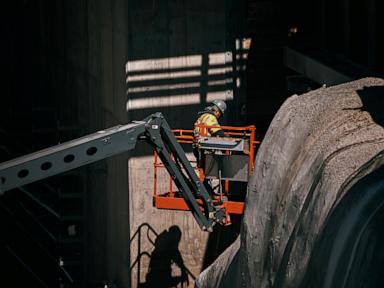
New York City's economy lives and dies by a pair of leaky, crumbling tubes. These tunnels, sitting deep under the Hudson River, are well over a century old. If they fail, the entire Northeast Corridor—a region responsible for 20% of the US GDP—effectively grinds to a halt. It’s not a "what if" scenario. It’s a "when." That’s why the Gateway Tunnel project isn't just another construction job. It is a desperate, massive, and long-overdue race against time that finally saw a massive breakthrough this year with the start of heavy tunneling operations.
The reality is simple. Every single day, about 200,000 commuters rely on the existing North River Tunnels. These were built by the Pennsylvania Railroad and opened in 1910. They weren't designed for modern loads, and they certainly weren't designed to be submerged in corrosive saltwater for a decade following Superstorm Sandy. We are currently betting the American economy on infrastructure built while William Howard Taft was in the White House.
The Massive Machines About to Change the East Coast
The star of this show is the Tunnel Boring Machine, or TBM. Calling it a "drill" doesn't do it justice. These are mobile, underground factories. We’re talking about machines that stretch for hundreds of feet and weigh thousands of tons. They don't just chew through the earth. They simultaneously install the concrete segments that form the tunnel walls.
Construction crews are preparing to launch these giants from the New Jersey side. They’ll grind through the varying geology of the Hudson River waterfront—shifting from hard rock to the notorious "Hudson River silt." It’s messy. It’s expensive. And it’s the only way to save the rail link. The project involves building two new tubes. Once those are finished, the old 1910 tunnels can finally be taken offline for a total overhaul.
Fixing the 12-Billion-Dollar Mistake of Delay
We could have had these tunnels years ago. In 2010, the Access to the Region's Core (ARC) project was already underway. New Jersey’s then-governor canceled it, citing cost concerns. That decision didn't save money. It just made the eventual fix twice as expensive and three times as urgent.
Today, the Gateway Development Commission (GDC) is managing a budget of roughly $16 billion for the tunnel portion alone. The federal government is picking up the vast majority of that tab, which is a rare win for regional infrastructure. Most people don't realize how precarious the current situation is. If one of the existing tubes has an "unplanned outage"—engineering speak for a collapse or major leak—Amtrak and NJ Transit capacity drops by 75%. Not 50%. You can't just run all the trains through one pipe. The scheduling logic breaks. The region breaks.
Engineering Challenges You Won't See from the Surface
Building under the Hudson is a nightmare. I’ve looked at the geological surveys, and they're a mess. On the Manhattan side, you have hard schist. Under the river, you have soft, muck-like silt. The TBMs have to be specifically calibrated to handle both. If you use a hard-rock cutter head on soft silt, you can't maintain pressure. If you use a soft-soil machine on rock, you break the teeth in minutes.
The engineers are using a method called "slurry shield" tunneling. Basically, they pump a pressurized fluid (usually bentonite clay) to the front of the machine. This keeps the tunnel face from collapsing inward while the machine works. It’s a delicate balance of physics and brute force.
Why Saltwater is the Real Enemy
When Superstorm Sandy flooded the tunnels in 2012, it didn't just stop the trains for a few days. It left behind chlorides. These salts are currently eating the concrete and the steel reinforcements from the inside out. You can’t just "wash" it off. The damage is deep. Maintenance crews spend every weekend doing "patch and pray" work, but the tunnels are basically on life support. The new Gateway tubes will be built with modern waterproofing and drainage systems that the 1910 engineers couldn't have imagined.
The Economic Ripple Effect
Think about your morning coffee. Or the package that arrived at your door today. Much of the labor force that keeps Manhattan running lives in New Jersey or further south. If the rail link fails, those people can't get to work. The bridges and existing car tunnels are already at 100% capacity. You can't just "put everyone on a bus."
The Northeast Corridor supports $50 billion in economic activity every single day. A total tunnel failure would cost the US economy an estimated $16 billion over four years in lost productivity and increased congestion. Gateway isn't a New York project. It’s a national security project.
What Happens Over the Next 24 Months
The TBMs are being assembled. The staging areas in North Bergen and the West Side of Manhattan are buzzing. You’re going to see massive amounts of soil being moved out by barge to keep trucks off the local streets.
The timeline is aggressive but necessary. We are looking at several years of boring before the first tracks are even laid. But the "burrowing" phase is the point of no return. Once those machines start spinning, the project is officially a reality.
If you live in the tri-state area, keep an eye on the work at the Hudson Yards casing. That’s where the tunnels will eventually plug into Penn Station. It’s a tight fit. They have to thread the needle between existing subway lines, building foundations, and the massive weight of the city above.
Check the Gateway Development Commission’s monthly reports if you want the raw data on boring progress. They’re surprisingly transparent because they know the public is watching. If you’re a commuter, stay vocal. The funding is secured for now, but infrastructure of this scale always faces political headwinds. The best thing you can do is understand the sheer scale of the engineering happening beneath your feet. We are finally building the 21st-century link this region needs to survive. Don't let the "construction fatigue" distract you from how vital this actually is.