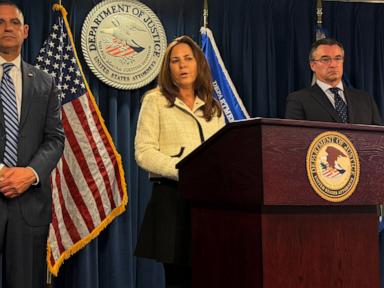
How does the person running a gambling helpline end up in prison for stealing nearly $1.5 million to feed a betting habit?
That irony is why the case of Philip Lee Sullivan caught fire the moment court details hit the news. Sullivan, who once led Florida's 888-ADMIT-IT problem gambling helpline, was sentenced in October 2026 to 118.5 months in state prison—nearly 10 years—and ordered to pay almost $1.5 million in restitution after pleading no contest to six felony charges, including grand theft. Headlines love a neat villain, and honestly, the surface story writes itself.
Look closer, though, and the story isn't a cartoon about a hypocrite robbing a charity. The theft happened before Sullivan joined the helpline, while he was serving as chief financial officer at Panama City real estate company Royal American. Over 11 months, prosecutors said he racked up unauthorized company card charges, bought gift cards and cash cards online, and bypassed accounting safeguards as his betting escalated from $25 sports wagers to $50,000 bets with losses topping $2 million.
If you're searching for what happened, you probably want two things straight: the actual facts of the case without sensationalized distortion, and what this messy collision of addiction, executive access, and stimulant medication says about modern gambling harm.
Why the Gambling Hotline Theft Story Misleads People
A catchy headline compresses a complicated timeline into a punchy one-liner. Readers naturally picture a helpline boss dipping into crisis funds to cover a losing parlay. That's not what the court record shows.
Sullivan's grand theft conviction stems from his earlier role as CFO at Royal American, where an internal audit uncovered unauthorized transactions on a company-issued credit card and led to his March 2024 arrest. According to testimony from Royal American controller Shannon Scribner, Sullivan didn't just stumble into temptation; he used company cards to buy gift cards and cash cards online and manipulated financial controls to cover his tracks. Later, after entering recovery and facing pending legal trouble, he worked with the Florida Council on Compulsive Gambling's helpline, sharing his personal struggles while helping hundreds of callers.
That distinction matters for trust. When people hear that a helpline director stole money, their first instinct is to doubt the helpline itself. Separating the theft at his prior corporate employer from his helpline role doesn't excuse his crimes—he received nearly a decade behind bars and a massive restitution order—but it keeps the blame where the evidence actually placed it.
I've watched plenty of workplace fraud cases unfold over the years, and the pattern repeats with eerie regularity. Executives with broad signing authority or credit card oversight rarely start out planning a massive heist. They start chasing a loss. Once a bettor is down tens or hundreds of thousands of dollars, normal income feels like a joke, and "just winning it back" becomes the only math that makes sense in their head.
How Chasing Losses Turns into Executive Fraud
Gambling disorder doesn't stay neatly inside a casino or a sportsbook app. When stakes climb into five figures, household savings disappear fast, credit lines max out, and secrecy becomes a full-time job.
In white-collar cases tied to gambling, access is the accelerant. A CFO or controller doesn't need to pick a lock—they already know where the approval bottlenecks are, how reconciliations get reviewed, and which transactions look routine enough to pass a quick glance. Buying gift cards and cash cards is a classic workaround because it converts corporate credit or funds into liquid value that's harder to trace at a glance than a direct transfer.
Prosecutors emphasized deliberate concealment and bypassed safeguards, while Sullivan's family and defense pointed to prescription Adderall as a factor worsening his gambling urges.
That clash at sentencing—prosecutors pointing to calculated workarounds versus family and defense lawyers blaming Adderall—gets to a real debate in addiction medicine. Does a stimulant medication cause someone to commit grand theft? No. A court holds a person legally responsible for their actions, and a judge remanded Sullivan straight into state custody after sentencing.
Still, dismissing the medication angle out of hand ignores clinical research. Amphetamines increase dopamine and norepinephrine activity, and laboratory work on stimulant-primed gambling cues—such as research published in Neuropsychopharmacology by Zack and Poulos—has shown that amphetamine can heighten gambling motivation and attention to gambling-related cues in problem gamblers. Survey research indexed via the National Institutes of Health (PMC4916028) has also linked stimulant use with higher rates of gambling problems. Correlation isn't causation, and plenty of people take prescribed ADHD stimulants without ever placing a bet, yet ignoring how neurochemistry, sleep loss, and high-speed betting apps interact leaves clinicians and families flying blind.
What Helpline Data Shows About Modern Betting Harm
Sullivan's case landed in October 2026 against a backdrop of rapidly shifting gambling habits across the United States. You don't have to drive to a resort anymore to lose a month's rent in twenty minutes; the sportsbook sits right inside a pocket.
According to the National Council on Problem Gambling 2025 National Problem Gambling Helpline Report, contacts to the helpline have been trending younger and more diverse, with online and app-based gambling rising sharply as a reported concern (up from 23% to 31% in that annual report, matching traditional electronic gaming at 31%). Across the broader U.S. population, the National Council on Problem Gambling Problem Gambling Fact Sheet estimates that roughly 2.5 million adults meet criteria for severe gambling problems in a given year, another 5 million to 8 million experience mild to moderate issues, and total annual social costs reach about $14 billion.
Those numbers explain why stories like this hit such a nerve. Almost everyone knows someone who treats live betting, player props, or trading-style event contracts like harmless entertainment. Most people can walk away when they're down $50. A smaller group gets pulled into chasing losses until every paycheck—or every accessible account—looks like fuel for the next wager.
One nuance worth keeping in mind: helpline reports and prevalence surveys rely heavily on self-reporting and estimates, and researchers still debate exact national totals as new betting formats spread state by state. What isn't up for debate is the speed of digital wagering. Faster settlement cycles mean a person can lose, deposit, chase, and lose again before a partner or coworker even notices they've stepped away from their desk.
Practical Steps If Gambling or Workplace Controls Are at Risk
Whether you're worried about your own betting habits, watching a loved one spiral, or running finance operations at a mid-sized business, waiting for a crisis to force action is a losing play.
- Put hard friction between impulse and money. If betting is creeping past what you planned to spend, set strict deposit limits on accounts, enroll in state or operator self-exclusion programs, and hand day-to-day bill pay or card oversight to a trusted partner or advisor.
- Tighten financial segregation at work. If you manage company finances, never let a single executive control both credit card/expense approvals and bank/ledger reconciliations—even if they've been loyal for years or claim to be in recovery.
- Talk to a specialist—and flag medications honestly. Reach out to a licensed counselor trained in gambling disorder or call/text 1-800-MY-RESET, and bring a full list of prescriptions (including stimulants) to your doctor if impulse control or late-night betting suddenly ramps up.
Real recovery doesn't come from white-knuckling a secret or pretending a $25 habit can't turn into a $50,000 one. It starts with honesty, boundaries that don't rely on willpower alone, and getting help before the hole gets any deeper.