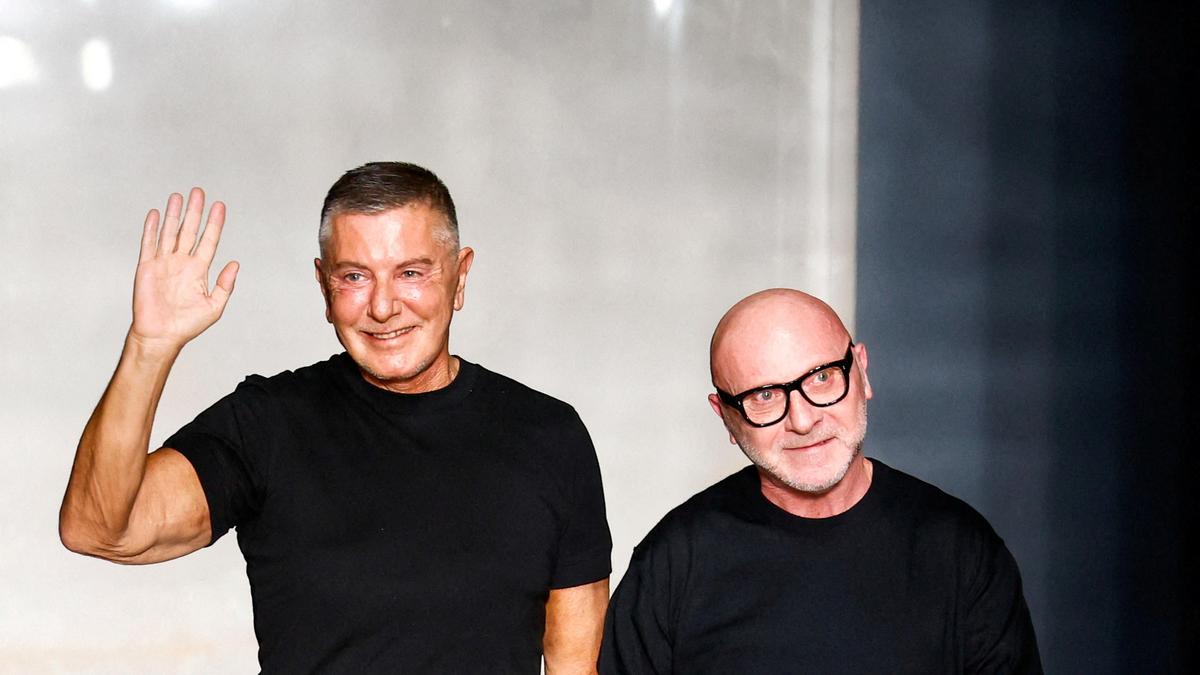
The headlines are bleeding with the word "resignation" as if Stefano Gabbana just walked away from the throne with his tail between his legs. Most financial reporters are treating this like a standard corporate restructuring or a sign of internal collapse. They are wrong. They are looking at the filing and missing the theater.
When a founder of a multi-billion dollar private empire "resigns" from a chair position, the amateur assumes it’s the end of an era. The pro knows it’s a tactical repositioning. Stefano Gabbana isn't leaving Dolce & Gabbana. He is insulating the brand from the messiness of the public markets and the prying eyes of future creditors. This isn't a retreat; it’s a fortification.
The Myth of the Clean Break
The "lazy consensus" suggests that a resignation signals a loss of power. In the luxury world, power doesn't sit in a title on a filing. It sits in the intellectual property and the name on the door. You cannot "fire" the DNA of a brand that relies entirely on the personal aesthetic of its living founders.
I have watched dozens of high-end firms attempt these "orderly transitions." Most fail because they try to replace a visionary with a suit. But Domenico and Stefano have spent thirty years ensuring they are inseparable from the product. By stepping down from the chair, Gabbana removes himself from the fiduciary crosshairs. He shifts from being a target for regulators to being a "creative consultant" with zero accountability but 100% influence.
If you think this move wasn't calculated years ago, you haven't been paying attention to how Italian family dynasties operate. They don't quit. They just go invisible.
Why Investors Get Luxury Founders Wrong
Traditional analysts love to apply standard EBITDA-driven logic to fashion houses. They see a chair resignation and worry about "governance risk." They ask: "Who is the successor?"
That is the wrong question. In luxury, the successor is usually a ghost or a committee designed to mimic the founder until the brand becomes a heritage museum. The real question is: What is this move protecting?
- IPO Readiness: If Dolce & Gabbana is actually serious about a public listing—a rumor that refuses to die—Stefano’s personal history of "unfiltered" commentary becomes a liability for a Board of Directors. Stepping down allows the company to present a "professionalized" face to institutional investors while the creative engine remains untouched in the back room.
- Tax and Estate Insulation: We are seeing a massive shift in how European luxury wealth is structured. Moving out of formal roles is often the first step in a complex handoff to foundations or holding companies that prevent the brand from being sold off piece-meal when the founders eventually depart the mortal coil.
- The "Cancel Culture" Buffer: Let’s be blunt. Stefano Gabbana has a track record of saying exactly what he thinks, consequences be damned. By removing the "Chair" title, the company creates a legal and PR firewall. If he makes a controversial statement tomorrow, the corporate entity can claim he is merely a "former executive" or "creative partner," protecting the share value from the heat of his personal brand.
The Architecture of Creative Control
Imagine a scenario where a captain leaves the bridge of a ship but stays in the engine room with a remote control. That is what is happening here.
In my years advising brands on structural shifts, the most successful "resignations" are those where the founder retains the veto power without the paperwork. The filing is a distraction for the SEC and the tax man. The reality is that nothing moves in that Milan headquarters without Stefano’s nod.
The industry is obsessed with "institutionalization"—the idea that a brand can outlive its creator. But luxury is not a utility. It is a cult of personality. When you remove the personality from the paperwork, you don't weaken the brand; you make the personality an untouchable myth.
The Flaw in the "Succession" Narrative
Everyone wants to know who the next "Stefano" is. There isn't one. The "People Also Ask" sections of the internet are flooded with queries about who will lead the creative direction.
The harsh truth? The era of the singular creative director is dying. It is being replaced by the "Archive Model." Brands now hire stylists to raid the founder’s closets from 1994 and repackage them for Gen Z. Stefano stepping down as Chair is the final step in turning himself into an Archive. He is transitioning from a manager to a Monument.
Trust the Silence Not the Filing
The most dangerous thing an insider can do is take a resignation at face value. Look at the board composition. Look at who holds the voting shares in the parent holding companies. You will find the same names, the same power structures, and the same intent.
If this were a real exit, there would be a sell-off. There would be a talent raid. There would be a shift in the aesthetic direction. Instead, we see a quiet filing during a busy news cycle. That is the hallmark of a strategic pivot, not a surrender.
Stop mourning the end of an era. This is the beginning of the "Shadow Founder" phase, where the real decisions happen in villas, not boardrooms, and the public is left chasing ghosts in the filings.
The paperwork is for the peasants. The power remains exactly where it has always been.