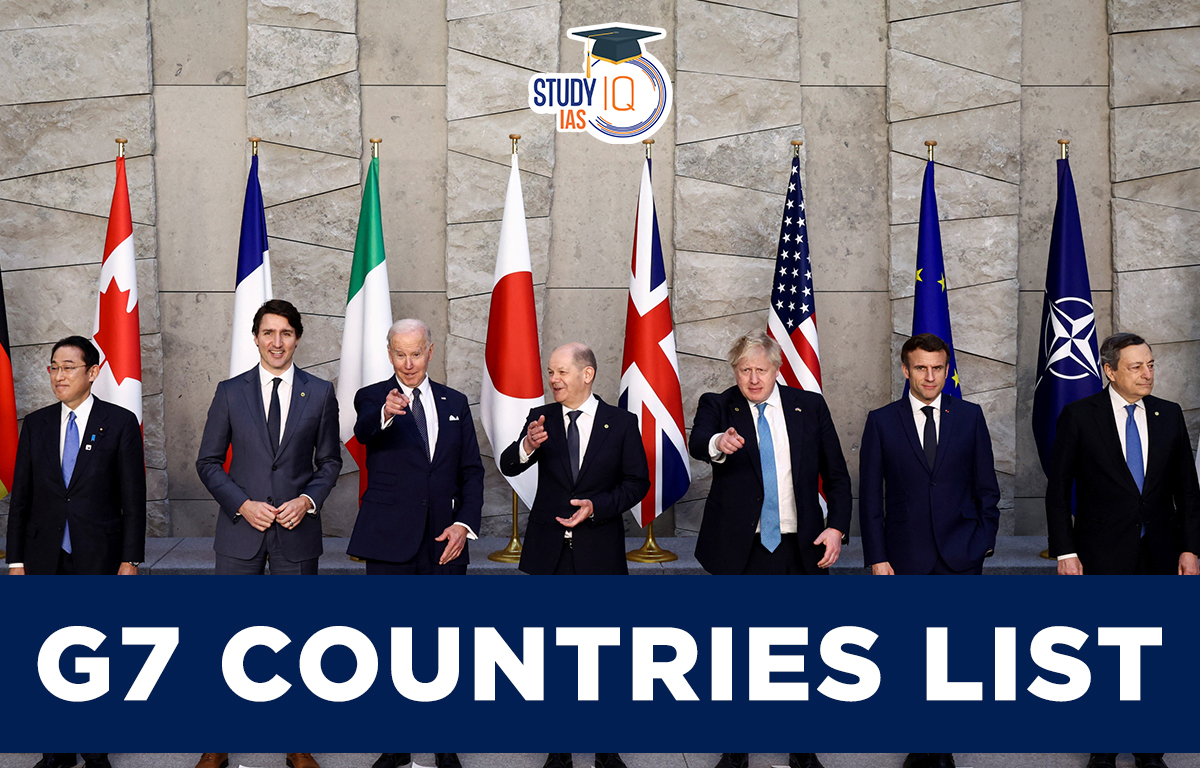
Global leaders just wrapped up their summit in Evian, France. If you read the official communiqués, you would think the wealthiest democracies on Earth just mapped out a harmonious plan for global stability, supply chain security, and green growth.
They did not.
What actually happened in Evian was a group of politically fragile leaders signing off on a series of economic contradictions. The official narrative celebrates "coordinated action." The reality is a desperate attempt to paper over structural cracks with rhetoric.
I have spent two decades analyzing macroeconomic policy and advising capital allocators who have to deploy billions based on these summits. Here is the blunt truth: the consensus coming out of the G7 is a lagging indicator of reality. If you build your corporate strategy or investment thesis around their joint statements, you are positioning yourself to get blindsided.
The Myth of De-Risking Without Inflation
The central pillar of the Evian summit was the collective commitment to "de-risking" global supply chains, particularly away from heavy reliance on Chinese manufacturing. The consensus view is that through smart subsidies, localized manufacturing, and "friend-shoring," Western economies can build resilient supply chains without triggering an economic crisis.
This premise is mathematically flawed.
You cannot duplicate global supply chains that took forty years to optimize for efficiency and expect prices to remain stable. The G7 statements treat supply chain resilience as a free lunch. It is not. It is a massive, structural tax on global consumption.
When a government heavily subsidizes a domestic semiconductor plant or an electric vehicle battery factory, it is not creating organic economic value. It is misallocating capital. The Peterson Institute for International Economics has repeatedly demonstrated that local content requirements and industrial subsidies drive up the baseline cost of goods for consumers.
Let us look at the mechanics:
- Capital Expenditure Surges: Building redundant manufacturing capacity in high-wage, highly regulated jurisdictions requires immense capital.
- Labor Bottlenecks: Moving advanced manufacturing to regions lacking the specialized labor ecosystem results in lower productivity and higher wage pressure.
- Resource Nationalism: As G7 nations attempt to lock down critical minerals, they provoke retaliatory export restrictions from resource-rich nations, driving raw material costs higher.
The hidden cost of "friend-shoring" is chronic, structural inflation. The G7 leaders promise stability, but their policies guarantee that your purchasing power will continue to erode.
The Sovereign Debt Elephant in the Room
Read through the Evian declarations and you will find plenty of commitments to funding global infrastructure, climate transition funds, and regional security initiatives. What you will not find is a single honest sentence about how any of this gets funded.
We are witnessing a collective refusal to acknowledge the sovereign debt crisis staring the West in the face.
The combined debt-to-GDP ratio of the G7 countries now hovers at levels historically reserved for the immediate aftermath of a total global war. The US national debt is compounding at a rate that defies fiscal sanity. France is consistently reprimanded by the European Commission for its budget deficits. Italy's debt burden leaves its economy permanently vulnerable to interest rate shocks.
The consensus view assumes that central banks can indefinitely manage this debt load through financial repression—keeping interest rates lower than they otherwise should be to keep government borrowing costs manageable.
This strategy has a shelf life. When the Bank for International Settlements warns about the long-term risks of fiscal profligacy, it is time to stop listening to politicians who claim they can spend their way to prosperity.
Imagine a scenario where a sudden spike in sovereign bond yields forces a G7 government to spend more on interest payments than on its entire defense budget. That is not a dystopian fiction; it is the current trajectory. The Evian summit completely ignored the fact that the fiscal foundation supporting all their grand promises is built on shifting sand.
The Green Transition Stagnation
The rhetoric surrounding the energy transition at Evian was predictably lofty. The leaders re-committed to aggressive decarbonization targets, framing the transition as a massive engine for job creation and industrial renewal.
This is a profound misunderstanding of how energy systems actually scale.
The green transition, as currently dictated by political mandates rather than technological readiness, is running into the hard wall of physical reality. You cannot legislate an energy transition into existence before the grid infrastructure, storage capacity, and material supply chains exist to support it.
By forcing capital out of traditional hydrocarbon production before viable alternatives can reliably handle base-load power demands, G7 policies are creating structural energy scarcity.
- Grid Collapse: The current regulatory push to electrify everything—from home heating to heavy transport—is outstripping grid capacity.
- The Copper Bottleneck: A truly green grid requires an exponential increase in copper, lithium, and cobalt mining. The current permitting timelines for new mines in G7 nations average over a decade.
- Geopolitical Irony: The push for rapid EV adoption directly subsidizes the very geopolitical rivals the G7 claims it wants to de-risk from, given who controls the processing of these critical materials.
The contrarian approach to energy is not denying climate change; it is acknowledging that the current political timeline is a fantasy that threatens industrial competitiveness.
Dismantling the "People Also Ask" Premises
To truly understand how flawed the consensus is, we have to look at the questions the public is trained to ask, and expose the broken logic underneath them.
How will the G7 Evian agreements stabilize global markets?
They won't. Markets do not react to empty communiqués; they react to capital flows and interest rates. The Evian agreements rely on voluntary compliance and vague frameworks. Historically, these statements act as a lagging indicator. By the time seven different nations agree on a statement, the market has already priced in the reality and moved on. Real market stability comes from fiscal discipline and regulatory predictability—two things the Evian summit completely lacked.
Can friend-shoring protect Western economies from coercion?
Only superficially. The idea that you can isolate your economy within a circle of trusted allies ignores the deeply interconnected nature of tier-two and tier-three suppliers. A factory in Ohio might assemble a component using parts from Germany, but those German parts rely on raw chemical inputs processed in nations outside the G7 orbit. "Friend-shoring" creates a false sense of security while driving up production costs. It swaps a concentrated dependency for a complex, opaque dependency.
The Unconventional Reality
If you want to navigate the post-Evian economic landscape, you have to invert the narrative.
When the G7 claims they are unifying global trade, prepare for increased fragmentation and localized protectionism. When they promise fiscal coordination, prepare for individual nations to break ranks as domestic political pressures mount. When they trumpet a smooth green transition, hedge your portfolio with real assets and traditional energy infrastructure that will be desperately needed to bridge the gap left by political overreach.
The real lesson of the Evian summit is that the world's major democracies are attempting to managed-decline their way through a period of massive structural shift. They are using 20th-century geopolitical tools to solve 21st-century economic realities.
Stop reading the joint statements. Watch the bond markets. Watch the capital expenditure trends of major multinational corporations who are quietly ignoring the political rhetoric and positioning themselves for a much more fragmented, inflationary, and volatile world than the leaders in Evian care to admit.