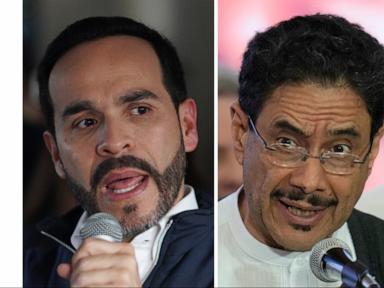
When a democratic head of state faces an internal coup, the immediate commentary defaults to a breathless assessment of factional body counts and immediate polling numbers. This hyper-fixation on short-term political theater obscures the structural damage that high executive turnover inflicts on administrative machinery. The real cost of leadership volatility is not measured in the loss of a prime minister’s job, but in the institutional friction, policy paralysis, and long-term depletion of democratic authority that follow.
Australian Prime Minister Anthony Albanese recently highlighted this dynamic. Commenting on reports that British Prime Minister Keir Starmer faces an internal revolt following local electoral defeats and factional pushback, Albanese observed that "the history of just changing leaders is not a positive one". This warning rests on a calculated operational reality: a rolling executive suite cripples state capacity. Deconstructing this phenomenon requires moving past the political gossip and evaluating the precise structural mechanisms that convert internal party friction into administrative dysfunction.
The Operational Penalty of Executive Instability
To quantify the cost of what Australian politics terms a "leadership spill"—and Westminster systems more broadly recognize as a party-room coup—one must analyze the executive branch through an operational lens. Every transition of a head of government triggers a cascade of systemic interruptions across three distinct vectors.
The Onboarding Deficit
A new prime minister does not simply change the occupant of an office; they reset the strategic trajectory of the entire civil service. The transition from one leader to another, even within the same governing party, demands an intense period of bureaucratic realignment. New policy briefs must be written, cabinet portfolios are reshuffled, and senior advisory roles are systematically purged and refilled.
During this realignment phase, the state apparatus enters a holding pattern. Departments defer high-risk, high-reward regulatory changes or long-term infrastructure allocations because they lack a stable executive mandate. The institutional learning curve for a incoming cabinet routinely swallows the first quarter of their tenure, a period where legislative momentum is completely surrendered.
The Credibility Risk Premium
International diplomacy and global financial markets value policy predictability. When a nation establishes a pattern of rapid executive turnover—the United Kingdom, for instance, faces the prospect of its seventh prime minister in just over a decade—it introduces a political risk premium to its international relations.
Foreign partners hesitate to ink long-term bilateral trade frameworks or defense treaties when the sitting prime minister’s political shelf-life is estimated in months rather than years. Treaties and international accords rely on personal diplomatic capital and institutional trust. If a leader cannot guarantee they will survive the next party-room ballot, their capacity to negotiate complex, multi-year international agreements is fundamentally compromised.
+---------------------------------------------------------+
|                  THE INTERNAL TURNOVER CYCLE             |
+---------------------------------------------------------+
|                                                         |
|   Local Electoral Defeat / Polling Drop                 |
|             │                                           |
|             ▼                                           |
|   Intraparty Factional Mobilization                     |
|             │                                           |
|             ▼                                           |
|   Executive Spill Motion Triggered                      |
|             │                                           |
|             ▼                                           |
|   Policy Paralysis & Bureaucratic Realignment           |
|             │                                           |
|             ▼                                           |
|   Depression of Public Trust & Core Voter Alienation    |
|                                                         |
+---------------------------------------------------------+
The Structural Drivers of Party-Room Coups
The mechanism that triggers a leadership challenge is rarely a sudden, spontaneous event. It is the culmination of structural design flaws inherent in modern parliamentary party governance. Two primary pressures drive this volatility.
The Local-National Disconnect
The contemporary push against Keir Starmer accelerated rapidly after regional byelections and council votes registered sharp anti-incumbent swings. In a parliamentary system, backbench members of parliament (MPs) function as localized risk-minimizers. When national polling dips or regional elections signal that the party brand is toxic, backbenchers do not view the issue through the lens of national policy continuity. They view it through the lens of personal career survival.
This creates a structural bottleneck. If approximately 15% to 25% of a parliamentary caucus concludes that a sitting leader threatens their individual re-election prospects, the threshold for a formal challenge is breached. The internal rules of Westminster parties frequently prioritize these localized anxieties over macro-level governance stability, allowing a vocal minority of the legislature to upend the executive branch.
The Asymmetry of Factional Leverage
Modern political parties are not monolithic entities; they are coalitions of distinct ideological factions. When a prime minister experiences a drop in popular support, the internal bargaining power shifts dramatically toward these factional fringes.
To survive an impending challenge, a sitting leader must often trade away core policy commitments to buy the votes of specific internal voting blocs. This desperate horse-trading creates a highly volatile policy environment. The resulting concessions frequently dilute the government's central platform, alienating the moderate centrist voters who delivered the initial majority, and ultimately accelerating the very decline in popularity the leader sought to arrest.
Structural Constraints and Institutional Antidotes
The tendency toward leadership churn is not an unavoidable law of parliamentary democracy; it is a direct consequence of institutional design. Australia’s recent political history provides an explicit baseline for how structural rule changes can artificially enforce executive stability.
Following a highly volatile decade characterized by rapid changes in leadership between Kevin Rudd, Julia Gillard, Tony Abbott, Malcolm Turnbull, and Peter Dutton's challenge to Turnbull, both major Australian political parties realized that unchecked internal coups were destroying their brand equity. In response, they introduced strict internal voting thresholds.
The Australian Labor Party implemented rules requiring a high supermajority within the parliamentary caucus to unseat an elected leader, alongside a mandatory vote by the broader rank-and-file party membership. This structural change deliberately injected friction into the coup mechanism. By making a spill logistically complex and high-risk, the party insulated its executive from sudden backbench panics.
The absence of similarly rigid institutional circuit breakers within the UK Labour framework means that any prime minister remains highly vulnerable to rapid, short-term shifts in internal party sentiment. Without structural hurdles that require broad, multi-layered consensus to depose a leader, executive stability remains permanently hostage to the next bad polling cycle or localized byelection loss.
The Strategic Projection
The structural reality of Westminster politics dictates that a leader who survives an initial wave of internal dissent by making policy concessions is merely delaying an inevitable correction. When a quarter of a parliamentary party publicly breaks ranks to demand an executive exit, the foundational narrative of competence and unity is broken.
Governments that choose to litigate their internal factional disputes in public view inevitably trigger a self-reinforcing downward spiral in public trust. The immediate strategic reality is clear: a party that prioritizes internal ideological purification or localized backbench self-preservation over structural policy execution will find that voters will enforce their own ultimate spill at the ballot box.