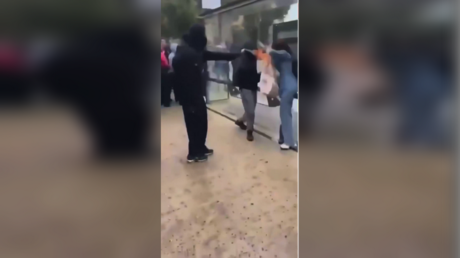
When a teenager in Marseille pulled out a makeshift flamethrower constructed from a standard aerosol can and a lighter, aiming flames directly at a woman's face during student demonstrations, the crisis in France crossed a terrifying line. Footage of the assault spread rapidly across digital platforms, shocking observers and exposing a volatile undercurrent within the country's ongoing school unrest.
What started as localized student complaints regarding overcrowded classrooms, crumbling facilities, and severe teacher shortages quickly morphed into nationwide chaos. But the transition from peaceful walkouts to urban warfare wasn't an accident. It was the result of a compounding system failure where genuine youth frustration collided with opportunistic agitators and heavy-handed crowd control. For another view, consider: this related article.
Beyond the Classroom Frustrations
To understand why thousands of teenagers are clashing with law enforcement, you have to look at the state of public education in France. Students across hundreds of high schools walked out to protest deteriorating conditions. Classrooms are packed, budgets feel squeezed, and staff absences leave entire grade levels hanging.
These grievances are entirely real. Young people feel like the social contract is fraying. They look at inflation, rising living costs, and a lack of economic mobility, and they panic about their future. When peaceful protests failed to yield immediate structural changes, frustration boiled over. Similar coverage regarding this has been provided by Reuters.
Yet, the nature of the protests changed almost overnight.
How Outside Agitators Hijacked the Movement
The French government quickly pointed out that the strikes were heavily infiltrated. Officials argued that radical political factions and organized militant groups capitalized on the teenage demonstrations to create intentional disorder.
When you mix angry, alienated teenagers with professional agitators who specialize in street combat, infrastructure destruction becomes inevitable. Schools were vandalized, fires were lit outside gates, and property damage soared. The 15-year-old arrested for the Marseille flamethrower attack wasn't just skipping fifth-period history. He was operating in an environment where violence had become normalized.
The statistics tell a staggering story of escalation:
- Thousands of individuals have been arrested nationwide since the unrest peaked.
- A significant portion of those detained are minors.
- Hundreds of high schools have faced partial or total closures due to safety concerns and barricades.
The Policing Dilemma
Law enforcement faces an impossible calculation. When teenagers start hurling heavy projectiles, setting fires, and using improvised weapons, police are deployed in heavy riot gear. But aggressive crowd control tactics often backfire, fueling more anger.
Videos circulating online show not only rioters attacking civilians and police, but also instances of officers using excessive force against teenage bystanders. This cycle feeds a dangerous feedback loop. Every harsh police charge and every horrific video of a protester or civilian getting injured hardens the resolve of the youth on the streets.
Politicians are scrambling for answers. Calls for stricter anti-rioting laws and harsher penalties for attacking citizens or public servants are growing louder. Critics argue that cracking down harder on minors won't solve anything if the root causes—starved school budgets and a broken educational pipeline—remain unaddressed.
The unrest in France is a glaring warning sign. When a society fails to listen to the legitimate grievances of its youth, the vacuum is quickly filled by chaos, destruction, and irreversible violence.
Teenagers injured at French protests raise questions over police weapons
This short clip examines how aggressive police tactics and tear gas usage during the French high-school demonstrations escalated injuries among teenage participants, fueling further public outcry.