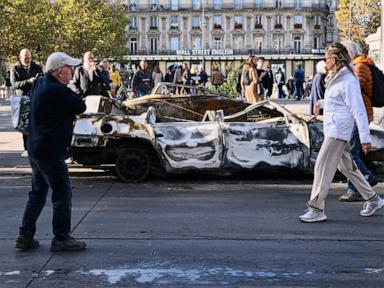
Standard shock-reporting treats large-scale street violence in France as an exogenous eruption of disorder, yet the October 2026 unrest reveals a predictable convergence of fiscal strain, educational bottlenecks, and political polarization. A piece framed simply around national shock mistakes the visible combustion—torched municipal buildings, smashed storefronts, and mass arrests—for the underlying engine of instability. To understand why localized school grievances escalated into nationwide clashes involving hundreds of thousands of demonstrators and heavy state mobilization, analysts must separate peaceful mass mobilization from violent escalation, map the incentives of political actors ahead of the 2027 presidential cycle, and evaluate the operational limits of reactive policing.
Deconstructing The Competitor's Logic
Coverage anchored in sudden national shock typically relies on a linear sequence: a peaceful protest occurs, a subset of actors turns violent, authorities deploy force, and politicians trade blame. That narrative has three analytical flaws when applied to modern French demonstrations.
First, it conflates crowd scale with insurrectionary intent. When hundreds of thousands of high school students, university students, and unionized workers march over understaffed schools, long schedules, and rising living costs, the baseline grievance is distributive and institutional. Treating an entire mobilization as a single violent actor distorts both risk assessment and policy response.
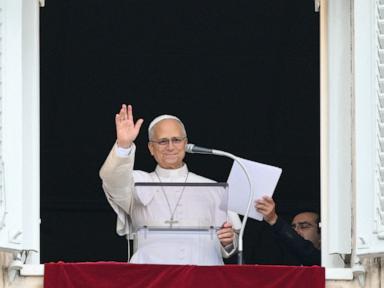
Second, it treats political attribution as an objective diagnosis rather than a strategic contest. Following major escalations in mid-October 2026, French President Emmanuel Macron distinguished student protesters from what he termed ultra-left actors seeking to undermine the Republic, while rival figures on the far right and far left framed the crisis around public safety failures or heavy-handed policing. Polling after the October 17 escalation showed strong public blame directed at the government alongside rising support for both Marine Le Pen and Jean-Luc Mélenchon. A rigorous analysis treats those claims as electoral positioning, not neutral descriptions of street dynamics.
Third, it overlooks coalition contagion. What began around school staffing and conditions expanded as labor unions and movements such as the Yellow Vests converged around cost-of-living and fuel pressures. Shock-driven reporting records the widening map of cities—Paris, Marseille, Lyon, Bordeaux, Nantes, Limoges—without explaining how distinct grievance pools link together when trust in institutional responsiveness erodes.
The Three Pillars of Mobilization
Every large protest wave in contemporary France rests on three distinct structural pillars that operate on different timelines and respond to different concessions.
- The Educational Bottleneck Pillar: High school and university protesters focus on tangible daily friction—teacher and staff shortages, long school days with scheduling gaps, and university admissions mechanics such as Parcoursup. Because students experience these constraints immediately and collectively, local walkouts can scale rapidly across campuses.
- The Purchasing-Power Pillar: Working families, unions, and cost-of-living protesters respond to real-wage compression, fuel prices, and household expenses. Unlike student grievances tied to academic calendars or admissions software, cost-of-living pressure persists across weeks and draws broader adult participation into authorized marches.
- The Coercive-Friction Pillar: Clashes between demonstrators, masked agitators, rival extremists, and law enforcement create a secondary grievance loop. When tear gas, water cannons, or forceful crowd control injure protesters—including teenagers—or spill into adjacent public spaces, policing itself becomes a focal point of anger alongside the original economic or educational demands.
The cause-and-effect relationship between these pillars is non-linear. Grievances in the first two pillars supply mass and legitimacy, turning localized complaints into national headline events. Once mass is achieved, high crowd density lowers the marginal cost for small, organized violent factions or opportunists to engage in arson, looting, or clashes with security forces under cover of scale.
The Escalation and Cost Function of Street Unrest
Rather than viewing riots as an inexplicable breakdown of norms, an operational model evaluates unrest through a cost-and-incentive function facing both state authorities and street participants.
On the state side, containment carries escalating fiscal, operational, and political costs. Deploying tens of thousands of officers alongside armored vehicles and helicopters, managing hundreds or thousands of arrests, and absorbing officer injuries—alongside reported strain such as large numbers of riot officers calling in sick—imposes heavy resource burn. Curfews, assembly bans, and restrictions on minors in specific cities can suppress nighttime flashpoints, yet broad restrictions also risk alienating moderate citizens and inflaming accusations of authoritarian overreach.
On the protester and activist side, participation is governed by perceived efficacy versus personal cost. Peaceful marchers weigh time, weather, and potential exposure to tear gas or violent spillover against the likelihood of winning concrete policy shifts. When government responses appear symbolic or delayed, demonstrators often view continued mobilization as the only lever capable of forcing action. Conversely, violent actors face lower reputational costs when grievance is widespread and face higher deterrence only when targeted law enforcement isolates disruptive pockets without sweeping up peaceful marchers.
Consider a concrete operational sequence from the October 2026 mobilization:
- Trigger and Diffusion: Localized student protests over school staffing and conditions gain visibility and spread across multiple cities.
- Coalition Broadening: Trade unions and cost-of-living demonstrators align with the momentum, lifting national turnout into the hundreds of thousands.
- Dusk Asymmetry: Authorized daytime marches give way after dusk to clashes, property damage, arson, and looting in select urban nodes, while crowd-control tactics reach bystanders and peaceful participants.
- Partial Concessions: Authorities announce adjustments—such as timelines to reform or replace Parcoursup and moves around minimum-wage timing—yet protest organizers treat those steps as insufficient and sustain pressure.
Notice the causal trap embedded in step four. Partial concessions validate that street pressure moves policy, while falling short of core demands keeps mobilization alive. That dynamic explains why a single weekend crackdown or a narrow policy pledge rarely ends a multi-week protest cycle.
Electoral Incentives Ahead of 2027
Prolonged unrest in France does not occur in a political vacuum; it interacts directly with presidential positioning ahead of the 2027 election. Both ends of the political spectrum extract distinct advantages from prolonged instability in ways that complicate centrist governance.
For the far left, student grievances over public education and worker frustration over living standards offer an opportunity to consolidate youth and union support. By framing street anger as a legitimate response to economic strain and heavy-handed policing, candidates can position themselves as champions of popular demands.
For the far right, visible disorder—torched public buildings, commercial looting, and clashes in major cities—reinforces arguments that the incumbent administration has lost control of public order. Even when underlying protests begin over schools or wages, images of urban destruction shift voter attention toward security, authority, and institutional competence.
The governing executive faces a narrow corridor. Over-reliance on force risks inflaming anti-police sentiment and driving young voters toward radical opposition, while broad concessions strain public budgets and invite criticism of capitulating to street coercion. Where exact causal attribution between specific factions and individual incidents remains contested in real time, a distinction between verified arrest or damage tallies and political blame attribution is essential. High public blame toward the government in post-escalation polling reflects frustration with perceived mismanagement, not necessarily endorsement of rioters.
Operational Limits and No Silver Bullets
Any serious response to large-scale civil unrest confronts hard operational constraints. First, no policing doctrine can fully decouple peaceful mass protests from violent fringe actors in dense urban centers without imposing severe civil-liberties and reputational costs. Heavy deployments can deter repeat looting on subsequent weekends, yet dispersed gatherings across hundreds of local events stretch municipal and national security capacity.
Second, fiscal and administrative remedies operate on slower clocks than street anger. Rebuilding school staffing, redesigning university admissions systems over multi-year horizons, and easing household cost-of-living pressures require budget trade-offs and administrative execution that cannot immediately satisfy crowds demanding rapid relief.
Third, dialogue with protest representatives faces a mandate problem. Even when student delegates or union leaders meet with prime ministerial officials and acknowledge incremental steps, decentralized street participants and autonomous agitators are not bound by negotiating tables.
Strategic Play for Crisis Containment and De-escalation
To break the escalation cycle without surrendering public order or relying solely on force, decision-makers should execute a four-part operational sequence:
- Separate Perimeter Security From Peaceful March Corridors: Establish clear spatial and temporal separation between authorized demonstrations and high-risk commercial or civic flashpoints, using targeted containment on violent actors rather than blanket dispersal measures that catch peaceful crowds and bystanders in tear gas.
- Publish Granular, Verifiable Incident Metrics: Release daily, city-level tallies separating peaceful march counts, property damage, injuries, and arrests so public debate is anchored in verifiable facts rather than competing political narratives.
- Pair Immediate Micro-Relief With Binding Milestones: Match short-term household or school-level adjustments with transparent, dated implementation benchmarks on admissions reform and staffing so negotiations produce credible commitments rather than open-ended promises.
- Protect Security-Force Readiness and Rotation: Enforce strict shift rotation, medical support, and rest schedules for deployed officers to prevent burnout and sick-leave spikes during multi-week mobilizations.
Executing this sequence will not eliminate political polarization ahead of 2027, nor will it resolve deep structural debates over public spending overnight. It will, however, shrink the operational space where peaceful grievances convert into destructive street escalation—turning a reactive cycle of shock and crackdown into measurable de-escalation.