The brake pads stacked on the wooden pallet in Windsor, Ontario, do not care about international diplomacy. They are heavy, cold to the touch, and smell faintly of metallic dust. To the person loading them onto a flatbed truck at 5:00 AM, they represent a shift completed and a paycheck earned.
But by tomorrow afternoon, those exact pieces of machined friction material will cross the Ambassador Bridge into Michigan. They will be bolted into a chassis assembled in Ohio, using electronic components manufactured in Queretaro, Mexico. Three countries. One car. A smooth, invisible choreography that operates on the absolute certainty that the borders will remain open, predictable, and quiet.
On July 1, 2026, that quiet certainty expires.
Six years ago, when the Canada-United States-Mexico Agreement—known as CUSMA in Canada, USMCA in America, and T-MEC in Mexico—replaced the old NAFTA, the politicians added a ticking time bomb to the text. They called it Clause 34.6. It is a sunset provision, a legislative mechanism that dictates the entire agreement will self-destruct in sixteen years unless all three nations explicitly sit down and agree to extend it.
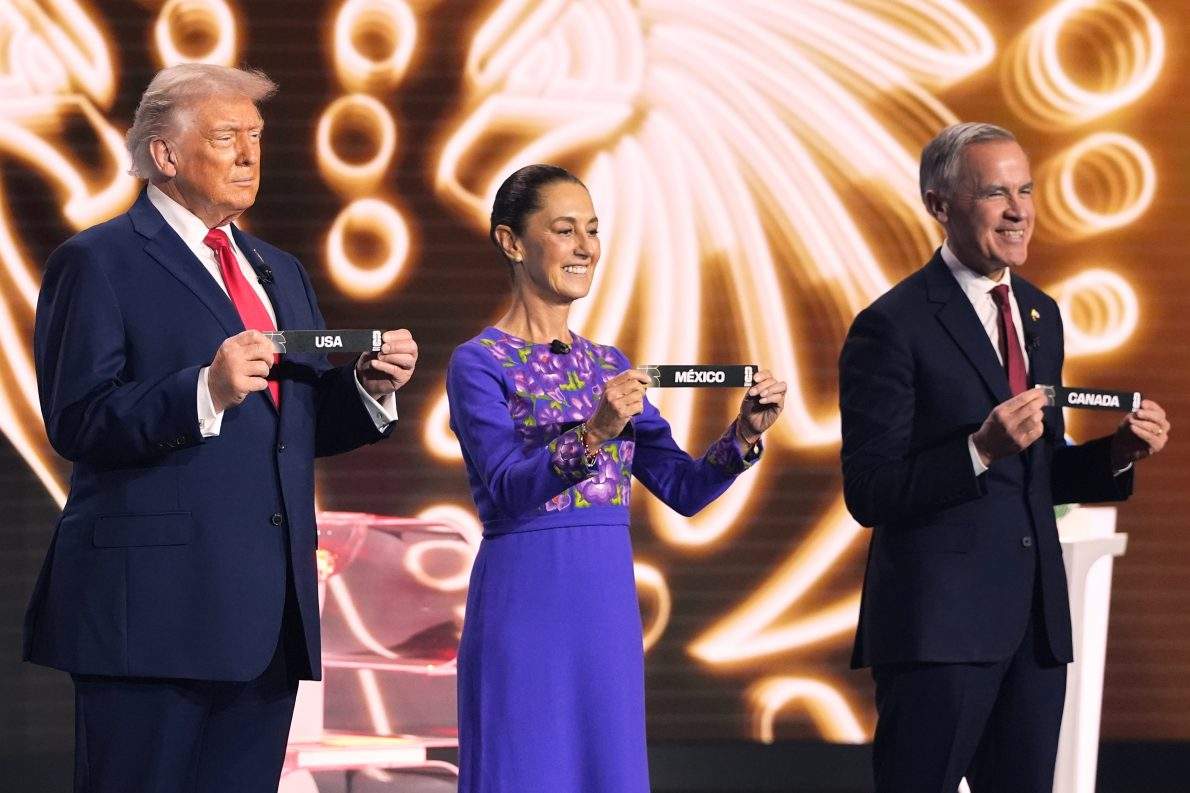
The first mandatory joint review begins today. It is not a routine check-up. It is a high-stakes poker game where the chips are regional stability, millions of manufacturing jobs, and the price of everything from a gallon of milk to a pickup truck. If all three countries do not sign a joint confirmation to extend the pact for another sixteen years, the agreement enters a state of regulatory purgatory, triggering mandatory annual reviews and a decade-long countdown to economic decoupling.
For the people whose lives depend on this trade corridor, the next few months will determine whether the ground beneath their feet remains solid or begins to crumble.
The Ghost in the Supply Chain
To understand why this review matters, you have to look past the press releases and into the daily reality of a modern assembly line.
Consider a hypothetical manufacturing manager named Carlos, working at a plastics plant outside Monterrey. His facility produces high-grade dashboard molds. Carlos does not read international trade law for fun. He does not have time. He spends his days worrying about transit times, customs clearance, and raw material costs.
Under the current rules, Carlos knows exactly what his margins are. His products cross into Texas without facing sudden, punitive tariffs. Because of this predictability, his company invested ten million dollars last year to expand its warehouse, hiring forty more local workers. That investment was not a gamble on market demand; it was a bet on a legal framework.
When the rules of trade become uncertain, investments freeze. Why build a new factory in Ontario or expand an operations center in Tennessee if the tariff structures might fundamentally shift in a few years?
This is the hidden tax of trade instability. It is not a visible tariff wall; it is the absence of decisions. It is the expansion that never happens, the job that is never posted, the machinery that is never purchased. The joint review process is designed to iron out wrinkles, but the mere existence of the review creates a cloud of doubt that hangs over every boardroom from Mexico City to Ottawa.
Three Capitals, Three Agendas
The difficulty of the 2026 review lies in the reality that the political pressures driving each country have drastically diverged since the agreement was signed in 2020.
Washington is consumed by an intense focus on domestic manufacturing and supply chain independence. The American perspective is increasingly skeptical of any arrangement that allows foreign components to slip through the back door. There are growing concerns about Chinese investment in the Mexican automotive sector, with American lawmakers worried that Mexico could be used as a transit point to bypass US tariffs. For Washington, the July 1 review is an opportunity to tighten the screws, demand stricter rules of origin, and force its neighbors to align more closely with its geopolitical strategy.
Ottawa finds itself in a delicate defensive posture. Canada’s economic survival relies entirely on its access to the American market. More than 75 percent of Canadian exports head south of the border. For Canadian negotiators, success means preservation. They want to protect the status quo, defend their supply management system for dairy, and ensure that American protectionist impulses do not inadvertently sever the integrated automotive supply chain that has taken fifty years to build.
Meanwhile, Mexico City faces its own internal balancing act. Mexico has become the United States' top trading partner, benefiting enormously from companies moving manufacturing closer to home. Yet, this economic boom brings immense scrutiny. Mexico must defend its labor reforms, prove it is cracking down on illicit transshipments, and manage energy policies that have frequently irritated its northern neighbors.
When these three distinct political survival strategies collide at the negotiating table, the conversation ceases to be about economic efficiency. It becomes an argument about sovereignty, national pride, and electoral survival.
The Point of Friction
The friction points are already well-defined, and they are deeply personal for the industries involved.
Take the dairy sector, an issue that has caused political headaches for decades. American farmers in Wisconsin and New York look at the Canadian market with frustration. They see Canada’s supply management system as an unfair fortress that keeps their milk and cheese out. Canadian farmers see that same system as the only thing protecting their multi-generational family farms from being wiped out by massive American corporate agri-businesses. During the review, this issue will be pried open once again, pitting the livelihoods of rural communities against each other.
Then there is the digital arena. When CUSMA was drafted, the scale of current artificial intelligence applications and data localization demands was barely on the horizon. Now, rules regarding cross-border data flows, digital services taxes, and intellectual property rights for software are major points of contention. What was once a trade agreement about physical goods like steel and grain is now an agreement about who owns the data generated by a tractor driving through a field in Saskatchewan.
But the true center of gravity remains the automotive industry. The current rules require that 75 percent of a vehicle's components must be made within North America to qualify for zero tariffs. Checking this compliance is an administrative nightmare of dizzying complexity. A single dispute over how to calculate the regional value content of an engine can alter the profitability of an entire vehicle line, determining whether a factory in Ohio stays open or shifts production elsewhere.
The Cost of Waiting
If the three nations fail to reach an agreement to extend the pact this year, the sky will not fall on July 2. The existing terms remain in place. The trucks will keep crossing the border. The trains will keep moving grain.
But the psychology shifts.
A failure to renew the agreement on the first attempt means the clock starts ticking louder. The agreement would enter an annual cycle of reviews, transforming trade policy into a permanent, agonizing reality television show. Every twelve months, businesses would have to watch the news to see if a political dispute over steel or labor rights might suddenly derail their entire corporate strategy.
This perpetual uncertainty is exactly what the authors of the sunset clause intended. They wanted to prevent the agreement from becoming a permanent entitlement, forcing each country to repeatedly justify the pact to its domestic voters. But for the people who actually run the economy, permanent justification looks a lot like permanent instability.
The real risk is not a sudden trade war. It is a slow, quiet erosion. It is the choice by a European or Asian conglomerate to build its next advanced manufacturing plant in a region with more predictable long-term trade frameworks, bypassing North America entirely.
The Human Bottom Line
Behind every digit in a trade balance report is a human reality. It is the truck driver waiting in a three-mile queue at the border crossing in Laredo, hoping the paperwork matches the new digital customs requirements. It is the software engineer in Vancouver working for a Silicon Valley tech firm, wondering if changes to labor mobility rules will force them to relocate. It is the consumer at a grocery store in Chicago, staring at the price of avocados and tomatoes, unaware that the cost on the sticker is directly tied to a legal text negotiated in a windowless room years ago.
North America has spent decades stitching its economies together. The borders are no longer just lines on a map; they are the seams of a single, massive economic engine. You cannot tear at one thread without causing the fabric to unravel elsewhere.
The joint review that begins on July 1 is an acknowledgment that the world has changed since 2020. Pandemics, geopolitical rivalries, and technological leaps have rewritten the global playbook. The three nations must now decide whether they want to face this new reality together or try to build walls high enough to hide behind.
As the sun rises over the border checkpoints today, the inspectors will wave the first trucks through just as they did yesterday. The paperwork will be processed. The goods will move. But the negotiators heading to the table carry a heavy burden. They are not just debating tariffs and quotas; they are deciding how long that invisible choreography will be allowed to continue.