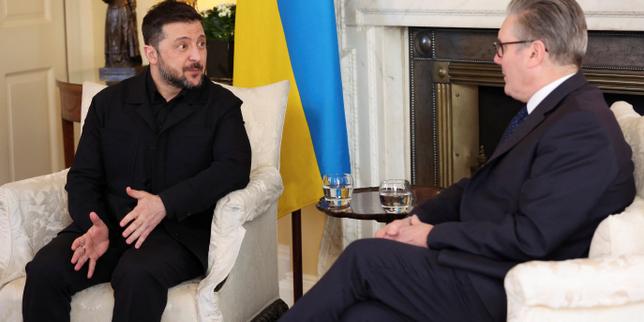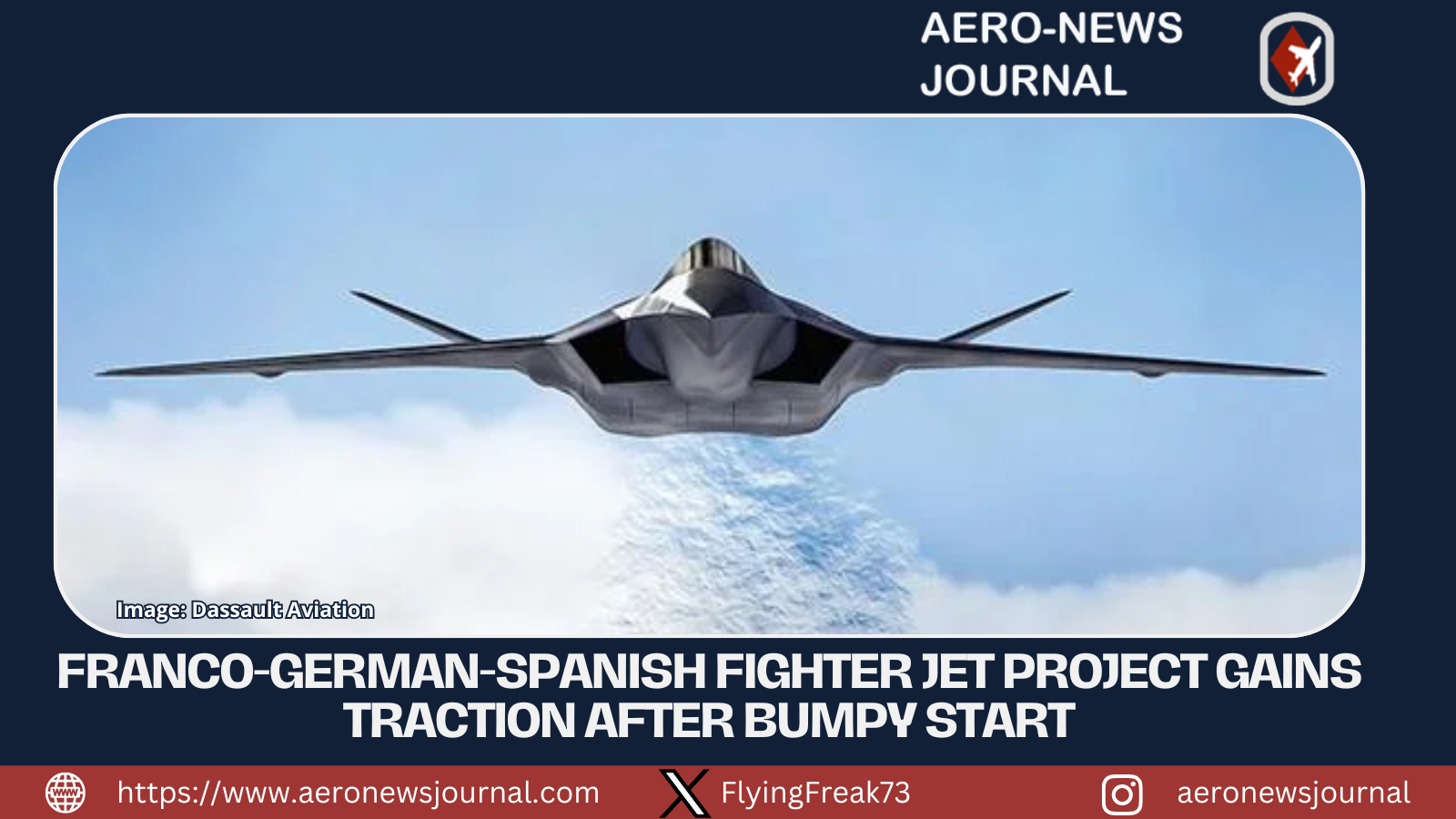
Emmanuel Macron and Friedrich Merz are meeting to "save" a project that was born dead. The media calls it a diplomatic hurdle. The analysts call it a budgetary challenge. I call it a technological suicide pact.
The Future Combat Air System (FCAS) is the most expensive industrial fantasy in European history. We are watching two nuclear powers argue over the blueprints of a museum piece while the world moves on. If you believe the official narrative—that this is about European "strategic autonomy"—you have been sold a bill of goods. This isn't about defense. It is about propping up legacy aerospace firms that have forgotten how to innovate without a government IV drip.
The Consensus Is a Lie
The standard take is simple: France and Germany must collaborate to share costs and compete with the United States and China. If they don't, they lose their edge.
That logic is rotting. Collaboration in European defense isn't a force multiplier; it is a weight. For every engineer added to the project from a second nation, you add three layers of bureaucrats and five years of delays. While Paris and Berlin bicker over "workshare"—the polite term for industrial welfare—the actual technology of aerial warfare is shifting beneath their feet.
The F-35, for all its early flaws, is already a decade into its operational life. By the time FCAS is supposed to fly in 2040, it won't be competing with the F-35. It will be a legacy platform facing swarms of autonomous, low-cost attritable aircraft that don't care about "pilot experience" or "European prestige."
The Sovereignty Myth
Chancellor Merz and President Macron talk about sovereignty as if it’s a physical object you can build in a factory in Seville or Munich. True sovereignty in 2026 isn't a specific airframe. It is the software stack, the data links, and the ability to iterate at the speed of code.
By tethering two different military doctrines—France’s carrier-capable requirements and Germany’s focus on NATO interoperability and land-based defense—you guarantee a compromised design. You end up with the "Homer Simpson car" of fighter jets: a vehicle that tries to do everything for everyone and succeeds at nothing.
I’ve seen this play out in private equity and industrial manufacturing a dozen times. You cannot "compromise" your way to a high-performance machine. Physics does not care about bilateral treaties. If the wings need to be a certain shape for a carrier landing, but the German airforce wants a different profile for high-altitude interception, the resulting airframe will be sub-optimal for both.
The Math of Failure
Let’s talk about the actual mechanics of this disaster. We are looking at a project that will likely exceed €100 billion.
$$C_{total} = C_{dev} + (n \times C_{unit}) + C_{political_friction}$$
In any standard procurement, you account for development and unit costs. In European defense, the $C_{political_friction}$ variable is exponential. It accounts for the work duplication where Dassault and Airbus Defense fight over who gets to code the flight control system.
When you split the work 50/50 between nations, you don't get 100% of the efficiency. You get 60% of the output for 150% of the price. The "lazy consensus" says this is the price of unity. I say this is a tax on survival.
The Software-Defined Reality
The biggest misconception is that the "jet" is the product. It isn't. In modern warfare, the jet is just a sensor node. The real product is the "Combat Cloud."
Germany’s industrial base is world-class at bending metal and precision engineering. But the FCAS requires a level of software integration that neither Airbus nor Dassault has ever demonstrated at scale. They are hardware companies trying to play in a software world. While they argue over who gets to build the engine nozzles, Silicon Valley-backed defense startups are building the AI backbones that will make these manned fighters irrelevant.
Imagine a scenario where a €200 million FCAS jet is taken down by a €50,000 drone swarm guided by a decentralized mesh network. That isn't science fiction; it’s the current trajectory of the conflict in Eastern Europe. Merz and Macron are planning for a 1990s dogfight in a 2040 digital graveyard.
Why Merz Is the Wildcard
Friedrich Merz is a pragmatist with a corporate background. He knows how to read a balance sheet. His predecessors were content to let the FCAS drift as a symbol of friendship. Merz, however, is under pressure to modernize the Bundeswehr now, not in fifteen years.
There is a growing, quiet realization in Berlin that the "French Connection" might be a liability. The French want the intellectual property. They want the export freedom. Germany, hamstrung by its own export restrictions and a desire to keep costs controlled, is starting to look at the British-led Tempest project (GCAP) with envy.
The UK, Italy, and Japan are moving faster. Why? Because they have a clearer command structure. They aren't trying to balance a fragile political ego every time they want to change a sensor's frequency.
Stop Fixing, Start Cutting
The most common question asked in the halls of the Bundestag is: "How do we fix the workshare agreement?"
That is the wrong question. The right question is: "How do we exit this sunk-cost fallacy without destroying the alliance?"
The answer is brutal: Kill the "Manned Fighter" obsession.
If France and Germany were serious about defense, they would pivot the FCAS budget into three distinct, non-overlapping streams:
- Autonomous Loyal Wingmen: High-attrition, low-cost drones.
- Standardized Data Links: Ensuring that a German tank can talk to a French satellite and a Dutch F-35 without a translation layer.
- Advanced Propulsion: Keep the engine research, but lose the airframe.
But they won't do that. Why? Because thousands of jobs in specific voting districts depend on the production line of a big, shiny jet. We are sacrificing the actual security of the European continent on the altar of industrial job preservation.
The Trust Gap
Trust is the currency of any partnership. In the FCAS project, the vault is empty.
France doesn't trust Germany to fund the project long-term if the budget gets tight. Germany doesn't trust France to share the "Black Box" technology that makes the jet actually work. This isn't a "troubled project"; it’s a dysfunctional marriage where both parties are only staying together for the sake of the defense contractors.
I have spent years in the room where these decisions happen. The "breakthroughs" announced after these summits are almost always cosmetic. They agree on a "Phase 1B" or a "Demonstrator" to kick the can down the road. They are buying time, hoping that the next generation of politicians will have the courage to pull the plug.
The Cost of the Status Quo
The danger isn't just a waste of money. The danger is the "capability gap."
While Europe spends the next two decades trying to make two different defense industries agree on a radar, the rest of the world is moving to 6th-generation systems. By 2035, the FCAS will be a "paper plane"—something that exists in beautiful CAD renderings and trade show models, but lacks the flight hours and battle-testing of its peers.
We are seeing a repeat of the Eurofighter Typhoon saga, but with higher stakes and less time. The Typhoon was a great jet that arrived a decade too late for its intended era. The FCAS is on track to arrive in an era where manned flight in contested airspace is a suicide mission.
The Actionable Pivot
If I were advising the Merz administration today, I’d tell them to do the unthinkable: Offer France a graceful exit.
Let Dassault lead the airframe for their own carrier-bound needs. Germany should take its billions and pour them into the "Loyal Wingman" program and the Combat Cloud. Separate the projects. Stop the forced marriage.
You get better tech. You get it faster. You stop the bleeding.
The downside? A few uncomfortable headlines in Le Monde and a frosty press conference. The upside? A military that can actually defend its borders in 2040.
Most leaders choose the headlines over the reality. They prefer the "synergy" of a failed project over the "friction" of a successful one.
The FCAS isn't a fighter project. It’s a political project masquerading as defense. Until we admit that the manned 6th-generation fighter is a legacy vanity piece, we are just burning billions to keep a cold fire going.
The meeting between Merz and Macron won't save the FCAS. It will just sign the next check for a ghost.
Stop trying to fix a project that is fundamentally broken by design. Buy the interoperability, build the autonomous future, and leave the 20th-century dogfight fantasies to the movies.
The sky is already full of sensors. It doesn't need another overpriced, over-politicized cockpit.