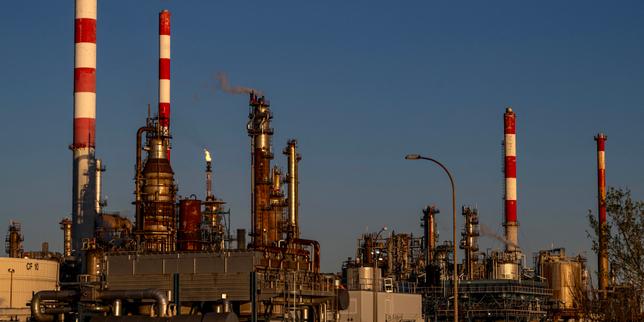
The French government is leaning on oil companies again. It’s a familiar script, but the stakes feel different this time. With conflict escalating in the Middle East, the specter of 2-euro-per-liter gasoline is back. It’s a political nightmare for any administration, especially one already walking a fiscal tightrope. Instead of direct subsidies which the state simply can't afford right now, the Ministry of Economy is looking at the profit margins of refiners and distributors. They want those companies to "do their part" to keep prices at the pump from exploding.
You’ve probably seen the headlines about Brent crude fluctuations. It’s volatile. One day it’s $75, the next it’s pushing $85 because of a drone strike or a closed shipping lane. But the price you pay at the station isn’t just about the raw cost of a barrel. It’s about refining spreads, transport costs, and—most importantly in France—taxes. Since the government won't cut the tax take, they're pointing the finger at the industry.
The Margin Squeeze Strategy
Bercy isn't asking nicely just for the sake of it. They’re using the "threat" of a windfall tax or public shaming to get TotalEnergies and other major players to cap prices. We saw this work in the past with the 1.99 euro cap. It’s a psychological barrier. Once the price crosses that 2-euro mark, the "Gilets Jaunes" ghost starts haunting the halls of government.
Refiners are in a tough spot. They’ll tell you their margins are already narrowing because of global competition and the transition to electric vehicles. But when TotalEnergies reports billions in quarterly profits, that argument falls on deaf ears at the gas station. The government knows this. They’re leveraging public opinion to force a private sector subsidy. It’s clever politics, but it’s a temporary fix for a structural energy problem.
The reality of French fuel pricing is dominated by the TICPE (Taxe Intérieure de Consommation sur les Produits Énergétiques). Taxes make up roughly 60% of what you pay for a liter of SP95 or Diesel. When the government asks refiners to "lighten the tension," they’re asking them to eat the 5 or 10 cent increase that should have come from rising crude costs. They want the private sector to act as a shock absorber so the state doesn't have to lower its tax revenue.
Middle East Volatility and the French Pump
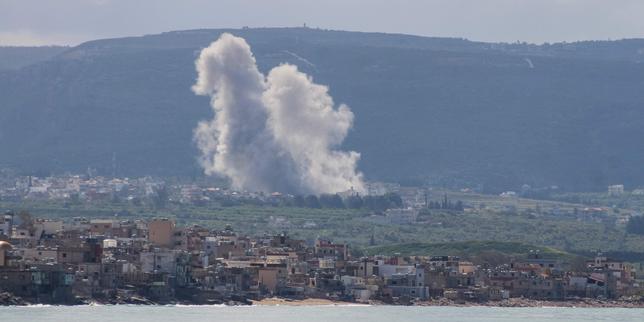
Why does a conflict thousands of miles away hit a small station in rural Brittany so fast? It’s the "rocket and feather" effect. Prices go up like a rocket when news breaks, but they drop like a feather when things calm down. Markets hate uncertainty. The Strait of Hormuz is the world’s most important oil chokepoint. About 20% of the world’s total oil consumption passes through there. If that gets blocked, or even threatened, insurance premiums for tankers skyrocket.
Those costs get passed down the line immediately.
French refiners buy their crude months in advance, but the retail price is pegged to the "replacement cost." This means the price you pay today reflects what it will cost the station to buy the next shipment. It feels like a scam to the average driver. Honestly, it kind of is, but it’s how the global commodity market functions. The French government is trying to interrupt this cycle by demanding "solidarity" from the oil giants.
- TotalEnergies usually leads the way with price caps because they have the most to lose from a new "super-profits" tax.
- Independent distributors like Leclerc or Carrefour use fuel as a loss leader to get you into the store, so they have less room to maneuver.
- Logistics firms are the ones truly suffering, as they can't always pass the cost to consumers instantly.
The Real Cost of Fuel Solidarity
If the government succeeds in browbeating refiners into lowering prices, who actually wins? In the short term, you do. You save a few euros on a full tank. But there's no such thing as a free lunch. If refiners are forced to keep prices artificially low, they invest less in maintenance and future capacity. It’s a trade-off. We saw this during the 2022 strikes when refinery maintenance was delayed, leading to even worse shortages later.
Ministerial meetings with the heads of the oil industry are basically high-stakes theater. The minister demands a gesture. The CEO complains about international markets. Eventually, they "agree" on a temporary discount or a price ceiling. It allows the government to look like it’s fighting for the little guy without actually spending a cent of the national budget.
It’s worth noting that France is more vulnerable to diesel shocks than petrol. Even though the "diesel-only" era is supposedly over, a huge portion of the French commercial fleet and rural population still relies on it. Since Europe has limited diesel refining capacity and used to rely heavily on Russian imports, any Middle Eastern disruption hits the diesel market twice as hard.
Beyond the Pump Price
We need to stop looking at fuel prices in a vacuum. The pressure on refiners is just one piece of a larger energy sovereignty puzzle. France is trying to pivot to nuclear and electric, but the transition isn't fast enough to protect the average citizen from a war in the Levant.
The government’s call to action is a band-aid. It doesn't solve the fact that France is an energy importer. Every time a refinery in the Persian Gulf is threatened, the French economy takes a hit. The "calls for moderation" are a tool of desperation used by a state that has very few levers left to pull. They can't lower VAT because the deficit is already screaming. They can't subsidize directly because the EU would flag it as illegal state aid. So, they bully the refiners.
What You Should Do Now
Don't wait for the government to "fix" the price. They can't. They can only delay the inevitable. If you're looking to protect your wallet from the next spike, stop relying on the daily news cycle and take a few practical steps.
Check the government’s official price comparison site daily—it’s actually updated quite well. Prices can vary by 15 cents between a highway station and a supermarket pump just five kilometers away. That’s a 7 or 8 euro difference on a full tank. If you see a major escalation in Middle East headlines, fill up immediately. The "rocket" effect usually hits the pumps within 24 to 48 hours of a major geopolitical event.
The pressure on refiners might buy us a few weeks of stability, but it won't stop the tide. If the conflict spreads, the 1.99 euro cap will be the first thing to break. Keep your tank half-full and stay cynical about "government-negotiated" discounts. They're usually more about optics than your bank account.