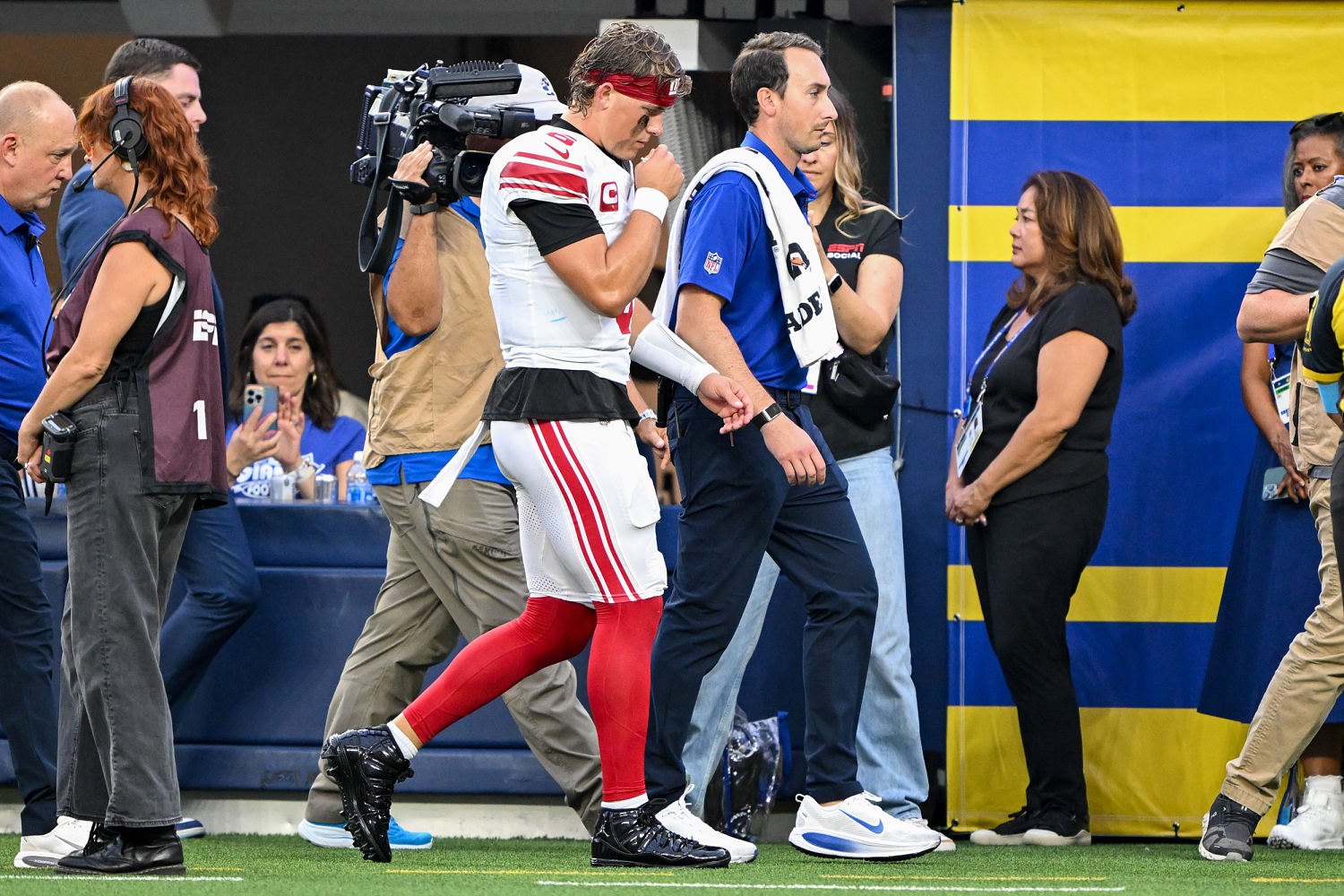
The modern National Football League developmental pipeline is structurally flawed, designed in a way that accelerates physical degradation before athletic maturation can anchor a player against elite defensive velocities. When a high-profile rookie quarterback suffers a catastrophic injury cycle before completing their initial contract window, public discourse typically defaults to reductionist narratives: bad luck, poor offensive line play, or a sudden spike in defensive aggressiveness. These explanations mistake downstream symptoms for foundational architectural failures.
To understand why a generation of highly touted signal-callers faces chronic medical disruption, we must examine the intersection of biomechanical stress thresholds, schematic complexity, and the economic incentives driving early deployment. The trajectory of a young passer is dictated by three primary friction points: the velocity-to-processing paradox, the physical cost of defensive specialization, and the structural misalignment between college spread systems and professional defensive architecture. For an alternative perspective, check out: this related article.
The Velocity-to-Processing Paradox
The primary operational constraint for any incoming quarterback is the bandwidth required to translate pre-snap diagnostic data into accurate spatial distribution under extreme temporal pressure. In the modern defensive landscape, coordinators rarely rely on static coverages. Instead, they deploy simulated pressures, late-rotation shell coverages, and disguised linebackers to create maximum cognitive load.
For a rookie entering the league, the cognitive burden directly influences physical vulnerability. When a passer experiences processing lag, the duration of the play extends beyond the optimal release window of 2.3 to 2.5 seconds. Every additional tenth of a second spent scanning the secondary increases the probability of defensive contact exponentially. Related insight on the subject has been provided by Bleacher Report.
[Processing Delay] -> [Extended Pocket Duration] -> [Defensive Disruption] -> [Compromised Biomechanical Delivery]
This dynamic establishes the velocity-to-processing paradox. To survive structurally unsound protection schemes, a quarterback must process faster. However, the anxiety of impending pressure frequently degrades decision-making efficiency. The nervous system prioritizes physical self-preservation over geometric field mapping, leading to checked-down throws, panicked scrambles, and awkward bodily contortions that invite high-impact trauma.
Furthermore, college programs heavily utilize pre-determined half-field reads and run-pass options that shield players from complex defensive disguises. When these prospects transition to the professional level, the abrupt inflation of cognitive complexity acts as a performance bottleneck. The physical injuries that follow are often the direct manifestation of a nervous system overwhelmed by spatial calculation speed requirements.
The Mechanics of Defensive Specialization
Defensive fronts have evolved past raw athletic traits into highly sophisticated, industrialized units designed specifically to exploit the physical vulnerabilities of the pocket passer. Pass-rush specialists are no longer simply heavy-handed edge setters; they are hyper-mobile edge benders who manipulate offensive tackle leverage through elite speed-to-power conversions.
The modern edge defender targets specific mechanical levers in the quarterback's delivery sequence:
- The Stride-Length Disruption: By compressing the pocket from the B-gap rather than just the exterior edge, rushers force the quarterback to truncate their throwing motion, altering the kinetic chain from the ground up.
- The Blind-Side Rotational Torque: Hits delivered while the passer is in mid-thoracic rotation (during the arm-cocking phase) expose the glenohumeral joint and the ulnar collateral ligament to sheer forces far exceeding physiological design tolerances.
- The Low-Center-of-Gravity Collision: Modern linebackers are coached to strike through the midsection, driving the passer's center of mass downward while their cleats are anchored in the turf, generating high torsional stress on the anterior cruciate ligament and the medial collateral ligament.
When a young quarterback attempts to compensate for deteriorating pocket integrity with raw athleticism, the frequency of these high-torque collisions multiplies. Unlike veteran passers who have learned the art of proactive self-preservation—throwing the ball away, sliding early, or absorbing contact in a relaxed physical state—young players frequently tense up at the point of impact. This muscular rigidity transfers the full kinetic energy of the collision directly into bone and joint structures rather than dispersing it through safe deceleration.
The Cost Function of Early Deployment
The economic and structural incentives of the NFL draft reward immediate deployment. Front offices operating under short-term job security mandates feel compelled to start a prized rookie quarterback from Week 1 of their debut season. This creates a severe misalignment between organizational risk tolerance and player developmental timelines.
The cost function of this strategy can be modeled through cumulative workload thresholds. A prospect who enters the league without a foundational mastery of professional pocket navigation is essentially learning an entirely new operational language under live-fire conditions.
Organizational Urgency = High Draft Capital + Win-Now Mandate
Developmental Cost = Premature Exposure + Unmitigated Contact Frequency
Net Outcome = Accelerated Attrition and Stunted Ceiling
When teams bypass a true redshirt or developmental seasoning period, they expose vulnerable biomechanics to an environment optimized for physical destruction. The body of an 21- or 22-year-old athlete has often not finished developing the dense connective tissue and structural stabilization required to withstand 250-pound professional linebackers operating at peak velocity.
The injury spike among young quarterbacks is not an anomaly or a run of bad luck. It is the predictable economic output of an unsustainable development model. Until front offices reframe the rookie contract window as a developmental runway rather than an immediate production mandate, the league will continue to burn through premium assets before they reach their operational prime. Organizations must begin treating quarterback durability as a quantifiable metric tied directly to structural protection, cognitive pacing, and controlled exposure rates, rather than an unmanageable variable left to chance.