Four.
A single word on a wire feed, stripped of breath, stripped of pulse, sitting between an ad for winter coats and a weather forecast for a city ten thousand miles away. Four killed in a Houthi missile strike on a presidential palace in Yemen. Read that sentence fast and you have already forgotten the weight of the numbers before the coffee cools.
Slow down. Let the sound of a missile entering high-altitude air settle into the quiet corners of a room where someone is checking a watch, folding a uniform, or pouring cardamom tea into a small glass. In war reporting, brevity is a reflex. Dispatchers count characters; editors shave adjectives; readers scroll with thumbs moving faster than grief can catch up. Yet every headline like that one is a trapdoor beneath a real floor. When a strike hits a seat of power or a contested compound in Yemen, the immediate shock belongs to the people standing closest to the blast—guards, clerks, drivers, neighbors who lived within earshot of every faction's shifting claim to legitimacy.
I have stood in rooms where distant violence felt abstract until a colleague's phone rang with news from a cousin's street in the Middle East, and suddenly the map on the wall stopped being ink and paper and became a place with specific smells—diesel exhaust, dry dust, baking bread, and cordite. Confessing that distance matters. I am not sitting inside a palace courtyard in Sanaa or Aden as a missile descends; I am writing from a quiet desk, trying to bridge the chasm between a four-line bulletin and the human lives that four names once held. If I get any part of the emotional geometry wrong, or make it sound neat when the reality is jagged, I owe you honesty: war rarely arrives with tidy moral labels on the ground, even when capitals argue over them on television.
The Architecture of a Target
A presidential palace in a fractured country is never just stone and ceremonial doors. It is a symbol with a bullseye painted on its roof.
To understand why a Houthi missile strike on a presidential compound carries such volatile meaning, think of a building as an argument made of concrete. In a stable state, a palace represents continuity—the quiet certainty that whoever holds the office tomorrow will inherit the same keys, the same civil service, the same predictable law. In Yemen, years of overlapping civil conflict, regional intervention, rival administrations, and fragile truces have turned buildings of state into moving pieces on a chessboard where nobody agrees on the rules of the game. A strike there is rarely aimed solely at bricks. It is aimed at morale, at sovereignty, at the claim of who actually commands authority over a territory and its people.
Consider what happens next when a projectile crosses miles of mountain or desert sky and finds a high-value compound. A missile is a machine of compressed intent. Engineers calibrate warheads, guidance systems, and flight paths; commanders authorize launches; spokespeople draft statements before the dust has even finished curling upward. All of that happens at a level of abstraction where words like "escalation," "retaliation," and "strategic target" sound almost clinical.
Then comes the impact.
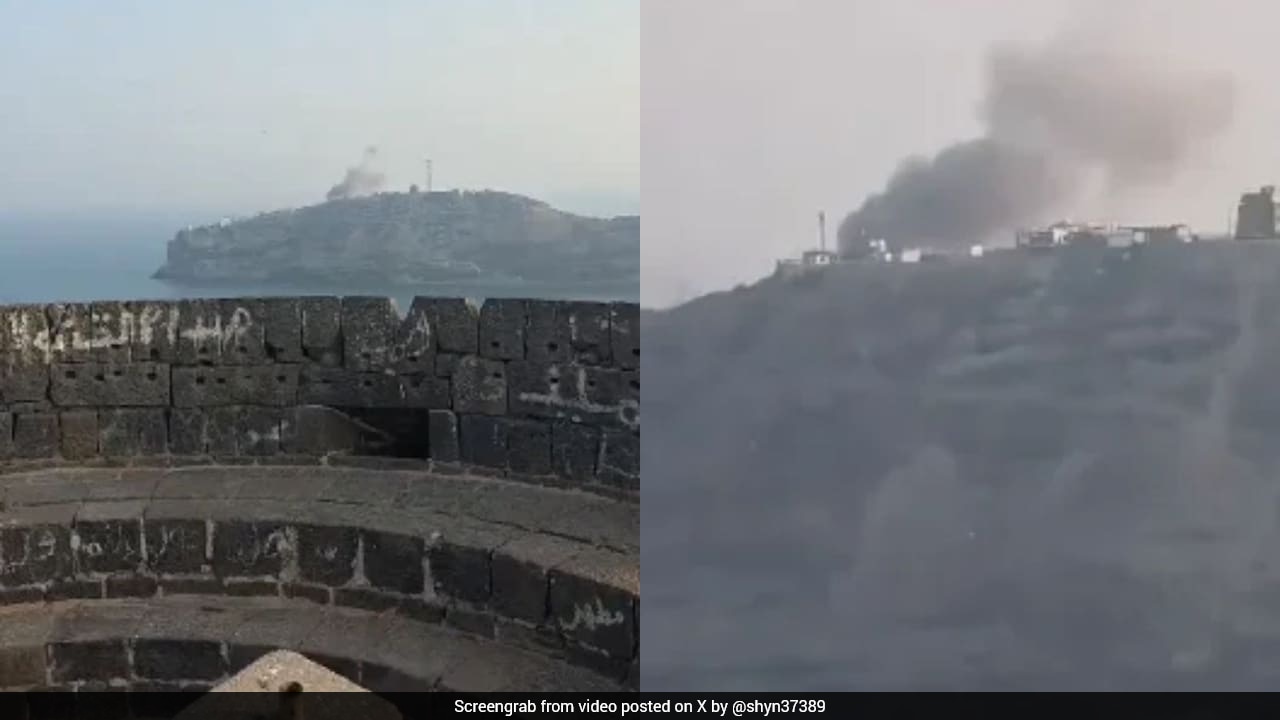
Glass blows inward. Plaster rains down like snow. Steel screams as it tears away from anchor bolts. In the split second between the flash and the concussion, no one inside a guard post or administrative wing is thinking about geopolitics. They are thinking about where the exit is, whether the wall behind them will hold, and who was standing by the doorway three seconds ago.
Four Names Behind a Bullet Point
(Note: The following individuals are hypothetical characters created to illustrate the human reality behind casualty reports; they do not represent identified victims of any specific strike.)
Suppose one of the four killed was Tariq, thirty-one years old, a night-shift duty officer whose main job was logging visitors, checking radios, and keeping a kettle warm so men on long watches would not fall asleep at their posts. Tariq was not a warlord. He did not draw maps or sign treaties. He had a nephew who wanted to fix motorcycles and a mother who worried every time the wind shifted toward the hills. To him, the compound was a paycheck—irregular, often delayed, never enough, yet still the thread that kept groceries on a table.
Picture a second life lost in that same strike: Nadia, an archivist or clerk moving between offices with a stack of paper files because digital systems in places hollowed out by conflict are often patchy, expensive, or offline. People forget how much of a country's daily administration rests on ordinary employees carrying folders from one room to another. When a strike hits a government or palace complex, it does not only hit uniformed fighters; it hits the quiet scaffolding of civil life—the electricians, mechanics, cooks, and record-keepers who keep lights flickering and ledgers moving.
And the other two? Perhaps a driver waiting near the gate with the engine idling, and a younger recruit barely old enough to feel invincible, standing near a perimeter wall because someone told him to stand there.
Four people. Four separate mornings that began with ordinary habits—tying laces, checking a cracked phone screen, brushing dust off a shoulder—and ended in a statistic that news tickers cycle through in under ten seconds.
Why do casualty counts so often numb us instead of moving us? Because human brains are built for faces, voices, and stories, not for single digits floating in isolation. A psychologist or historian might call it psychic numbing: once we hear enough numbers from a long-running conflict, our mind builds a calloused shell just to keep functioning. We aren't necessarily cruel when we scroll past "4 killed." Often we are simply overwhelmed by a decade of headlines that blur together.
A Metaphor of Cracked Glass
Think of Yemen's political and security crisis like an old pane of glass that has been struck from several sides over many years.
That is a metaphor, and like every metaphor, it has limits—glass is inanimate, while Yemen is a living country of tens of millions of people with distinct regions, histories, dialects, and aspirations. Still, the image helps explain why a single strike reverberates so far beyond the blast site. When glass already carries fine spiderweb fractures from past shocks, a sharp tap in one corner can send a fresh line racing across the entire sheet.
A missile hitting a presidential palace—whether viewed by its launchers as a blow against an opposing authority or condemned by observers as a reckless escalation—tests every fracture in the surrounding environment. It rattles diplomatic channels that may already be hanging by a thread. It forces security forces onto hair-trigger alert, which raises the risk of miscalculation, stray fire, or retaliatory strikes that hit far wider than the original target. Every time violence spikes around symbols of state power, ordinary civilians living near checkpoints, ministries, or residential blocks feel the tremor in their ribs.
People watching from abroad frequently ask a simple question: Why does this keep happening even after talks, pauses, or agreements?
There is no single neat answer, and pretending otherwise would insult your intelligence. Part of the answer lies in entrenched grievances and competing visions of rule that did not start overnight. Part of it lies in how armed actors use high-profile strikes to project strength—to prove to allies, rivals, and domestic supporters that they can still reach a fortified target. And part of it lies in the brutal momentum of conflict itself, where every action creates a new reason for counter-action, turning peace from a destination into a fragile negotiation fought over ruins.
The Ripple Beyond the Courtyard
When a strike kills four people at a major compound, the immediate grief belongs to families who must now navigate funerals, burials, and sudden absence amid scarcity. In places where basic services are strained, losing a wage-earner is not only emotional heartbreak; it is an economic cliff. A household that was already stretching every riyal or dollar suddenly has one fewer pair of hands and one fewer income.
Meanwhile, across capitals and newsrooms, the event is sorted into buckets. Analysts debate what kind of projectile was used, how air defenses responded, and what the strike signals about regional alignments. Spokespeople trade accusations. Commentary fills airtime.
Notice the gap between those two worlds. In one world, four families are sitting in quiet rooms trying to absorb a name on a list. In the other, strategists are reading tea leaves in a trajectory.
I have watched that gap widen again and again over years of following conflicts across the Middle East. The closer you get to the ground, the smaller the grand theories look and the larger the human cost becomes. A policy paper can call an attack a "tactical signal." A mother who has spent twenty years cooking for her son does not care about tactical signals. She cares that his boots are still by the door.
Why Four Lives Still Matter
There is a temptation, whenever violence flares in a place already scarred by years of turmoil, to treat tragedy as background noise—as if four deaths in Yemen are somehow less shocking than four deaths somewhere quieter.
Resist that reflex. Every life carries the same unrepeatable weight, regardless of whether the surrounding news cycle has room for it or whether the location is familiar to readers far away. When we reduce four people to a bare headline—4 Killed In Houthi Missile Strike On Presidential Palace In Yemen—we let speed do the work of forgetting.
Looking closer does not require taking sides blindly or pretending the situation is simple. It requires refusing to look away from the human reality tucked inside the dispatch. Behind every strike report are real people caught in the crossfire of power struggles they did not invent, in a country whose history is far richer than the latest flashpoint.
Dust settles over stone courtyards, sirens fade into distant hums, and new headlines arrive tomorrow to push today's off the screen, leaving four empty chairs where morning light used to fall.