The rain in Goma smells of wet basalt, lake water, and diesel. Even on quiet mornings, when the fishing boats push off from the dark volcanic shoreline of Lake Kivu, the air feels heavy—as if the earth itself remembers every foot soldier who marched across it over the last thirty years.
For millions of people living in eastern Democratic Republic of the Congo, war is not a headline. It is a schedule. You wake before dawn to check whether the road toward Bukavu is open. You pack a plastic jerrycan and a change of clothes before your children leave for school. You learn the difference between the dull thud of distant artillery in the highlands and the closer chatter of small arms along a trading route.
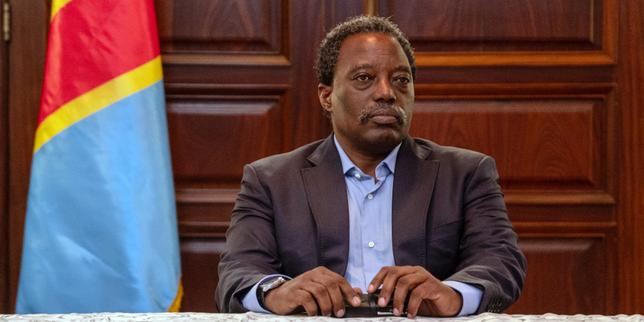
Now, a name that once sat at the very top of the state has stepped into the center of that storm. Joseph Kabila, who governed the DRC for eighteen years after taking power in 2001, has emerged as the head of a new political-military coalition—the Front for the Refoundation of the Nation (FRN)—succeeding the AFC/M23 alliance that has seized wide territory across North and South Kivu.
Read that sentence again. Not a warlord from the bush. Not an obscure general with a grudge. A man who held the presidency until 2019, who carries the title of senator for life, who was sentenced to death in absentia by a Congolese military court in 2025 for treason and war crimes, and who has now openly assumed leadership of an armed movement operating out of the east.
Cold news reports reduce this shift to a line item on a geopolitical ledger: an alliance formalised, a movement renamed, a diplomatic track stalled. Yet on the ground, where more than 7.8 million people have been displaced and roughly 28 million face acute food insecurity across the country, a title change at the top of a rebel coalition is never just paperwork. It alters loyalties, supply lines, negotiation tables, and the odds that a family sleeping under plastic sheeting tonight will still have a roof—or a home—next month.
How a Presidency Becomes an Insurgency
To understand how a former head of state ends up leading an armed rebellion against the government in Kinshasa, you have to look at how fragile political truces are when power is treated like a zero-sum prize.
Kabila became president in January 2001 at twenty-nine years old, thrust into command after the assassination of his father, Laurent-Désiré Kabila. Raised largely outside the country and shaped by guerrilla warfare and backroom bargaining during the Congo wars, he spent nearly two decades navigating a vast, resource-rich nation where state authority often thinned out hundreds of miles from the capital. When he finally handed over office to Félix Tshisekedi in early 2019 following disputed elections, many observers saw a historic transfer of power. Others saw a temporary arrangement.
(Note: The following portrait of a displaced family is a hypothetical composite built from documented realities in North and South Kivu to illustrate how political shifts echo inside ordinary households.)
Consider a hypothetical family—let us call them Bahati, his wife Neema, and their two young sons—living in a displacement camp outside Goma. Five years ago, Bahati farmed cassava and tended a small plot near the hills. When fighting flared, displaced them once, then twice, then a third time. Like millions of Congolese, they have watched politicians in Kinshasa and regional capitals trade accusations while their own lives shrank to a single room and a ration card.
For a brief period after 2019, Kabila’s political network and Tshisekedi’s camp shared space in a tense marriage of convenience. By 2020, that alliance cracked apart. Cabinet posts changed hands, corruption investigations targeted Kabila’s circle, and the former president eventually spent time in self-imposed exile before resurfacing in Goma and drawing accusations from Kinshasa of backing armed groups.
In October 2025, a military court in Kinshasa sentenced Kabila to death in absentia for treason, war crimes, and related charges. Months later, in April 2026, the United States imposed sanctions on him over alleged financial backing of rebel factions. Then, in October 2026, the coalition launched under Kabila’s leadership—the Front for the Refoundation of the Nation—declared its intent to challenge the government by force if necessary.
Look at that shoreline in the photograph: calm water, a flag fluttering on the stern, and a volcano rising in the background. In eastern Congo, beauty and danger have shared the same frame for generations. Lake Kivu looks serene from a distance, yet underneath its waters lie dissolved gases, and around its shores sit borders, trade routes, and mineral veins that draw outside interests like magnets.
The Invisible Stakes Beneath the Hills
Why does eastern Congo keep bleeding, no matter how many peace agreements are signed in distant capitals or how many new acronyms appear on rebel banners?
Here is an intuitive way to picture it. Imagine a house built over a rich seam of gold and copper, with no locks on the doors, no local police force, and neighbors arguing over who owns the hallway. Inside the house live families trying to cook dinner and send children to school. Outside, contractors, militias, and neighboring states eye the wealth beneath the floorboards. When central authority is weak and trust between communities is broken, every dispute over land, identity, or profit quickly turns armed.
Eastern Congo holds vast deposits of coltan, gold, tin, tungsten, and other minerals essential to modern electronics and global supply chains. In theory, that wealth should fund paved roads, clinics, and schools. In practice, conflict networks and smuggling routes—long documented by United Nations experts and human rights monitors, including allegations of Rwandan support for M23 that Kigali has denied—turn natural abundance into a curse for civilians. Human rights organizations have repeatedly reported killings, forced labor at artisanal mining sites, sexual violence, and looting as armed groups fight for territory and revenue.
When a former president steps into the leadership of an armed movement on contested soil, the conflict stops looking like a peripheral border insurgency and starts looking like a direct struggle over the future of the Congolese state itself.
That is the invisible stake that dry news summaries often miss. When Joseph Kabila—someone who knows the architecture of the Congolese military, the rhythms of regional diplomacy, and the fault lines of Congolese politics—takes the helm of the FRN, the stakes rise immediately.
Will his presence pull old loyalists out of the shadows? Will it harden resistance in Kinshasa and deepen fears that the country faces de facto partition or prolonged fragmentation? Or will rival armed factions and local communities push back against a former ruler whose own eighteen years in power many Congolese blame for leaving deep institutional wounds?
Even experts who study the Great Lakes region admit uncertainty. Politics in the DRC rarely moves in a straight line. Alliances shift overnight. A commander who fights for one banner this month may cut a deal or switch sides the next. Anyone who claims to know with certainty how Kabila’s move will play out on the ridges above Lake Kivu or along the road to Bukavu is guessing louder than they should.
A Nation Caught Between Gunfire and Fatigue
I have sat across from people who have lost everything twice in ten years, and the hardest thing to bear isn't always their anger. Sometimes it is their exhaustion.
Ask a mother in North or South Kivu what a political communiqué means when mortar fire echoes near a market or when prices jump because a highway is cut. She doesn't care which faction holds the microphone in a press briefing. She cares whether there is clean water, whether the clinic has antibiotics, and whether her son can walk to the market without being stopped at an illegal checkpoint.
Consider what happens next on the ground. Armed clashes have continued around strategic corridors—including fighting near Kahuzi-Biega National Park and along National Road 3 connecting areas north toward Bukavu—even as diplomatic initiatives struggle to gain traction. Meanwhile, the Congolese military and allied local fighters, known as Wazalendo, have traded ground with rebel forces in parts of South Kivu’s highlands, while military courts in the DRC have handed down harsh punishments, including death sentences for troops convicted of abandoning frontline posts.
Each clash leaves behind a trail of quiet tragedies. A shopkeeper shutters his stall. A teacher cancels class because half the desks are empty. A young man, seeing no future in farming or trading, wonders if picking up a gun is the only way to survive or belong.
Critics of the government in Kinshasa argue that poor governance, factionalism, and unresolved grievances have created openings that armed groups exploit. Defenders of the government—and many ordinary citizens—see Kabila’s alignment with an armed coalition as a profound betrayal by a man who once swore to uphold the constitution and defend the nation's sovereignty. Both perspectives collide in a country where trust in institutions has been stretched thin for decades.
What happens when the person who once wrote the rules of power decides to challenge them from outside the law with armed backing?
It forces every actor—Kinshasa, regional neighbors, international mediators, and everyday citizens—to confront a harsh reality: peace in eastern Congo cannot be bought with temporary ceasefires or top-down power deals alone. It requires accountable security forces, transparent management of resources, genuine justice for victims of abuse, and leadership that values the lives of citizens over political survival.
Until those pieces change, headlines will keep changing names while the burden stays on the same shoulders.
Out on Lake Kivu, dusk settles over the water in shades of slate and ember, and on the shore a single kerosene lantern flickers inside a shelter while distant thunder rolls across the hills.