The Smell of Bleach at Midnight
The Atlantic ocean looks entirely different when you are staring at it through a heavy glass porthole, shivering under a duvet that suddenly feels far too thin.
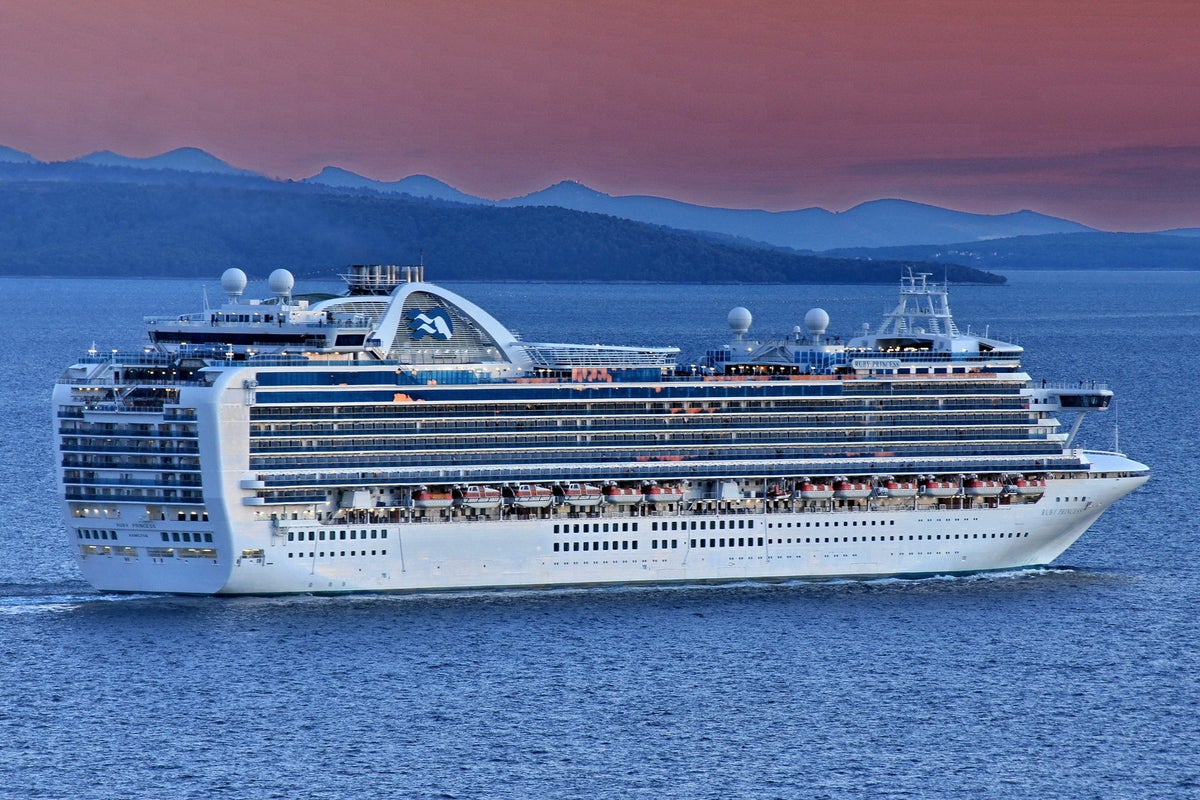
For months, the countdown clock on the smartphone screen represents an escape. You save the money. You arrange the pet sitters. You buy the specific linen shirts that only make sense when a warm tropical breeze is blowing across a promenade deck. When you finally step across the gangway of a massive luxury cruise liner, the outside world ceases to exist. The ship is a self-contained ecosystem of luxury, a floating promise that for seven nights, every human whim will be anticipated and satisfied. For an alternative view, read: this related article.
Then, somewhere around the third night, the illusion cracks.
It starts with a quiet whisper in the corridors. You notice a crew member in crisp white uniform spraying down a handrail with an intensity that seems slightly frantic. At dinner, the self-service buffet is suddenly guarded by crew members holding tongs, politely refusing to let you touch the serving spoons. The air in the grand atrium, usually redolent of expensive perfumes and fresh flowers, carries a faint, sharp undertone of industrial disinfectant. Related insight regarding this has been provided by Travel + Leisure.
By midnight, the sanctuary feels like something else entirely.
This is the reality of a norovirus outbreak at sea. When news broke that 125 human beings had fallen violently ill aboard a Princess Cruises vessel, the headlines treated it like a statistical anomaly, a brief blip in a corporate press release. But statistics do not vomit. Statistics do not spend thirty-six hours trapped in a ninety-square-foot stateroom, listening to the synchronized retching of neighboring families through thin cabin walls.
To understand what happened on that ship, we have to look past the cold numbers and look at the fragile nature of our modern illusions of safety.
The Perfect Vector
Consider a hypothetical passenger. We will call her Sarah.
Sarah is sixty-two, recently retired, and spent three years planning this specific itinerary. She is meticulous. She carries a small bottle of hand sanitizer in her purse and washes her hands before every meal. She believes she is protected.
What Sarah does not know is that norovirus does not care about standard hygiene rituals. It is an evolutionary masterpiece of infection.
The virus requires a microscopic dose to completely dismantle a human body. As few as eighteen viral particles can trigger an infection. To put that in perspective, a single drop of vomit from an infected person contains enough viral material to infect more than five billion people. It survives on dry surfaces for days, resisting standard alcohol-based hand gels like a minor inconvenience. When Sarah grips the polished mahogany banister of the grand staircase to steady herself against a rogue wave, she is stepping into a microscopic minefield.
The ship itself is the ultimate accelerator.
A modern cruise ship is a masterpiece of engineering, a vertical city housing thousands of people from every corner of the globe. They share the same air, eat from the same kitchens, swim in the same pools, and gather in the same packed theaters. In any standard city, if you get sick, you go home. You isolate in your house. You do not share an elevator with twenty strangers five minutes later.
On a ship, isolation is an afterthought. The architecture that makes the vacation so effortless—the seamless transitions from dining rooms to lounges—becomes the very mechanism of transmission.
The virus strikes with terrifying speed.
One moment Sarah is enjoying a chocolate soufflé in the main dining room, laughing at a joke made by a couple from Ohio. The next, a profound, primal dread settles into her stomach. The transition from healthy vacationer to biological casualty takes less than an hour. The nausea is not a gradual buildup; it is a violent, sudden coup d'état of the digestive system.
The Hidden Cost of the Dream
When the illness hits a critical mass, the atmosphere on the ship shifts from leisure to containment.
The crew members are the unsung front line of this quiet war. They are miles away from their own homes, working long hours to send money back to families in Manila, Mumbai, or Jakarta. Now, they are tasked with deep-cleaning a floating hotel while trying to maintain the facade that everything is perfectly fine. They scrub carpets, wipe down elevator buttons every ten minutes, and deliver plain toast and ginger ale to hundreds of sealed cabins.
The psychological toll on the passengers is immediate.
The cruise experience is built entirely on the concept of unlimited freedom. You can eat at 2:00 AM. You can swim under the stars. You can wander through endless lounges. When the captain announces over the PA system that an outbreak is underway and requests that all symptomatic guests remain in their staterooms, that freedom vanishes.
The cabin transforms from a cozy bedroom into a holding cell.
The beautiful view of the ocean becomes a mocking reminder of isolation. You watch the waves move past, fully aware that you are trapped on a moving island with an invisible predator. The sounds of the ship change. The distant thumping of the bass from the nightclub is replaced by the rattle of medical carts rolling down the carpeted hallways.
The economic reality of the cruise industry dictates that the ship must keep moving. It cannot simply pull over on the highway and let everyone out. It must press on toward the next port, even as the medical bay on the lower decks fills to capacity.
The Illusion of Control
We live in an era where we believe we have conquered the wilder elements of our environment. We build massive ships that can withstand Atlantic gales, equipped with stabilizers that make the ocean feel as flat as a highway. We filter our water, flash-freeze our seafood, and monitor the temperature of our beef with digital precision.
Yet, a strand of RNA so small it cannot be seen with a standard microscope can bring a billion-dollar vessel to its knees.
The true horror of the norovirus outbreak is not the physical pain, though the cramping and dehydration are grueling. The true horror is the total loss of agency. You realize that your health is entirely dependent on the hygiene habits of the stranger who used the public restroom before you. It depends on the passenger who decided that a little scratchy throat or a mild bout of nausea wasn't going to ruin their expensive shore excursion, so they hid their symptoms and boarded the tour bus anyway.
Human nature is the weak link in the chain.
When people spend thousands of dollars on a vacation, they develop a sense of entitlement that clouds their judgment. They rationalize. They tell themselves it was just the rich food or a touch of seasickness. They do not want to be confined to their rooms, so they venture out, leaving a trail of viral particles on slot machines, buffet tongs, and public door handles.
The Cold Return to Shore
When the ship finally docks at the end of the voyage, there are no flashing lights or emergency sirens. The disembarkation process looks remarkably similar to any other cruise.
Passengers walk down the gangway, pulling their wheeled suitcases behind them. Some look pale. Others look exhausted, the tan they hoped to acquire replaced by the sallow complexion of a rough recovery. They step into the terminal air, breathing in the scent of coastal asphalt and car exhaust, strangely grateful for the mundane stability of solid ground.
The cruise line will issue its statements. They will emphasize their adherence to strict sanitation protocols. They will point out that the 125 affected individuals represent a small percentage of the total souls on board.
But for those who were inside the cabins, the memory lingers long after the physical symptoms fade.
The next time they see a commercial for a pristine white ship gliding through azure waters, they will not just see the sun-drenched decks or the smiling waiters. They will remember the sharp, metallic tang of chemical bleach. They will remember the sound of the wind howling outside a sealed window while the world shrank down to the size of a bathroom floor. They will know exactly how fragile the sanctuary truly is.