There is a specific kind of silence that falls over a room when someone universally recognized walks through the door. It is not the silence of awe. It is the sudden, practiced suspension of breath from forty strangers who have collectively agreed to pretend they are looking at their water glasses.
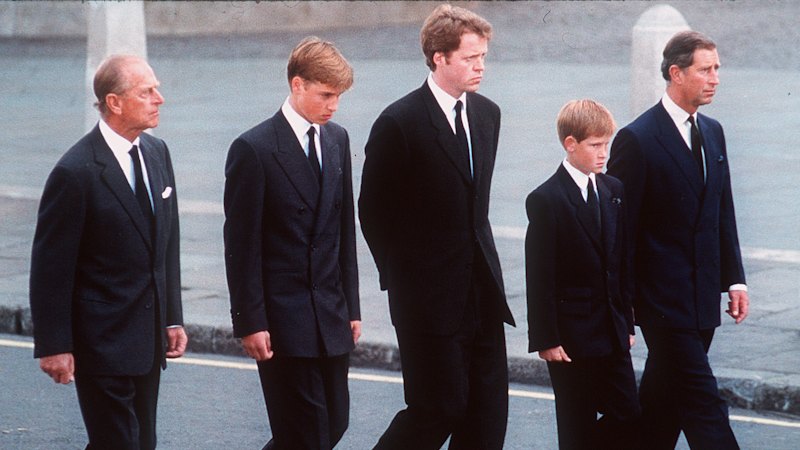
For decades, the cultural obsession with where famous people eat was fueled by visibility. You went to the restaurant where the flashbulbs popped like lightning storms. You wanted to be seen, or you wanted to see the person who starred in the summer blockbuster eating a Cobb salad three tables down. The destination was a theater. The food was a prop. Also making waves recently: Charles Earl Spencer and the Royal Family Feud Inside the Windsor Machine.
That era is effectively dead.
Today, the most exclusive dining rooms in Los Angeles, New York, London, and Paris operate on an entirely different frequency. They are built on the architecture of invisibility. The currency of modern fame is no longer a front-row table facing the street; it is a dark corner booth behind an unmarked exterior where a phone camera will never capture your chewing. Additional information regarding the matter are covered by Bloomberg.
To understand where the world’s most recognizable faces actually spend their evenings, you have to look past the press releases and the public relations campaigns designed to trick tourists into ordering mediocre carpaccio. You have to understand how power, privacy, and appetite intersect behind heavy velvet curtains.
Consider what happens at seven o'clock on a rainy Tuesday in West Hollywood.
A sleek black SUV pulls up to an alleyway entrance that has no sign, no plaque, and no listing on Google Maps. The door opens before the vehicle fully stops. Two people step out into the shadows—not into the glare of paparazzi lights, but into the warm, amber glow of an interior courtyard guarded by a bouncer who knows their children's names.
This is not a restaurant in the traditional sense. It is a sanctuary.
In places like San Vicente Bungalows in Los Angeles or Zero Bond in Manhattan, the rules are absolute. Cameras are physically taped at the front door. Social media is forbidden. If you pull out a smartphone to take a photograph of your artisanal pasta, a staff member is at your elbow before you can lift your fork, politely reminding you of the social contract you signed upon entry.
Here, discretion is valued above culinary innovation. You can order a martini or a plate of French fries without worrying that your posture, your companion, or your calorie intake will be scrutinized by millions of strangers by morning. The food is exceptionally good—executed with the quiet confidence of chefs who do not need Michelin stars to validate their menus—but the real dish being served is safety.
Yet, privacy alone does not explain the entire phenomenon. Celebrities are human, and humans get bored of golden cages.
When they want to break out of the members-only echo chambers, they retreat to a different kind of venue: the neighborhood joint that refuses to care.
There is a small, unassuming trattoria tucked away in a gritty corner of downtown Manhattan. The awning is faded. The floors creak. The reservation book is a battered paper ledger kept by a man named Salvatore who has been working the floor since the Carter administration.
An Academy Award-winning actress sits in a vinyl booth near the kitchen door, wearing an oversized hoodie and no makeup. She is eating a plate of cacio e pepe that costs twenty-two dollars. A table of off-duty construction workers sits three feet away, arguing loudly about baseball. Nobody is looking at her. Salvatore made it clear thirty years ago: you come here to eat, or you do not come back at all.
This is the hidden dichotomy of modern elite dining. The A-list splits its allegiance between hyper-secure fortresses designed to keep the world out and humble neighborhood anchors that treat them like ordinary people who happen to have a high Q-score.
The middle ground—the trendy, loud, see-and-be-seen hotspots plastered across lifestyle magazines—is increasingly abandoned to influencers, reality television contestants, and tourists seeking a brush with proximity. If you see a room full of people holding their phones high to capture the lighting of a flaming dessert, you can be certain that no one famous is in that room. The truly famous are three blocks away, sitting in a windowless cellar, talking about their kids.
Behind this shift lies a profound psychological exhaustion. The internet turned every citizen into a paparazzo. When your face is a public utility owned by millions of strangers on social media, the simple act of chewing food in public becomes a low-level hazard.
So the culinary world adapted. Architects of high-end hospitality now design spaces with acoustic dampening panels that prevent directional audio recording. Kitchens are positioned near back exits so diners can slip away into the night without crossing a main dining room. Private dining rooms are no longer reserved for corporate executives celebrating a merger; they are standard infrastructure for anyone whose presence causes a room to tilt on its axis.
What do they actually eat when the doors are closed and the phones are locked away?
The myth is that they subsist on kale leaves and mineral water. The reality is far more mundane and comforting. Billionaires, supermodels, and blockbuster movie stars are remarkably fond of carbohydrates.
In these private sanctuaries, the orders mirror what anyone might crave after a fourteen-hour workday. Cheeseburgers cooked medium-rare. Crispy French fries dipped in mayonnaise. Bowls of buttered pasta. Thick-cut steaks dripping in jus. The luxury is not in the exoticism of the ingredient; the luxury is in the absence of judgment. You can order the double cheeseburger, eat every bite with your fingers, and leave a hundred-dollar tip without a single whisper making its way to a gossip blog.
The geography of where they eat is also shifting geographically. While New York and Los Angeles remain the gravitational pull centers, secondary markets have emerged as culinary safehouses. Cities like Nashville, Austin, and London's quieter Mayfair alleyways have become preferred dining territories because they offer a buffer of Midwestern or British politeness. People in these cities might recognize an icon, nod respectfully, and then return to their shepherd's pie.
There is an art to hosting this clientele, and it belongs to a dying breed of old-school restaurateurs who view discretion as a sacred trust.
Ask any veteran maître d' in Paris or London what their most important job is, and they will never mention wine pairings or table turnover rates. They will talk about the blind spot. Every good dining room has a blind spot—a table that cannot be seen from the bar, cannot be photographed from the kitchen doors, and has a direct line of sight to an exit.
Assigning that table is a political act. It requires intuition, psychological profiling, and an acute understanding of social dynamics. You do not seat an aging rock star within ten feet of a rising tech billionaire if their publicists are currently feuding. You do not place a newly single actress near a table of rowdy hedge fund managers celebrating a bonus.
The maître d' is an air traffic controller of egos and anxieties, orchestrating a ballet of quiet movements so that the people paying four hundred dollars for a bottle of wine can forget, if only for ninety minutes, who they are.
Consider the journey of a single evening for a major movie star dining in London.
Car drops them at a side entrance. A coat check attendant takes their jacket without asking for a selfie. The table is waiting in the shadowed alcove near the wine cellar. The server approaches, places two menus down, and says nothing other than a quiet, low-voiced greeting. No gushing. No praise for last year's box office numbers. Just the acknowledgment of a human being ready for sustenance.
The meal proceeds in waves of quiet conversation. The wine is poured without a label being flashed. The plates are cleared with practiced stealth.
When the meal ends, there is no waiting for the valet to fetch the car from a crowded sidewalk. The car is already idling in the alley, engine humming softly in the damp night air. The back door swings open before the check is even signed.
The actor slips back into the vehicle, the door closes with a heavy, satisfying thud, and the car merges into the stream of London traffic, vanishing into the rain as if they had never been there at all.
That is where the A-list eats now. Not where the cameras flash. Not where the review columns praise the foam. They eat where the world stops watching, where the food tastes like home, and where the most valuable item on the menu is the right to disappear.