The financial press spent October weeping into its espresso because Firmus pulled its massive Australian initial public offering. Headlines screamed about shattered valuations, skittish institutional buyers, and a sudden cold sweat gripping the artificial intelligence gold rush. The lazy consensus in every major market newsletter is that public investors sniffed out a bubble, choked on a thirty-billion-dollar price tag, and slammed the brakes on the entire infrastructure buildout.
They are completely missing the point. Meanwhile, you can read other stories here: The Anatomy of Rail Corridor Optimization A Structural Analysis of the Kingston Alto Decision.
The collapse of the Firmus float is not a warning sign for the artificial intelligence economy. It is a violent, overdue rejection of financial tourism. Public equity markets are fundamentally broken when it comes to pricing high-intensity compute factories. When institutional pension funds demand decades of predictable dividend growth from a company burning billions to lay down copper, fiber, and hundred-thousand-GPU clusters, the math fails. The public market did not reject artificial intelligence infrastructure; it rejected the absurd expectation that a hyper-growth industrial buildout can be traded like a sleepy utility stock.
Look at the mechanics of what actually happened in Sydney. Firmus tried to run an IPO valuing a business with two operational sites and a mountain of future commitments at over thirty billion dollars. At the same time, critical construction partnerships shifted, and insiders held options to dump massive tranches of stock right out of the gate. Institutional managers in Sydney and New York looked at the prospectus, ran the debt numbers, and balked. Good. That is how price discovery is supposed to function. The system worked. To understand the bigger picture, we recommend the detailed report by Investopedia.
The mistake is assuming that a failed stock market listing means the underlying asset class is rotting. Private markets immediately stepped in because the real money understands a basic physical truth: artificial intelligence is an industrial commodity, not a software subscription.
The Industrial Reality Of Silicon Factories
We have spent three decades treating technology like weightless code. Venture capitalists and public market analysts want every startup to scale with marginal costs near zero, margins approaching eighty percent, and capital expenditure limited to a few AWS credits and some MacBook Pros.
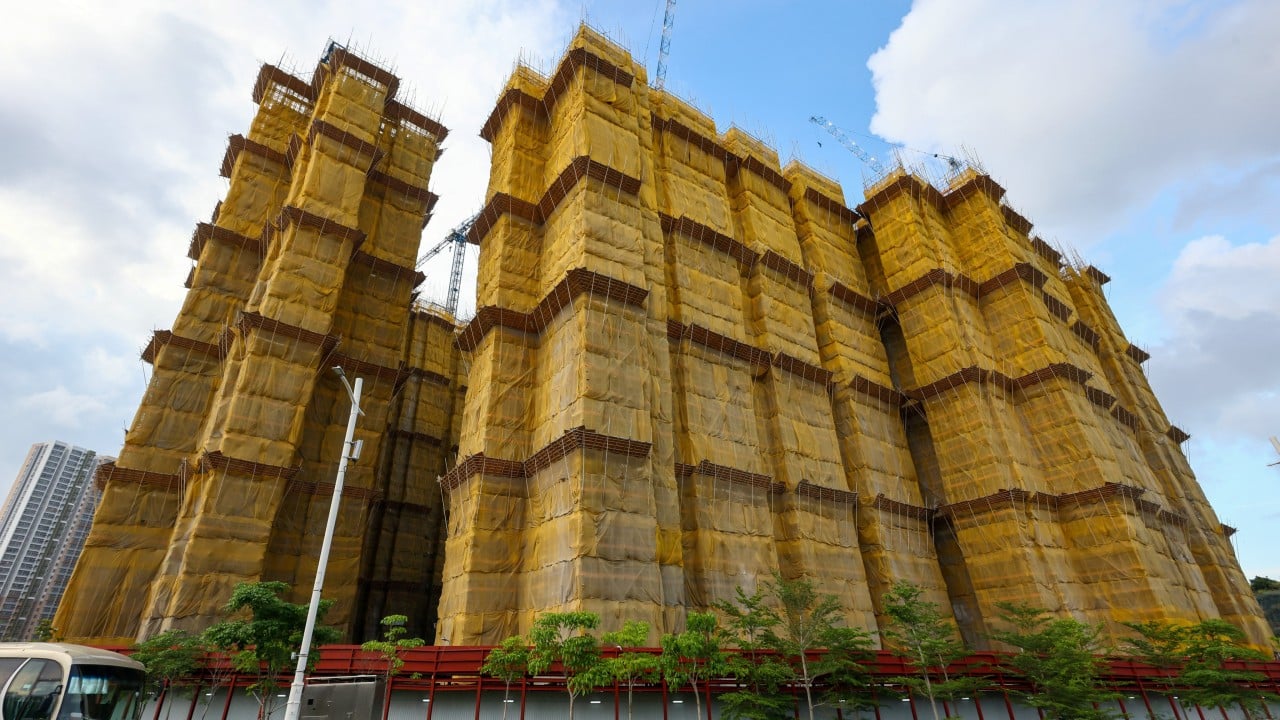
Data centers do not work that way. They are heavy industry. They look more like a modern oil refinery or an aluminum smelter than a SaaS platform. They demand massive baseline power allocations, industrial-grade liquid cooling loops, and billions of dollars in silicon hardware that depreciates the moment it leaves the fab.
When a company like Firmus builds out a massive campus in Batam or Melbourne, they are pouring concrete and locking in power purchase agreements that stretch for decades. Expecting public retail investors and conservative index funds to accurately price the net present value of a gigawatt-scale GPU cluster five years out is an exercise in corporate fiction. Public markets want quarterly smoothing. Industrial infrastructure requires brutal, concentrated capital deployment.
The narrative that institutional skepticism signals an impending bust ignores who is actually writing the checks behind closed doors. Nvidia, Blackstone, and private tech giants did not pull their funding when the public ticker died. Instead, they doubled down on private rounds. Why? Because the enterprise demand from hyperscalers like Meta and OpenAI for raw, dedicated training clusters is completely insatiable.
Why Public Listings Are The Wrong Vehicle For Compute
Imagine a scenario where a mid-19th-century railroad syndicate tried to finance a transcontinental iron network entirely through retail day-traders demanding an immediate quarterly dividend. The tracks would never have made it past the first riverbed.
Public markets punish capital intensity. When a firm announces it needs to spend ten billion dollars on hardware that will be technologically obsolete in forty-eight months, the public stock price gets massacred by analysts who measure success in linear earnings growth. Private capital syndicates, sovereign wealth funds, and strategic chip architects like Nvidia can absorb that cyclical volatility because they understand the macro trajectory. They know that missing out on a gigawatt of compute capacity is an existential threat, whereas taking a bath on an over-hyped public valuation is a minor accounting error.
The Firmus debacle proves that the public equity apparatus is ill-equipped to fund the physical foundations of the next technological era. Retail investors should be thanking those institutional funds that refused to bite at the top of the pricing range.
We need to stop mourning failed technology listings as if they are funerals for innovation. Often, they are just garbage collection. The capital is still flowing, the power grids are still humming, and the chips are still burning through electricity. The only thing that died in Sydney was an inflated valuation that had no business touching a public exchange in the first place.