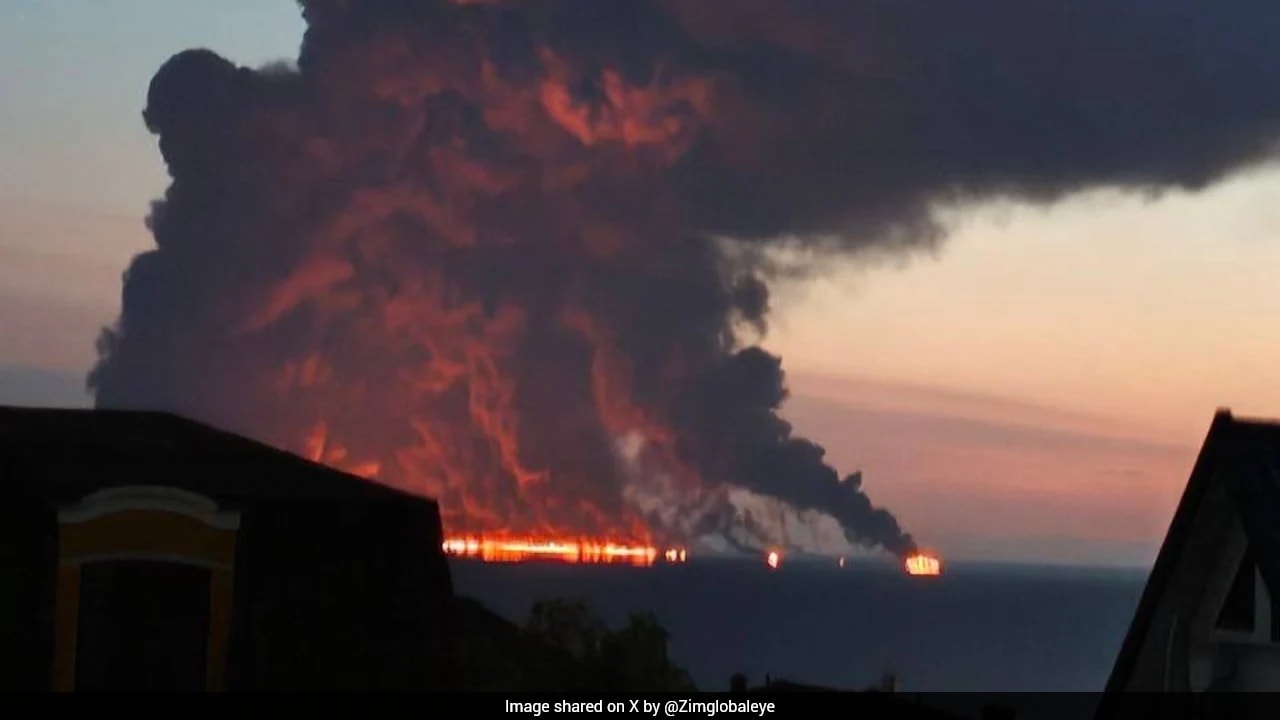
The maritime industry has spent centuries worrying about reefs, rogue waves, and engine failures. Today, the greatest threat to a crew member sleeping below deck is a state-sponsored autonomous explosive skimming across the dark water at forty knots. When an oil tanker carrying twenty-three Indian seafarers catches fire following a drone strike, the crisis is no longer confined to regional geopolitics. It represents a terrifying evolution in modern naval warfare, where civilian merchant shipping functions as collateral damage in an escalating technological arms race.
The incident involving the tanker carrying twenty-three Indian crew members highlights a grim operational reality. Modern commercial vessels are traversing active combat zones without defensive shields, adequate air defense, or military escorts. As the conflict in Eastern Europe spills over into vital maritime corridors, the vulnerability of the global supply chain has been exposed in the harshest possible light.
The Anatomy of a Maritime Strike
Commercial oil tankers are floating industrial plants. They are massive, slow-moving, and filled with highly combustible hydrocarbons. When an uncrewed surface vessel or aerial drone strikes a hull, the resulting fire is not a localized incident. It is a multi-front emergency involving explosive shockwaves, structural breaches, and cascading fuel ignitions.
For the twenty-three Indian crew members onboard, the attack meant transitioning instantly from routine watchkeeping to an existential fight for survival. Merchant mariners are trained for firefighting, abandon-ship drills, and engine room floods. They are not trained to repel military-grade kinetic weapons guided by satellite telemetry.
The weapon systems targeting these vessels have grown increasingly sophisticated. Early iterations relied on basic remote piloting. Current generations utilize autonomous terminal guidance, making countermeasures nearly impossible for civilian crews armed only with water hoses and basic fire suppression foam. When a tanker takes a direct hit, the structural integrity of the vessel is compromised long before firefighting teams can assemble on deck.
The Human Cost and the Seafarer Shortage
Global trade relies on an invisible workforce. Over eighty percent of the world's physical goods move by sea, propelled largely by officers and ratings from nations like India, the Philippines, and Eastern Europe. These individuals sign contracts spanning months, operating in hazardous conditions far from home.
By dragging civilian crews into the crossfire of the Black Sea and adjacent trade routes, the conflict is accelerating a looming labor crisis. Why would an experienced engineer or deck officer sign a contract for a voyage that risks a missile or drone strike?
Maritime recruitment agencies are already reporting rising insurance premiums and widespread pushback from unions. Crew members are demanding war-zone bonuses, but financial compensation does little to stop shrapnel or suppress chemical fires. If the risk profile of commercial shipping continues to deteriorate, shipping companies will face severe staffing shortages. Ships may sit idle in ports not because of a lack of cargo, but because human beings refuse to sail into a war zone.
The Insurance and Economic Domino Effect
Every explosion on a tanker sends immediate shockwaves through global financial markets. Marine insurance underwriters adjust their risk models within hours of an attack. Premiums for voyages through contested waters skyrocket, adding millions of dollars to the cost of a single transit.
These costs are not absorbed by shipping conglomerates. They trickle down to the end consumer, manifesting as higher fuel prices, inflated manufacturing costs, and generalized economic friction. The militarization of trade routes turns ordinary commodities into geopolitical hostages.
Furthermore, environmental liability hangs over every incident. A burning tanker in a confined sea lane threatens ecological disaster. When a vessel laden with crude oil catches fire, the potential for a catastrophic spill rivals that of any traditional environmental disaster, threatening fisheries, tourism economies, and coastal ecosystems across multiple sovereign borders.
The Breakdown of International Protections
The law of the sea has long maintained a fragile distinction between military combatants and civilian merchant vessels. Under traditional frameworks, commercial shipping is supposed to remain neutral and protected during regional conflicts. That legal architecture is fracturing in real-time.
When drones lack the discernment to differentiate between a military logistics vessel and a privately chartered commercial tanker, international maritime law becomes little more than ink on paper. State actors engaging in asymmetric warfare in coastal waters often view the commercial status of a ship as secondary to its potential utility to an adversary.
Governments whose citizens make up the backbone of these merchant crews are finding themselves in an impossible diplomatic bind. India, which supplies a massive percentage of the global maritime workforce, must balance robust bilateral relations with the stark reality that its citizens are routinely operating in the line of fire. Diplomatic protests and safety advisories ring hollow when a drone is already burning on the deck of an oil tanker.
The fire on that tanker is an alarm bell for the entire global economy. As long as civilian crews are left unprotected on the front lines of technological warfare, the next disaster is merely a matter of coordinates and timing.