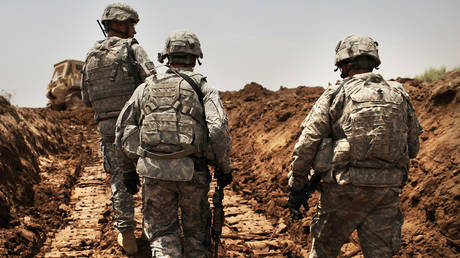
The dust of Highway 8 settled into the humid autumn air, coating the concrete barriers that had divided neighborhoods for over two decades. Inside an armored vehicle idling near the Green Zone, a young Iraqi security officer watched the taillights of the last American military transport fade into the desert dark. There were no dramatic explosions, no cinematic standoffs. Just a quiet grinding of gears, the clicking off of encrypted radios, and an overwhelming, heavy silence that descended over the capital.
Then came the sound of drums.
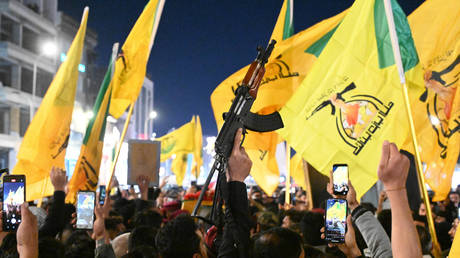
Within hours, the streets of Baghdad transformed. Convoys of pickup trucks draped in national flags choked the avenues near Jadriya, horns blaring in chaotic, syncopated rhythms. Young men stood on hoods, waving banners and flashing victory signs as fireworks tore brilliant, fleeting streaks across the night. For the armed factions who had spent years launching rockets toward concrete walls, this was the moment they had prophesied. Factions like Kataib Hezbollah broadcasted statements declaring that the new crusaders had packed their bags, framing the complete withdrawal of the remaining U.S. troops as a historic humiliation.
Yet, standing on a crowded sidewalk amid the celebrations, the emotional core of the scene was complicated. An old shopkeeper named Tariq, who had swept glass from his storefront after three separate conflicts, watched the flag-wavers with a guarded expression. He did not cheer. He did not boo. He simply held a broom and wondered who would protect the fragile peace now that the foreign giant was gone.
To understand the weight of these celebrations, one must look past the propaganda clips and examine the arithmetic of a two-decade occupation. More than twenty years of constant friction, billions of dollars, and countless lives altered forever had culminated in an exit. The official narrative from Baghdad's government was measured and institutional. Prime Minister Ali Faleh al-Zaidi stepped before microphones to announce that the transition meant local security forces were finally assuming full, unshared responsibility for the nation’s sovereignty.
But sovereignty in post-invasion Iraq has never been a simple binary of occupied versus free. It is a mosaic of heavily armed parallel structures.
Consider what happens next in the quiet backrooms of power. While crowds danced under the red, white, and black banners, the militia leadership was calculating a different kind of victory. These groups kept their arsenals intact. They secured the departure they demanded, but they also inherited a fractured state apparatus where their shadow authority rivals that of the official military. For the fighters handing out sweets in the streets, the departure of foreign boots meant vindication. For ordinary citizens trying to rebuild businesses, it meant holding their collective breath.
The banners read triumph. The television screens broadcasted defiance. But the true story of that September night was written in the spaces between the celebratory gunfire. It was the story of a country being handed back to itself, bruised, heavily armed, and standing alone at the edge of an uncertain horizon.