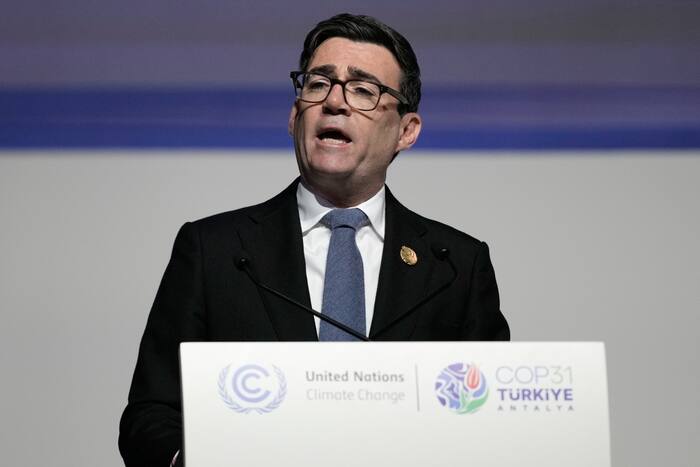
At a Diwali Milan gathering in New Delhi, Prime Minister Narendra Modi took direct aim at one of Indian politics' most enduring slogans, contrasting the Congress party's 1971 "Garibi Hatao" campaign with his own administration's record on lifting citizens out of poverty, citing recent World Bank assessments to validate his claim. For half a century, erasing poverty has served as the ultimate electoral currency in New Delhi, yet the political fireworks at the event mask a fierce, unresolved battle among economists over how India actually counts its poor.
Slogans win elections. Measuring human deprivation, however, requires spreadsheets, household surveys, and methodologies that have become deeply politicized over the past decade. When Modi stood before journalists and party workers to argue that decades of socialist rhetoric failed to deliver what targeted welfare schemes achieved in ten years, he was tapping into a foundational divide in modern Indian economic history.
The Ghost of 1971
To understand why a 55-year-old campaign slogan still triggers sharp political exchanges at festive gatherings, you have to look at what Garibi Hatao represented when Indira Gandhi introduced it ahead of the 1971 general election. Facing a split in her own party and an opposition coalition campaigning under the banner "Indira Hatao" (Remove Indira), Gandhi flipped the script with a two-word promise to abolish poverty.
It was a masterstroke of political communication. It bypassed regional caste brokers and spoke directly to the bottom of the economic pyramid.
Yet the policy architecture built around that slogan relied heavily on state control. Throughout the 1970s and 1980s, poverty alleviation meant nationalized banks, sprawling public sector enterprises, strict industrial licensing, and leaky subsidy networks. Rajiv Gandhi famously acknowledged the systemic rot in the mid-1980s when he estimated that out of every rupee spent by the central government on welfare, barely 15 paise reached the intended beneficiary on the ground. The remaining 85 paise vanished into administrative overhead and corruption.
By invoking Garibi Hatao during Diwali Milan, Modi was not merely attacking a rival party. He was attacking an entire economic philosophy—one characterized by top-down state distribution that often created dependency without building assets. His counter-argument rests on the JAM Trinity (Jan Dhan bank accounts, Aadhaar biometric identification, and Mobile connectivity), which rewired how the Indian state transfers cash and subsidies, cutting out local middlemen who had thrived for generations.
What the World Bank Actually Said
Political speeches thrive on broad strokes, while international financial institutions deal in caveats. When government officials and the Prime Minister cite the World Bank to validate India's poverty reduction, they are generally pointing to two distinct sets of findings that have reshaped the global development debate over the last few years.
First came the World Bank's 2022 policy research working paper by economists Sutirtha Sinha Roy and Roy van der Weide. In the absence of an official Indian government consumption expenditure survey between 2011 and 2022, researchers used private consumer pyramid data from the Centre for Monitoring Indian Economy (CMIE) to estimate extreme poverty—defined as living on less than $2.15 a day in 2017 purchasing power parity terms. Their conclusion was striking: extreme poverty in India fell by 12.3 percentage points between 2011 and 2019, dropping from 22.5 percent to 10.2 percent, with rural areas seeing the sharpest decline.
Second, international agencies have increasingly pointed to the Multidimensional Poverty Index (MPI), developed alongside the Oxford Poverty and Human Development Initiative and utilized by India's own policy think tank, NITI Aayog. Rather than looking strictly at cash income or daily calorie intake, the MPI tracks ten indicators across health, education, and standard of living—including access to cooking fuel, sanitation, drinking water, electricity, and housing.
According to NITI Aayog's baseline data, roughly 248 million Indians escaped multidimensional poverty between 2013-14 and 2022-23. When the Modi government distributes free cooking gas cylinders under the Ujjwala scheme, builds rural toilets under Swachh Bharat, or connects villages to the electrical grid, those interventions register immediately as improvements in multidimensional poverty, even if a household's cash income remains modest.
International observers took notice. Brookings Institution researchers, analyzing newly released household consumption data in 2024, went so far as to suggest that extreme poverty in India had dipped below 3 percent, effectively signaling the near-elimination of severe destitution as defined by the baseline global threshold.
The Missing Data Problem
Numbers only tell the truth if the yardstick stays the same. Beneath the celebratory headlines lies a messy methodological dispute that has divided India's statistical establishment since 2019.
Historically, India measured poverty using the Household Consumption Expenditure Survey (HCES), conducted roughly every five years by the National Sample Survey Office (NSSO). The 2011-12 survey served as the last universally accepted baseline. When the government completed the 2017-18 survey, the findings were leaked to the press, suggesting that rural consumer spending had actually fallen for the first time in four decades—a politically explosive conclusion following the 2016 demonetization shock and the rollout of the Goods and Services Tax.
The Ministry of Statistics and Programme Implementation promptly junked the 2017-18 report, citing "data quality issues." For more than a decade, India operated without an official, updated poverty line.
When the government finally released factsheets from the 2022-23 Household Consumption Expenditure Survey in early 2024, economists noticed a major structural change. Surveyors had altered the questionnaire design, moving from a single-visit recall method to multiple visits with updated item lists to better capture modern spending habits. While the new data showed rural monthly per capita consumption expenditure rising significantly faster than urban spending, purists argued that changing the survey instrument made direct apples-to-apples comparisons with 2011-12 statistically hazardous.
Furthermore, India still lacks an updated official poverty line. The last formal benchmarks—set by the Tendulkar Committee in 2009 and revised by the Rangarajan Committee in 2014—have never been formally replaced by the current administration. Without a clearly defined domestic threshold, the government leans heavily on the World Bank's $2.15 extreme poverty line or the MPI framework.
Critics argue that the $2.15 benchmark is far too low for a lower-middle-income economy aspiring to become a global manufacturing hub. By World Bank standards for lower-middle-income countries, the poverty threshold sits at $3.65 per day. Under that higher bar, hundreds of millions of Indians remain vulnerable, living just one medical emergency or failed monsoon away from sliding back into deprivation.
Welfare Saturation Versus Job Creation
Even if you accept the most optimistic readings of the World Bank and NITI Aayog numbers, an uncomfortable structural question emerges from the data. How much of India's recent poverty reduction is driven by rising wages, and how much is propped up by state-funded subsidies?
Look closely at the food security apparatus. During the COVID-19 pandemic in 2020, the central government launched the Pradhan Mantri Garib Kalyan Anna Yojana, providing 5 kilograms of free food grains per person every month on top of heavily subsidized rations. In late 2023, rather than winding down the emergency measure, the administration extended the free grain program for another five years, covering roughly 813 million people—nearly 60 percent of the nation's population.
Think about the tension embedded in that single policy decision. On one hand, the government celebrates World Bank figures showing that extreme poverty has been virtually eradicated. On the other hand, the state deems it necessary to provide free staple grains to over 800 million citizens until 2028 to prevent hunger and cushion household budgets against food inflation.
Both things can be true at the same time, and that paradox defines the modern Indian economy.
Targeted welfare delivery—what the administration calls "saturation coverage"—has unquestionably raised the floor of human dignity. A family in rural Uttar Pradesh or Bihar today is far more likely to have a concrete roof, a bank account, an indoor toilet, and a subsidized gas connection than they were in 2010. Direct benefit transfers have plugged the notorious leaks of the Garibi Hatao era, ensuring that pension payouts, maternal health stipends, and farmer income support arrive directly in beneficiaries' accounts.
Yet welfare saturation is not the same thing as structural economic mobility. True, durable poverty eradication happens when agrarian laborers transition into productive, formal-sector manufacturing and services jobs.
Here, the record is far more mixed. While India has led major economies in post-pandemic GDP growth, labor force data from the Periodic Labour Force Survey (PLFS) shows that the share of workers employed in agriculture actually ticked upward after 2019, reversing a decades-long trend of workers leaving the farm for factory and city jobs. Self-employment—often a euphemism for low-productivity street vending, gig work, or unpaid family labor on small plots—accounts for well over half of India's workforce.
Real rural wages, adjusted for inflation, remained largely stagnant between 2019 and 2024. Households survived and improved their living standards largely because state subsidies covered their basic caloric and housing needs, freeing up scarce cash for consumer goods, mobile data, and healthcare.
The Political Economy of Dignity
Why, then, does Modi's critique of Garibi Hatao resonate so powerfully with voters, regardless of what development economists argue in academic journals?
Because politics operates on lived contrast, not regression analysis. For forty years after 1971, poor households experienced the Indian state as a distant, often predatory bureaucracy. Getting a ration card, a gas connection, or a subsidized housing grant required bribing local officials or begging political intermediaries. Poverty was managed rather than alleviated, keeping voters dependent on local patrons every election cycle.
By digitizing the welfare state and branding tangible physical assets—houses, toilets, water taps—as direct guarantees from New Delhi, the current administration transformed basic public goods into visible proof of governance. When a citizen receives cash directly into a phone-linked bank account without paying a cut to a village middleman, the contrast with the rhetoric of the 1970s requires no World Bank footnote to be understood.
Opposition parties have struggled to counter this narrative. When Congress leaders promise higher cash transfers or expanded caste-based quotas, they often end up validating the very welfare-first model the ruling party has already industrialized at massive scale.
The Next Threshold
Erasing extreme destitution—ensuring people do not starve, sleep in the open, or defecate in fields—is a historic achievement for a country of 1.4 billion people. Whether the exact figure of extreme poverty sits at 3 percent or 10 percent, the baseline of survival in India has shifted upward over the last fifteen years.
Moving from survival to genuine middle-class prosperity, however, requires an entirely different set of tools. Free grain and cash transfers cannot substitute for quality public schools, functional primary healthcare clinics, and labor-intensive factories capable of absorbing millions of young workers entering the job market every year.
Slogans like Garibi Hatao defined an era when the state promised to rescue the poor through central planning. Today's model rescues them through digital logistics and fiscal transfers. Until India solves the riddle of mass formal job creation, the war on poverty will remain half-won—measured not by the wealth citizens generate on their own, but by the efficiency of the state apparatus keeping them afloat.