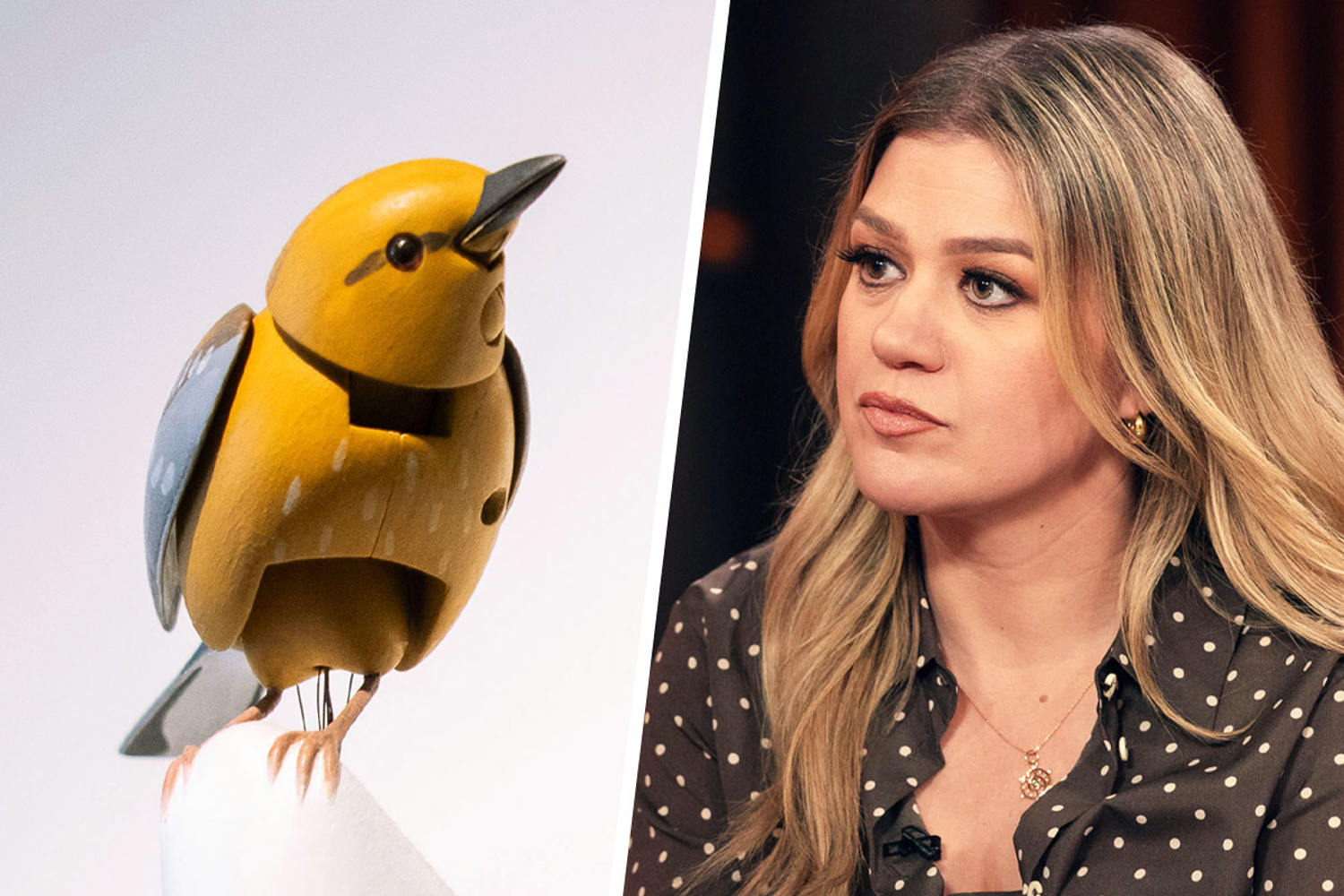
Brass gears do not bleed. Yet when a dispute over a mechanical bird collides with a pop star’s brand and a Brooklyn shopkeeper’s pride, the wound feels remarkably human.
Walk past a crowded shop window in Brooklyn on a damp autumn afternoon, and you will see people stop for reasons they can barely name. Not for mass-produced sweatshirts. Not for algorithms telling them what to buy. They stop for things with weight, patina, and a trace of obsession. Inside, dust motes dance in a shaft of afternoon light across glass cases, shelves of oddities, and a clockwork creature—Molly, the mechanical bird—sitting motionless behind the panes.
Outrageous.
That is the first word that comes to mind when a Brooklyn store entangled in a feud with Kelly Clarkson puts a $15 million price tag on a mechanical bird. Fifteen million dollars. Enough to buy a collection of grand brownstones, fund an independent film, or underwrite a small neighborhood’s arts budget for a decade. For a bird made of metal and motion rather than bone and feathers, the number sounds like a joke told at a gallery opening—until you realize nobody is laughing.
A quick clarification on what we actually know: the public headline centers on a Brooklyn store embroiled in a feud with Kelly Clarkson announcing that Molly, the mechanical bird, is now available for $15 million. Beyond that core premise, fine details—such as the exact provenance of the automaton, the precise legal or personal contours of the dispute, or whether any buyer has stepped forward—remain sparse or unverified in the headline alone. We should treat the $15 million figure as the shop’s stated asking price rather than an appraised settlement or guaranteed sale value.
Still, you do not have to know every docket number or receipt to understand why this story sticks in the throat. People fight over strange things when what they really care about is dignity, memory, and control.
When an Object Becomes a Battleground
To see why a mechanical bird becomes a lightning rod, picture a hypothetical shopkeeper—let’s call him Arthur, purely as an illustration of the pressures small-business owners face in celebrity-adjacent disputes. Arthur spends years curating objects that carry a quiet pulse: a wind-up music box with a missing tooth, a brass compass that points a fraction off true north, a clockwork songbird whose wings lift and fall when a key turns. To Arthur, every piece in the shop is an argument against disposability. When a high-profile clash erupts involving someone as recognizable as Kelly Clarkson, the shop stops being a quiet corner of Brooklyn and turns into a stage.
Celebrity feuds are rarely just about the immediate spark. They are amplifiers. A famous name brings cameras, comment sections, and instant polarization. Suddenly, an argument that might have been settled over coffee or a quiet letter becomes a public spectacle where strangers pick sides based on loyalty, skepticism, or sheer boredom.
And in the middle of that noise sits Molly.
Why a mechanical bird? Think about what an automaton represents. Long before screens flickered in our pockets, craftspeople built clockwork birds to mimic life without quite being alive. They sing without lungs. They flap without flight. They hold the eerie, captivating tension between artifice and soul. When an object already carries that uncanny magic, attaching a headline-grabbing feud and a $15 million sticker turns a curio into a symbol. Is it art? Is it bait? Is it a monument to a grudge?
Let’s pause and admit something honest: price tags like $15 million make normal people feel a little dizzy. Most of us measure value in groceries, rent, electric bills, and the occasional treat that does not wreck our monthly budget. When a number leaps into eight figures for a single mechanical bird, it can feel alienating, even absurd. You might wonder whether the store is dead serious, making a provocative statement about value and visibility, or testing how loud the internet can roar.
That uncertainty is part of the hook. A reasonable price invites a transaction. An astronomical price invites a conversation.
The Hidden Math of Attention and Value
Consider what happens next: once a number that large enters the room, nobody talks about brass and springs anymore.
They talk about leverage.
In modern commerce—especially in cities like New York where real estate is brutal and attention is the scarcest currency of all—an unusual object can function like a lighthouse. Even if nobody walks through the door with a $15 million check tomorrow morning, the claim itself travels across feeds, group chats, and entertainment columns. It reframes a local shop feud from a he-said-she-said squabble into a high-stakes saga about a prized mechanical bird.
Consider a metaphor: imagine a town square where two people argue over a lantern. If the lantern is ordinary, passersby shrug and keep walking. If someone announces the lantern is worth a king’s ransom because of who touched it or who fought over it, the crowd gathers. Suddenly the argument isn’t just about light. It’s about status, narrative ownership, and who gets the last word.
That is the invisible stake in disputes involving celebrities and independent businesses. Power is asymmetrical. A household name like Kelly Clarkson carries decades of cultural presence, massive reach, and an established public persona. A Brooklyn storefront carries brick, inventory, reputation, and vulnerability. When a feud breaks out, the smaller player often feels the pressure of being flattened into a footnote—or worse, cast as the villain in someone else’s storyline.
Putting a $15 million price tag on Molly flips the script in a theatrical way. Instead of waiting to be judged by how the feud looks from the outside, the seller names a figure so audacious it forces everyone to reckon with the object on the seller’s terms. Whether that strategy wins admiration or eye-rolls depends entirely on what you believe a thing is worth when emotion enters the ledger.
What Makes a Mechanical Bird Worth Anything at All?
Let’s strip away the celebrity heat for a moment and ask a quieter question. Suppose there were no feud. Suppose there were no famous singer anywhere near the story. What makes a mechanical bird compelling in the first place?
I have spent enough time around old workshops and antique markets to know the smell of machine oil, camphor, and dry paper. You learn quickly that mechanical things tell on themselves. You can fake a glossy coat of paint, but you cannot fake the rhythm of a well-balanced escapement or the gentle click of a spring winding down. When a clockwork bird moves, your eye watches the tiny rise of the chest, the tilt of the beak, the feathering of the tail—and for a second, your brain plays along. You know it is brass and steel. Your heart still leans in.
That is why mechanical curiosities have fascinated humans for centuries. They hold up a mirror to our own longing to preserve moments, voices, and beauty against time. A real bird ages, grows fragile, and dies. A mechanical bird stays put, waiting for the next turn of the key, freezing a gesture in time.
Yet price and meaning are not twins. Sometimes they barely wave at each other across the street.
Art historians, collectors, and everyday buyers have argued for ages about what sets a price. Is it rarity? Craftsmanship? Historical lineage? Or simply the moment a buyer decides, I have to have that, and I will pay whatever it takes to keep it from anyone else?
When a store in Brooklyn names $15 million for Molly, it is blending all of those questions into one sharp provocation. If you are a collector looking for a trophy with a story, the feud adds drama. If you are a skeptic looking for hype, the price looks like theater. Either way, the bird is no longer just sitting on a shelf. It is doing work.
Why Feuds Linger Longer Than Headlines
Headline cycles move fast. Tomorrow brings another controversy, another tour announcement, another viral clip, another dispute somewhere else. Most internet uproars burn hot and cool down before the week ends.
So why do clashes like this—a Brooklyn shop, a feud tied to Kelly Clarkson, a mechanical bird priced at $15 million—linger in people’s heads a little longer?
Because they tap into universal frictions:
- Pride versus practicality: Most of us know what it feels like to dig our heels in when we feel cornered or misunderstood, even when digging in costs us peace of mind.
- The gap between public fame and private reality: Fans see a star on screen or stage; neighbors see a storefront on a familiar block. Neither view captures the whole truth behind closed doors.
- The absurdity of modern price tags: We live in an era where digital tokens, vintage sneakers, obscure art pieces, and headline-driven items can command jaw-dropping sums while everyday affordability squeezes families hard.
It is okay to feel conflicted here. You can admire Kelly Clarkson’s voice and still wonder how a local shop dispute escalated into public crossfire. You can roll your eyes at a $15 million asking price for a mechanical bird and still appreciate the sheer nerve of putting a number that big on a window display. Life rarely hands us neat little boxes where one side is pure saint and the other is pure villain.
Usually, there is history we don’t see, hurt feelings that grew teeth, and a desire to be taken seriously.
Stepping Back From the Noise
If you ever find yourself standing outside a shop like that—rain misting the glass, traffic humming down a Brooklyn street, your phone buzzing with hot takes—take a breath before deciding what to think.
Look past the loudest numbers and the sharpest jabs. Ask what is actually happening beneath the spectacle. A feud got oxygen. A mechanical bird became a bargaining chip, a symbol, or a punchline, depending on who is holding the microphone. And a price tag of $15 million became a mirror reflecting how much weight we give to fame, conflict, and novelty.
Someday, the dispute will fade into archive links and trivia. The shop’s windows will catch new seasons of light. And somewhere behind the glass, Molly’s brass and gears will wait—silent until someone winds the spring, watching the world argue over what a bird is worth when it can never take flight.