The air in the room does not move. It sits heavy, wet, and thick against the skin, smelling faintly of baked dust and old asphalt. It is three in the morning in a cramped apartment where the window fan rattles a frantic rhythm against a frame that has warped from months of relentless drought.
In the bed lies seventy-two-year-old Mateo. He is sleeping, but his sleep is not rest. His breathing is shallow, whistling softly through parched lips. His blanket has long been kicked aside, yet his skin radiates an intense, dry heat. Outside, the city is a concrete oven that refuses to cool, hoarding the glare of the day through walls of brick and glass.
Mateo does not know about El Niño. He does not watch the scientific briefings tracking sea surface temperatures across the equatorial Pacific, thousands of miles away off the coast of Peru. He does not know that a vast, warm pool of water has shifted eastward, altering the jet stream, bending the winds, and setting off a chain reaction across the globe. All he knows is that his heart feels heavy in his chest, like a wet stone, and that the water in the pitcher on his nightstand is lukewarm and tastes of iron.
By February 2027, researchers project that Mateo’s silent struggle will find its echo in nearly half a million similar stories. Not all of them will end quietly.
Science often speaks in dry prose. It deals in statistical anomalies, confidence intervals, and multivariate projections published in journals with austere gray covers. When a recent epidemiological study warns that the compounding heat waves driven by a powerful El Niño cycle could trigger up to half a million extra deaths worldwide by early next year, the numbers wash over us as abstractions. Five hundred thousand. A decimal point on a graph. A footnote in a global risk assessment.
Numbers do not sweat. Numbers do not wake up gasping for breath in a room where the air conditioner died three days ago and the repairman is backed up for weeks.
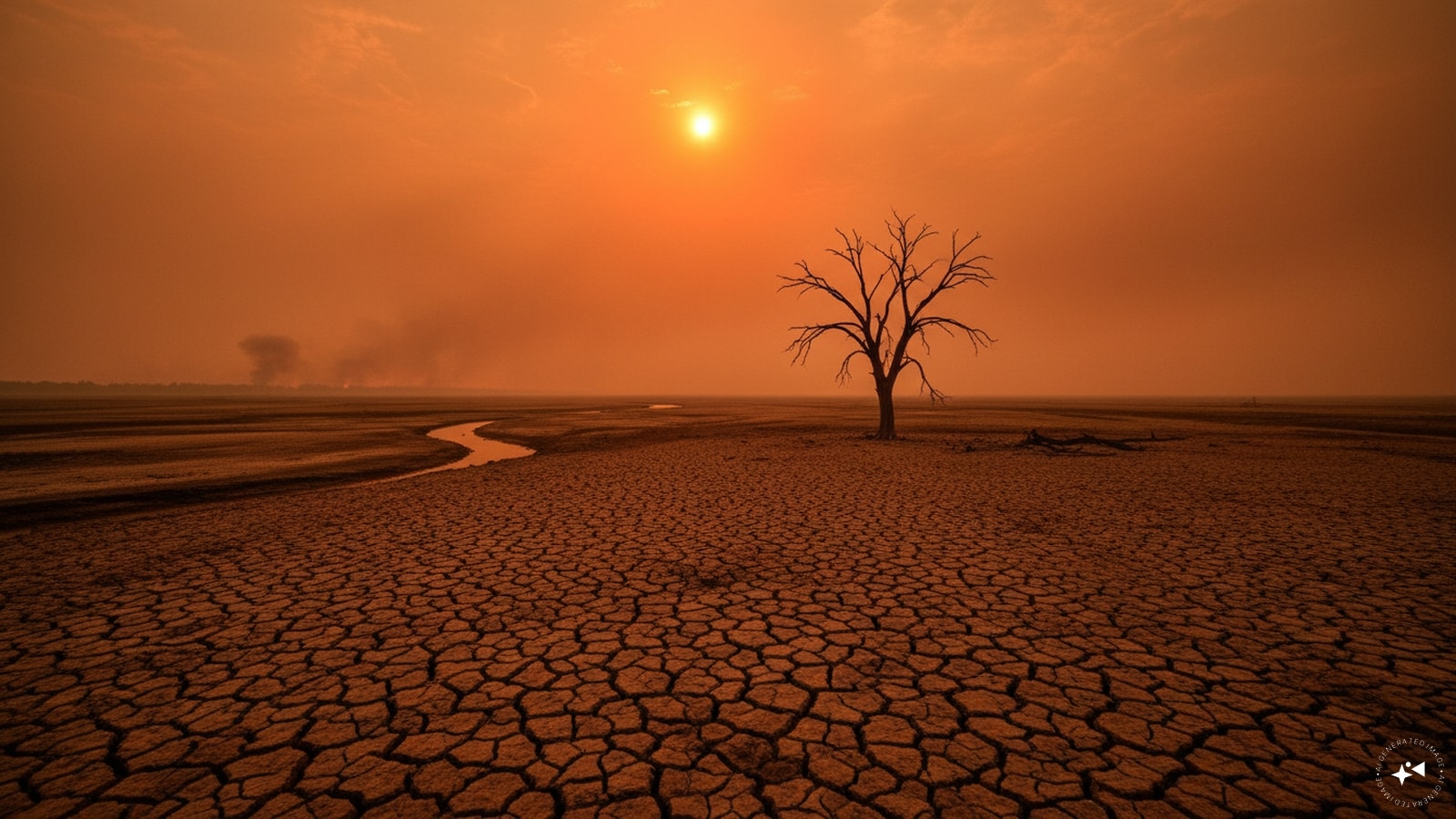
To understand what is coming, we have to look past the spreadsheets and step into the weather systems that shape our lives. El Niño is not merely a weather pattern. It is an engine of atmospheric disruption. When the trade winds weaken, warm water piles up in the central and eastern Pacific. This immense thermal anomaly acts like a radiator turned up to its highest setting in a closed room. The atmosphere responds by shifting rainfall belts, intensifying droughts in some regions, and unleashing torrential floods in others.
But the most insidious weapon in this meteorological arsenal is heat.
Heat is an invisible thief. Unlike a hurricane, which announces its arrival with screeching winds and flying debris, or a flood that turns streets into rushing brown rivers, extreme heat creeps in through the cracks. It settles over cities and countryside alike, trapping particulate matter, baking ozone into toxic soup, and pushing human physiology past its breaking point.
Consider the human body. It is a remarkable, fragile thermodynamic machine. To survive, it must maintain a strict internal temperature around 98.6 degrees Fahrenheit. When the ambient temperature climbs, and when the air is so saturated with humidity that sweat can no longer evaporate from the skin, that machine starts to fail. The heart pumps harder, trying to push blood to the skin to cool it down, even as the organs begin to starve for oxygen. For the elderly, for those with pre-existing cardiovascular or respiratory conditions, and for outdoor laborers whose livelihoods depend on unshaded toil, this is a slow, grinding mechanical breakdown.
It happens cell by cell.
Dr. Elena Vance has spent two decades studying urban microclimates in rapidly growing tropical and subtropical cities. She has watched the baseline temperatures creep upward year after year, like a tide that never recedes.
"We talk about heat as if it’s an inconvenience," Elena says, leaning over a topographical map of a densely populated metropolitan area, her finger tracing the dense red blotches that mark urban heat islands. "We think of it as a sunny afternoon at the beach. But extreme heat during an El Niño event is an acute physiological stressor. It attacks every chronic vulnerability a person has. If you have a weak heart, it pushes you over the edge. If your kidneys are compromised, dehydration finishes the job. It is the ultimate force multiplier for vulnerability."
She points to a cluster of neighborhoods marked by lower income levels and sparse tree cover.
"Look at these districts. There is no green space. The roofs are corrugated tin. The asphalt absorbs the sun all day and radiates it back all night. When El Niño supercharges the regional temperatures, these neighborhoods become ovens. The people living here don't have the luxury of escaping to air-conditioned retreats. They are trapped inside their own biology, fighting an environment that has turned hostile."
The statistics behind the impending crisis are stark, yet they tell only part of the story. The projections of hundreds of thousands of excess deaths are built on historical data from past super-El Niños—events that reshaped global agriculture, triggered massive forest fires, and strained public health systems to their breaking point. But the baseline today is different. The planet is already warmer than it was during the major events of the late twentieth century. Every degree of background global warming acts as kindling, making the cyclical fury of El Niño burn hotter and bite deeper.
When the heat persists through the night, the human body never gets to reset. That is the hidden danger. A hot day is manageable if the night brings relief, allowing body temperatures to drop and cardiovascular strain to ease. But during severe heat waves fueled by climate anomalies, tropical nights remain warm and humid. The body stays on high alert for twenty-four hours a day. Day after day. Week after week.
By the time February 2027 rolls around, the cumulative toll of these sleepless, sweltering cycles will have penetrated deep into the demographic fabric of vulnerable nations.
We are not helpless against this tide, but our collective response has been paralyzed by the abstract nature of the threat. For too long, extreme heat has been treated as an invisible crisis—a silent emergency that lacks the dramatic photo-op of a collapsed bridge or a mudslide-swallowed village. Municipalities issue generic warnings to stay indoors and drink water, as if hydration alone could solve a systemic failure of urban design and public infrastructure.
True resilience requires a fundamental reimagining of how we live in a warming world. It means treating shade not as an aesthetic afterthought, but as a critical public health infrastructure. It means retrofitting public housing with passive cooling techniques, redesigning city streets to break up asphalt deserts with native vegetation and reflective surfaces, and establishing emergency cooling centers that are accessible, trusted, and open around the clock.
It means recognizing that climate change is not a distant threat looming on some distant horizon in the mid-twenty-first century. It is here, rattling the window fan in Mateo’s apartment at three in the morning. It is pressing down on the chest of a warehouse worker in a sun-baked industrial park. It is ticking away in the quiet failure of an overworked heart.
The fever in the Pacific will eventually break. The warm waters will disperse, the trade winds will return to their familiar paths, and the ocean will find a new equilibrium. But the half a million lives hanging in the balance between now and early next year represent a debt we are being asked to pay for decades of atmospheric negligence.
Back in the quiet apartment, the digital clock on the wall glows a dim, stubborn red. The numbers shift silently from 3:14 to 3:15. In the next room, a floorboard creaks as the building expands slightly under the lingering, unrelenting weight of the night. Outside, the stars are obscured by a thick, heavy haze of stagnant air, waiting for a dawn that will bring no relief, only the return of the sun.