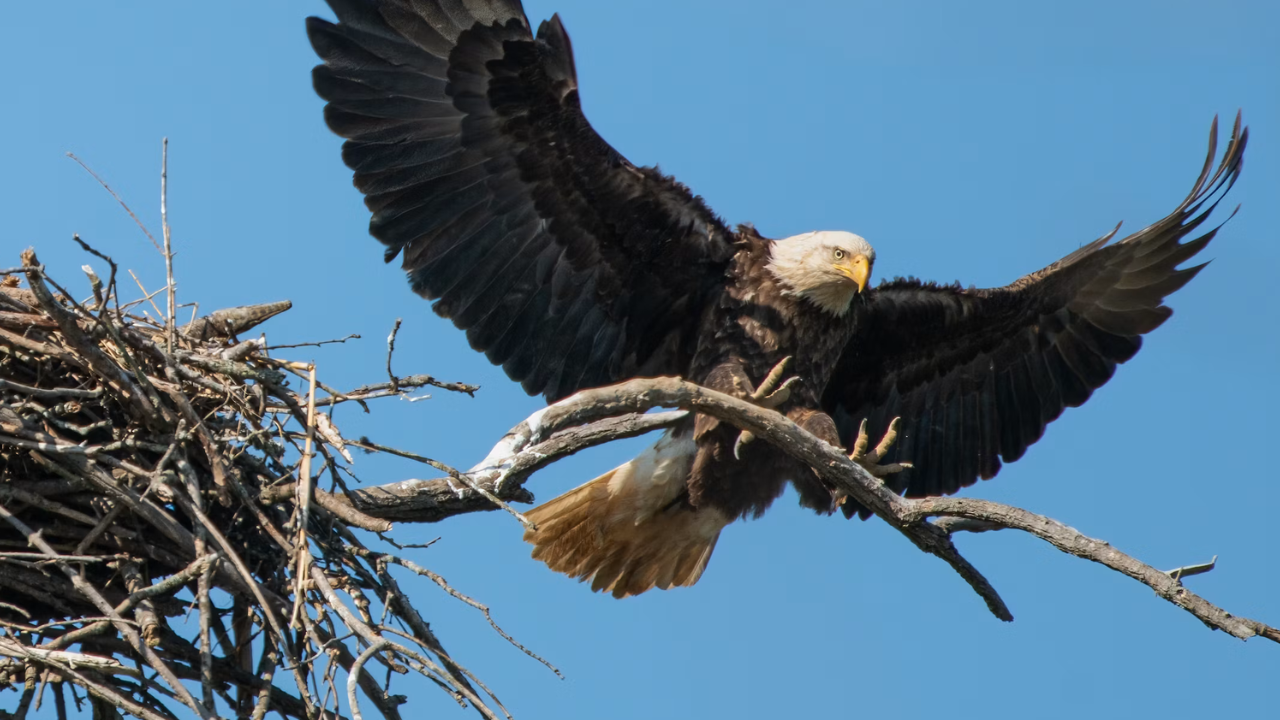
Federal wildlife enforcement actions rarely intersect with suburban agricultural friction points without exposing deep systemic misalignments between statutory frameworks and property management realities. The criminal information filed against a 66-year-old resident of Brush Prairie, Clark County, Washington, highlights this friction. Benjamin G. Allen faces federal prosecution under the Bald and Golden Eagle Protection Act and the Migratory Bird Treaty Act following the discovery of a dead bald eagle on February 5, 2026. The structural anatomy of this case provides an ideal framework for analyzing the intersection of wildlife conservation law, statutory penalties, and the operational economics of small-scale livestock husbandry.
The Statutory Architecture of Federal Avian Protection
To understand the severity of the charges, one must analyze the legal framework governing North American raptors. The bald eagle occupies a unique regulatory tier. Removed from the Endangered Species Act list in 2007 due to demographic recovery, the species remains strictly governed by two primary statutes that impose absolute liability for unauthorized lethality, regardless of ecological context or immediate provocation.
The Bald and Golden Eagle Protection Act establishes a Class A misdemeanor threshold for unauthorized taking, wounding, or killing. The statutory penalty calibration is exceptionally steep for a misdemeanor designation:
- First-time offenses carry a maximum custodial sentence of one year in federal prison.
- Financial penalties scale up to five hundred thousand dollars for individual defendants, reflecting the punitive weight assigned to protecting the species.
Simultaneously, the Migratory Bird Treaty Act functions as a strict liability statute criminalizing the destruction of protected migratory birds. In this case, prosecutors added a Class B misdemeanor charge under this secondary act, carrying an additional penalty of up to six months incarceration and a five-thousand-dollar fine.
This dual-charge strategy creates a severe asymmetrical risk profile for property owners. The legal system treats wildlife protection as an absolute public good, subordinating localized property defense rights entirely to federal oversight.
The Operational Realities of Backyard Poultry and Raptor Predation
The primary behavioral catalyst in this legal action is the proximity of livestock. Investigators confirmed that the defendant maintained a flock of domestic chickens adjacent to the location where wildlife officers recovered the deceased raptor. Bald eagles are opportunistic apex carnivores capable of targeting small livestock, including poultry, when natural foraging yields decline or when domestic setups present low-resistance caloric intake.
This dynamic creates an economic cost function for small-scale agricultural operators:
- Asset Vulnerability: Free-range or semi-confined poultry represent high-value, low-mobility targets for avian predators.
- Legal Exclusion: Federal statute provides zero operational latitude for preemptive lethal defense. Unlike mammalian predators in certain agricultural zones, protected raptors cannot be engaged under self-help doctrines unless specific, highly restricted federal permits have been issued prior to the incident.
- Mitigation Burden: The financial and operational burden of constructing fully enclosed, heavy-gauge netting or fortified runs falls entirely on the property owner.
When an apex predator enters a domestic agricultural footprint, property owners face an immediate tactical choice governed by high emotional friction and asymmetric legal consequences. The presence of chickens near the site of the shooting establishes circumstantial proximity, but federal investigators carry the burden of proving intent and execution.
Evidentiary Mechanics and Forensic Validation
The prosecution's case relies heavily on hard forensic pathology rather than circumstantial assumptions alone. Following the initial discovery by the Washington Department of Fish and Wildlife, law enforcement transferred the carcass for advanced diagnostic evaluation.
Radiographic imaging revealed two distinct shotgun pellets lodged within the cranial structure of the animal. Subsequent veterinary pathology confirmed that these projectiles penetrated the brain, establishing the definitive mechanism of death. Audio witness testimony reporting a sound resembling a gunshot earlier that morning aligns chronologically with the forensic timeline, providing investigators with a coherent evidentiary chain linking the acoustic anomaly to the physical trauma observed during the necropsy.
This methodology demonstrates the rigorous standard of proof required in federal wildlife violations. Prosecutors cannot rely on the mere proximity of livestock or generalized local friction; they must connect ballistic evidence directly to an actionable defendant via forensic matching and corroborating statements.
WA man accused of killing bald eagle with shotgun
This video provides additional local context regarding the ongoing federal prosecution and wildlife protection enforcement in Washington state.