A throbbing tooth is a universal language. Most of us know the precise, rhythmic torture of it. It is a sharp, white-hot flash that dictates how we chew, how we speak, and how we sleep. We tolerate it for a day, maybe two, before the desperation drives us to a clinic. We sit in a sterile room, receive a local anesthetic, and the problem vanishes. It is a routine, mundane piece of modern life.
But remove the clinic. Remove the right to walk out the door. Remove the autonomy to seek help when the throbbing turns into a fever. Suddenly, that mundane ache transforms into something entirely different. It becomes a ticking clock.
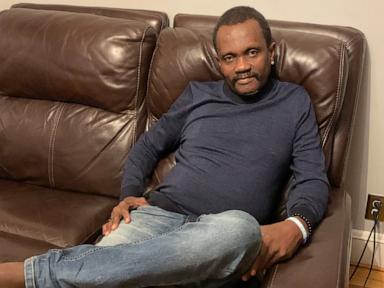
For Jean Jimenez-Joseph, a twenty-seven-year-old Haitian citizen, the clock started ticking inside a CoreCivic-operated immigration detention facility in Georgia. What began as a dental infection—a medical issue so routine it rarely warrants a second thought in daily life—ended in a solitary confinement cell.
This is not just a story about a medical oversight. It is a look at what happens when bureaucratic isolation meets biological reality, and how a treatable ailment can become a death sentence when a person is hidden from the world.
The Anatomy of an Overlooked Infection
To understand how a man dies from a toothache, we have to look past the bureaucratic paperwork and look at the human body. The mouth is not an isolated chamber. It is a gateway, heavily vascularized and directly connected to the rest of our vital systems.
When a tooth becomes deeply decayed, bacteria penetrate the soft inner pulp. If left untreated, the infection does not simply stay contained within the enamel. It seeks an exit. It pools at the base of the root, forming an abscess. From there, the microscopic invaders look for the path of least resistance.
In medical terms, this can lead to a condition known as Ludwig’s angina, a rapidly spreading connective tissue infection that originates in the floor of the mouth. The swelling can become so severe that it physically blocks the airway. The patient suffocates from their own jawline. Alternatively, the bacteria can breach the bloodstream. This triggers sepsis, a systemic wildfire where the body’s immune system destroys its own organs in a desperate bid to fight off the infection.
Consider a hypothetical patient in the outside world, let us call him Marc. Marc feels the swelling start. His fever spikes. Within hours, his family notices his slurred speech and takes him to an emergency room. He is pumped with high-dose intravenous antibiotics. A surgeon drains the abscess. The pressure relents. Marc goes home with a prescription and a second chance.
The science is simple. The execution is standard. But that execution relies entirely on responsiveness.
For Jean Jimenez-Joseph, the trajectory was devastatingly different. The official autopsy report later connected his tragic death while in custody to complications arising from these very dental woes. The infection was allowed the time and space it needed to conquer a young, otherwise viable body.
The Invisible Walls of Detention
The real tragedy lies in the systemic blindness that occurs within detention environments. When a person is placed behind bars, their health is no longer their own responsibility; it is entirely in the hands of the state and the private corporations contracted to run these facilities.
In custody, you cannot simply ask for an aspirin. You cannot schedule an emergency root canal. You must fill out a form. You must wait for a guard to clear the request. You must wait for a medical provider, who may only visit the facility a few times a week, to evaluate the severity of your pain.
When language barriers are added to this mix, the system grinds to a near-halt. Imagine trying to explain the nuance of a blinding, neurological pain when you do not share a primary language with the person holding the keys to the medicine cabinet. The agony is easily dismissed as exaggeration, or worse, malingering.
During his time at the Stewart Detention Center, Jimenez-Joseph’s mental and physical health deteriorated. Reports indicated he displayed signs of severe psychological distress, which ultimately landed him in solitary confinement—an isolation cell measuring a few paces across.
Isolation does not cure an infection. It merely muffles the screams.
The interaction between physical pain and psychiatric distress is well-documented by medical professionals. Constant, unremitting pain degrades cognitive function. It induces panic, paranoia, and deep despair. When a facility treats a screaming or disoriented detainee as a behavioral problem rather than a medical emergency, the consequences are catastrophic. The cell door shuts, the observation window remains dark, and the bacteria continue their quiet, relentless march.
The True Cost of Care Deferred
The systemic failures inside immigration detention facilities are often masked by legal jargon and corporate double-speak. Private prison companies operate on tight margins, where every dollar spent on outside medical transfers or specialized dental surgery is a dollar taken from the bottom line.
But the cost is never truly erased. It is simply transferred. It is paid by families who receive a phone call telling them their loved one is gone. It is paid by a society that compromises its moral standing by allowing preventable deaths to occur in its name.
The autopsy of Jean Jimenez-Joseph forced a brief, uncomfortable spotlight onto a system that prefers to operate in the shadows. It revealed that his death was not an unpredictable act of nature. It was the logical conclusion of a chain of neglect.
When a toothache kills a twenty-seven-year-old man in the twenty-first century, it is because multiple human systems failed simultaneously. The medical screening failed. The monitoring failed. The basic empathy required to look at a suffering human being and see a person in need of a doctor failed.
We often think of human rights as grand, abstract concepts debated in international courts. We think of freedom of speech, freedom of assembly, and protection from tyranny. But human rights are also microscopic. They exist in the access to a sterile needle, a dose of penicillin, and a dentist’s chair.
Jean Jimenez-Joseph’s life ended in a lonely room, surrounded by concrete, while a treatable infection ravaged his body. His memory remains a stark reminder that the true measure of a society's humanity is not how it treats its highest citizens, but how it cares for the vulnerable, the isolated, and the detained who are crying out in pain behind locked doors.