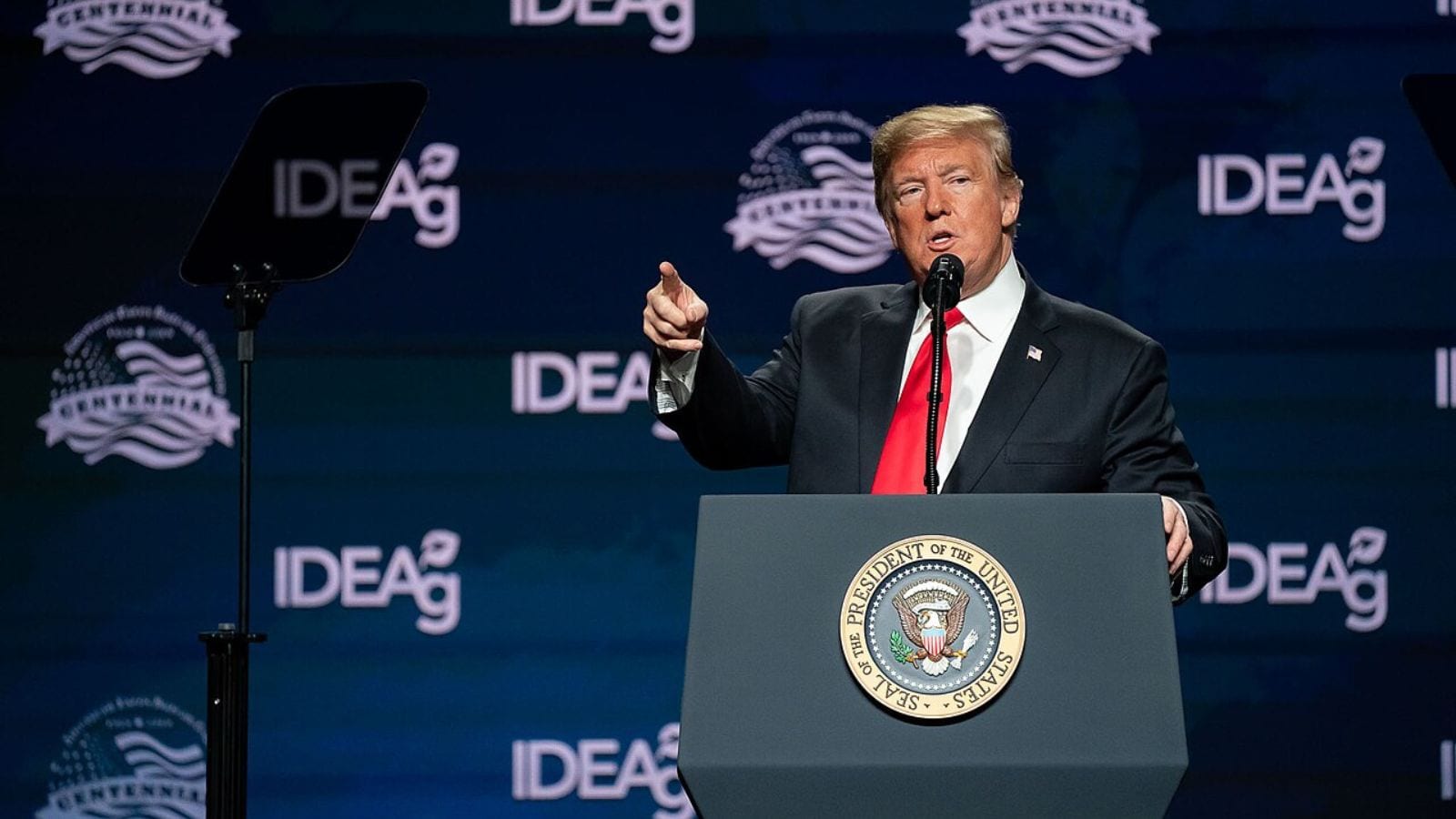
Political commentary loves a clean binary. Either Washington pours its attention, money, and political capital into confronting foreign adversaries like Iran, or it pulls back to tackle domestic crime and institutional corruption. When Donald Trump urges JD Vance—or any administration official—to pivot away from Tehran and focus on corruption and crime at home, media coverage almost universally frames the moment as a zero-sum strategic choice: foreign interventionism versus "America First" domestic renewal.
That framing misses how modern statecraft, transnational crime, and domestic corruption actually operate. Treating foreign policy toward Iran and domestic anti-corruption efforts as competing priorities ignores the deep structural overlap between the two—and obscures the constitutional and institutional realities that govern how a president actually fights crime at home.
The Myth of the Zero-Sum Security Budget
The conventional narrative assumes Washington operates on a single, finite dial: turn up pressure on Iran, and you automatically turn down resources for domestic law enforcement. In reality, the federal apparatus handling Middle Eastern deterrence and the machinery responsible for domestic criminal justice barely draw from the same operational pools.
- Military and diplomatic deterrence relies on the Department of Defense, the State Department, and the intelligence community's foreign-collection arms.
- Domestic anti-crime and anti-corruption enforcement relies on the Department of Justice, the FBI, federal prosecutors, and—most decisively—state and local police departments, district attorneys, and municipal courts.
Suggesting that reframing U.S. posture toward Iran frees up bandwidth to prosecute local street crime or state-level corruption conflates two entirely different branches of government capacity. A carrier strike group in the Persian Gulf does not take patrol cars off the streets of Chicago, nor does lifting or tightening sanctions on Tehran alter the caseload of a U.S. Attorney's office investigating municipal bribery.
Even at the senior leadership level, where White House attention genuinely is a scarce resource, the Vice President does not run the Justice Department. Under longstanding executive branch norms and statutory structures, criminal prosecutions and anti-corruption investigations are insulated from direct White House direction precisely to prevent political interference. A directive from a president to a vice president to "target corruption and crime" is a political messaging signal, not an operational command that moves federal agents onto domestic cases.
Where Foreign Threats and Domestic Corruption Actually Collide
The deeper flaw in the "Iran versus home" binary is the assumption that foreign adversaries stay neatly inside their own borders. Over the past decade, intelligence assessments and Justice Department indictments have documented how authoritarian regimes—including Iran—actively exploit domestic criminal networks and institutional vulnerabilities inside the United States.
According to multiple federal indictments unsealed by the Department of Justice, Iranian intelligence operatives have repeatedly hired domestic criminal syndicates, transnational gangs, and local hitmen to conduct surveillance and attempted assassinations on U.S. soil, targeting dissidents, journalists, and former U.S. officials. In these cases, foreign deterrence and domestic crime fighting are the exact same mission.
The overlap extends into financial corruption as well:
- Sanctions evasion and money laundering: State-backed actors rely on shell companies, illicit real estate purchases, and opaque financial intermediaries inside Western jurisdictions to move money. Weaknesses in domestic corporate transparency laws and underfunded financial-crime units directly enable foreign adversaries to fund overseas operations.
- Cyber-enabled extortion and fraud: Foreign state-aligned hackers frequently collaborate with or operate alongside domestic ransomware and cybercrime rings, blurring the line between national security threats and conventional white-collar theft.
- Influence operations: Foreign-backed lobbying networks and undisclosed financial arrangements exploit the very same campaign-finance and disclosure loopholes that domestic anti-corruption reformers target.
When policymakers treat foreign threats and domestic corruption as separate buckets, they leave the seams between them unguarded. Cracking down on money laundering, shell corporations, and public corruption at home directly degrades the financial infrastructure that regimes like Iran use to bypass international pressure.
What "Fighting Crime at Home" Actually Requires
Whenever a political figure calls for shifting focus to domestic crime and corruption, supporters hear a promise of decisive action, while critics warn of executive overreach. Both reactions tend to overlook the mundane, structural realities of how American law enforcement works.
In the United States, roughly 85 to 90 percent of violent and property crime is investigated, prosecuted, and adjudicated at the state and local levels—not by the federal government. The White House cannot unilaterally rewrite local bail statutes, hire municipal detectives, or replace elected city prosecutors. Federal tools are sharp, but they are narrow:
- Grant funding and task forces: The Justice Department can surge federal agents into joint violent-crime task forces and attach conditions to federal law enforcement grants.
- Public corruption statutes: Federal prosecutors use statutes like the Hobbs Act, wire fraud, and RICO to pursue state and local officials when local watchdogs fail or are compromised.
- Border and narcotics interdiction: Federal agencies control customs, immigration enforcement, and transnational drug trafficking routes that feed local street markets.
Using these tools effectively requires sustained institutional capacity at the DOJ, the FBI, and the Treasury Department's Financial Crimes Enforcement Network (FinCEN). Ironically, political movements that demand aggressive domestic crackdowns on crime and corruption often simultaneously advocate for deep budget cuts or structural dismantling of the very federal investigative agencies tasked with carrying them out. You cannot demand more federal anti-corruption enforcement while hollowing out the investigative apparatus that builds complex white-collar cases.
The Political Utility of the Pivot
If the operational trade-off between Iran and domestic crime is largely illusory, why does the argument recur so reliably in American politics? Because it solves a specific political problem.
Foreign policy confrontations in the Middle East carry massive downside risk for any administration. Escalation with Iran threatens energy price spikes, regional war, and prolonged entanglement—outcomes that alienate war-weary voters across the political spectrum. By contrast, campaigning against domestic crime and entrenched institutional corruption is politically unifying for a populist base and allows leaders to frame themselves as defenders of ordinary citizens against both street-level disorder and elite misconduct.
Reframing the agenda from Tehran to domestic corruption is therefore less a reallocation of government resources and more a deliberate shift in political narrative. It allows a leader to project strength without committing to foreign military escalation, while directing public frustration toward domestic institutions, political rivals, and local governance failures.
The Real Strategic Question
The debate over whether Washington should focus on Iran or domestic crime asks the wrong question. A superpower does not get to choose between managing external threats and maintaining internal rule of law; failure in either domain rapidly destabilizes the other.
The real question is whether policymakers are willing to address the institutional weaknesses that connect the two. Unchecked financial secrecy, politicized justice systems, and under-resourced enforcement agencies make the United States simultaneously more vulnerable to domestic corruption and easier for foreign adversaries to penetrate. Focusing on home does not mean ignoring Tehran—it means building domestic institutions resilient enough that neither local criminals nor foreign regimes can exploit them.


