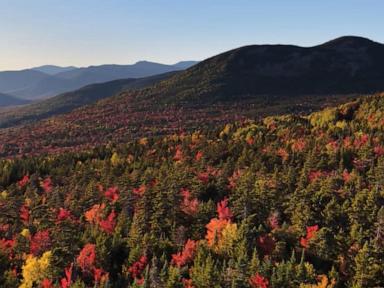
Every autumn, millions of motorists clog rural corridors across the American Northeast in pursuit of transient chromatic brilliance. They call it leaf-peeping. The ritual generates billions of dollars in hospitality revenue, turning quiet New England hamlets into gridlocked tourist traps for six weeks. Yet beneath the postcard imagery of crimson maples and golden birches lies a compounding ecological and economic vulnerability that local municipalities refuse to address.
Autumn tourism is no longer a charming seasonal pastime. It is a high-stakes economic dependency masking deep vulnerabilities in regional infrastructure, forestry management, and climate resilience.
The Economic Mirage of Autumn Tourism
For small towns in Vermont, New Hampshire, and upstate New York, October arrivals represent the difference between fiscal solvency and municipal insolvency. Hotels charge peak summer rates for mediocre rooms. Country stores sell maple syrup at triple-digit markups. Traffic snakes along two-lane state highways for miles, turning a pastoral drive into an exercise in combustion engine frustration.
Local chambers of commerce project revenue growth every single year, treating the seasonal influx as an infinite resource. That optimism ignores fundamental operational realities. Small town police forces, volunteer fire departments, and local waste management systems bear the brunt of an overwhelming human tide. Roads deteriorate faster under the weight of tour buses and out-of-state SUVs. Trash receptacles overflow. Local housing markets, already pinched by short-term rentals, buckle under the temporary population spike.
When the leaves drop by mid-November, the revenue vanishes just as quickly. Towns are left with bruised infrastructure, exhausted service workers, and municipal budgets that must stretch through months of lean winter. The financial model relies on compressed timing and perfect weather conditions, making it acutely sensitive to climate volatility.
Climate Volatility Disrupts the Timeline
The biological clock governing autumn color change is precise, delicate, and increasingly erratic. Temperature drops, sunlight duration, and moisture levels dictate when trees pull chlorophyll from their leaves, revealing the carotenoids and anthocyanins underneath.
Rising global temperatures and unpredictable precipitation patterns are throwing this ancient mechanism into chaos. Warm Septembers delay the onset of color change, compressing peak viewing windows into chaotic, shortened bursts. Drought stress causes leaves to turn brown and drop prematurely without ever achieving the vibrant hues tourists travel hundreds of miles to witness.
Consider the operational nightmare this creates for hospitality operators. A hotelier invests heavily in seasonal staffing and inventory based on historical timelines, only to watch a sudden October heatwave ruin the canopy. Tourists arrive to find bare branches or muted brown foliage. Cancellation rates spike. Refunds cripple small businesses that budgeted for a flawless six-week run.
Forestry experts note that stressed trees are also more vulnerable to disease and invasive pests. The aesthetic commodity driving the regional economy is slowly degrading under the pressure of changing weather patterns.
The Infrastructure Strain on Rural Communities
Rural municipalities were never engineered to absorb metropolitan traffic densities. When thirty thousand vehicles converge on a town with a permanent population of twelve hundred, the physical limitations become glaringly obvious.
Cell towers overload, rendering emergency communication unreliable. Local healthcare clinics face surges in minor traffic accidents and medical emergencies from elderly travelers navigating winding, unlit roads. Wastewater treatment facilities strain against capacity limits.
State departments of transportation sink disproportionate capital into maintaining scenic byways that sit empty for ten months of the year while secondary residential roads crumble. The public subsidy required to keep leaf season running smoothly is rarely calculated into the net economic benefit reported by tourism boards.
Communities face a difficult choice. Limit access and protect their way of life, or embrace unrestricted growth and watch the character of the region pave over itself in asphalt parking lots.
Shifting the Paradigm
Rethinking autumn tourism requires abandoning the growth-at-all-costs mentality that defines modern hospitality marketing. Municipalities must transition toward managed visitation models. Timed-entry reservations for peak scenic areas, similar to national park ticketing systems, can smooth out extreme traffic spikes.
Hospitallers and local governments need to pool resources to diversify local economies so that October is not an existential fiscal cliff. Agritourism, craft food production, and remote work infrastructure can sustain rural towns through the shoulder seasons without relying on fleeting weekend drivers.
The golden canopy will return next year, but the economic and environmental conditions supporting it will continue to shift. Ignoring the cracks in the foundation of the leaf-peeping industry guarantees that the region's greatest natural asset will eventually become its heaviest liability.