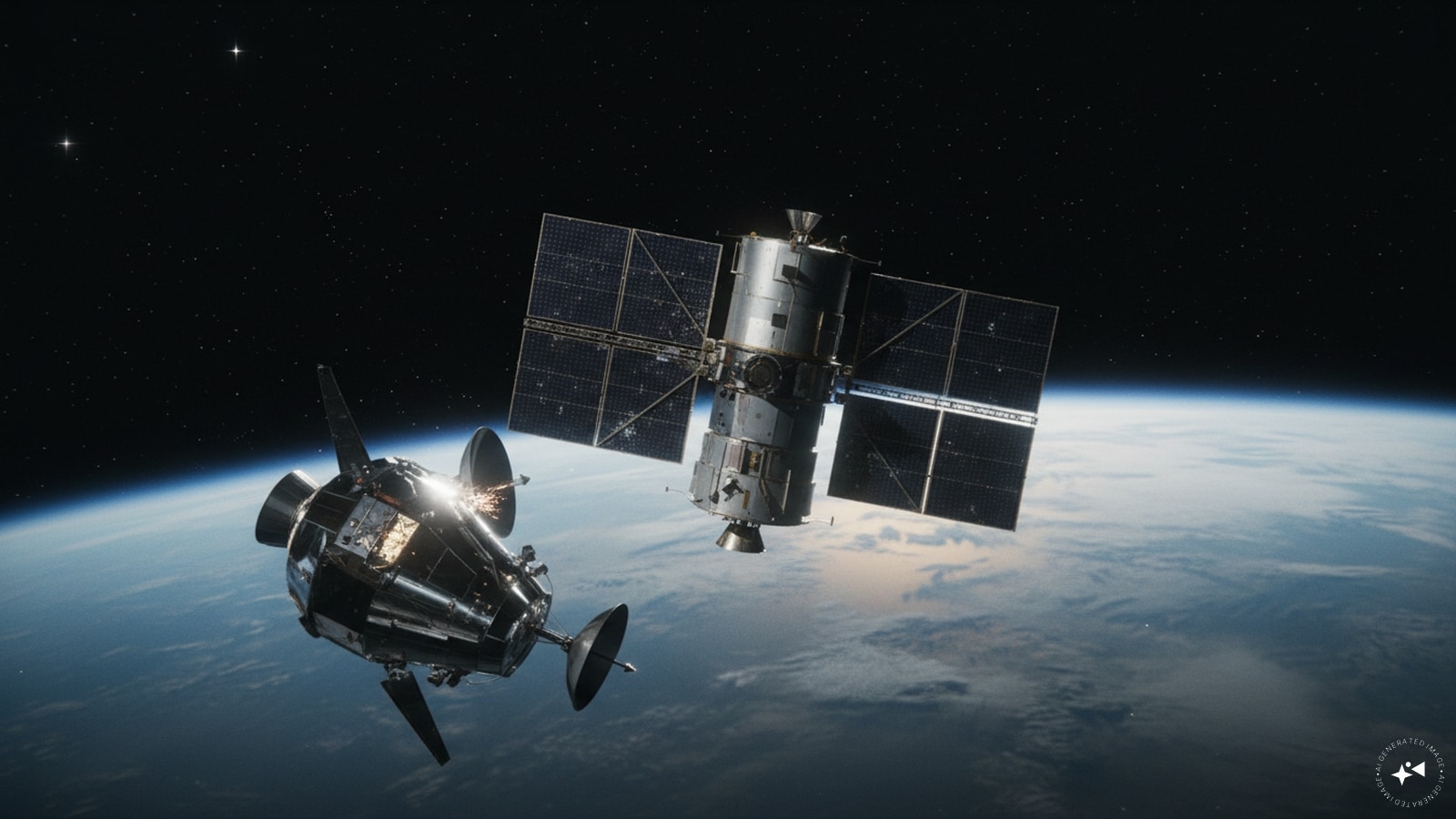
The Neil Gehrels Swift Observatory is coming home, and not in the way anyone wanted. After more than two decades spent tracking the most violent explosions in our universe, the aging telescope is set to burn up in Earth's atmosphere later this year. NASA’s $30 million gamble to save it with a private, rushed rescue mission has effectively hit a wall.
If you’ve been following the headlines, you know the basics. A robotic craft called LINK, built by Arizona startup Katalyst Space Technologies, was supposed to rendezvous with Swift, grapple onto it, and shove it into a higher, stable orbit. It didn't happen. Roughly three weeks after its July 3 launch, LINK began spinning uncontrollably. Despite desperate attempts by flight controllers to stabilize the craft, the attitude control issues persisted.
But here is where the "failure" narrative gets messy. Was this really a waste of money? Or is the space industry just finally doing what it should have been doing all along: taking massive, calculated risks?
The Reality of High-Stakes Space Engineering
People love a simple success-or-failure story. When you look at the price tag—$30 million—it feels like a lot of cash to "lose." But this mission was never just about saving a 21-year-old telescope. It was a stress test for a new way of doing business in orbit.
NASA moved with incredible speed on this. They gave Katalyst less than a year to design, build, and prep a rescue vehicle for a launch. In the traditional aerospace world, that timeline is borderline impossible. By forcing the issue, NASA wasn't just trying to extend Swift’s life; they were testing whether the U.S. space industry could handle rapid-response, in-space servicing on a budget that wouldn't bankrupt a small nation.
When you strip away the technical jargon, NASA was basically asking, "Can we build a tow truck for satellites on a tight deadline?" The answer, at least for this specific build, is that they found the limits of the current hardware. That data is worth more than a single telescope’s extra few years of gamma-ray burst detection.
Why Swift Had to Go
Swift was launched in 2004 with a two-year prime mission. It lasted twenty-one. Think about that for a second. We don't expect our smartphones to work for twenty years, yet we expect billion-dollar orbital hardware to keep humming indefinitely.
The telescope’s orbit decayed because of the sun. Increased solar activity effectively turned the upper atmosphere into a thicker barrier, dragging Swift down from 600 kilometers to 360 kilometers. The physics of orbit decay are brutal and unforgiving. Once you dip too low, it's just a matter of time before gravity and atmospheric friction win.
NASA didn't abandon Swift because they stopped caring about gamma-ray bursts. They ran out of runway. The mission was a proactive, if unsuccessful, attempt to prove that we don't have to let every dying satellite become orbital debris or a fiery streak across the sky.
The Silver Lining in the Spin
The most interesting part of this story isn't the failure; it’s what happens next. NASA isn't just turning LINK off and walking away. They’re still going to attempt proximity operations.
The LINK craft will still rendezvous with Swift. It just won’t "grab" it. They’ll use the remaining fuel and operational time to practice how to get close to other objects in space without crashing into them. This is the kind of hands-on, high-risk experience that engineering teams can't simulate in a lab. You can model physics in a computer until you're blue in the face, but until you’re actually out there dealing with a spinning, malfunctioning robot, you don't really know how your systems will hold up.
What This Means for Future Satellite Servicing
Satellite servicing is the next great frontier. We have thousands of pieces of hardware floating around, many of which are functionally fine but just need a little boost, a little extra fuel, or a software update. If we can master the ability to service these, we stop treating space like a single-use environment.
The failure of the Swift mission is a painful, expensive lesson in how hard it is to control things in a vacuum. It’s also a lesson in the necessity of these "high-risk, high-reward" attempts. If you’re waiting for a 100% guarantee before you launch a service mission, you’re never going to get off the ground.
If you’re looking at the future of space exploration, don’t judge the industry by the craft that couldn't quite make the grab. Judge it by the fact that they’re now actively, publicly, and rapidly trying to fix orbital issues. We’re moving toward a world where satellites aren't just launched and forgotten. We’re learning how to be better custodians of the orbital environment, and sometimes, that means watching a $30 million experiment spin out of control so the next one doesn't.
Keep an eye on the data coming out of these proximity operations. That’s where the real progress is happening.