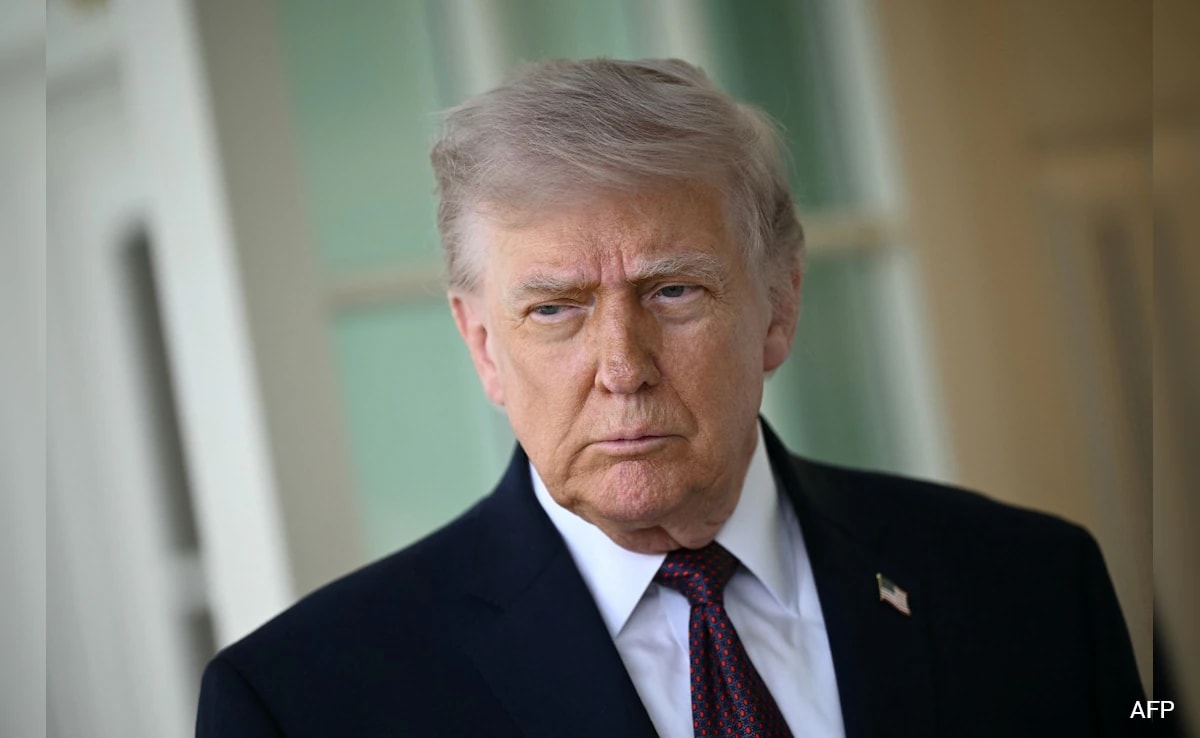
The physical passport serves as the primary interface between an individual and the global system of Westphalian sovereignty. Any alteration to its design represents more than an aesthetic update; it is a shift in the signaling architecture of the state. The proposal to integrate the image of a sitting or former President into the United States passport must be analyzed through the lens of institutional branding, manufacturing logistics, and the geopolitical implications of personality-based state identity. This move transitions the document from a symbol of abstract bureaucratic authority to one of specific executive alignment, a transformation that carries significant technical and diplomatic friction.
The Structural Mechanics of Document Authority
Passport design is governed by strict international standards, primarily those set by the International Civil Aviation Organization (ICAO) under Document 9303. These standards ensure that machine-readable travel documents (MRTDs) remain interoperable across 193 member states. The primary function of a passport’s visual design is to facilitate rapid authentication while embedding anti-counterfeiting measures.
The introduction of a presidential portrait introduces several technical variables:
- Security Feature Displacement: Every square millimeter of a passport page is dedicated to security. Watermarks, microprinting, and optically variable inks (OVI) are layered to prevent tampering. Inserting a high-fidelity portrait requires the displacement of existing guilloché patterns or holographic overlays. The technical challenge lies in ensuring that the portrait itself functions as a security feature rather than a vulnerability.
- Optical Character Recognition (OCR) Interference: If the portrait is placed on the data page, it must not create "noise" for the scanners used at border control. Modern passports use Near Field Communication (NFC) chips, but the physical backup remains the baseline for global entry.
- The Lifespan Asymmetry: US passports are valid for ten years. The political cycle operates on a four-to-eight-year frequency. This creates a temporal mismatch where the physical artifact of the state outlasts the administration it depicts, leading to a fragmented document pool where different citizens carry different versions of executive branding simultaneously.
The Three Pillars of State Branding
To understand the impact of this proposal, we must categorize the function of national iconography into three distinct pillars: Institutional Continuity, Psychological Deterrence, and Diplomatic Signaling.
Institutional Continuity
Traditionally, US passports feature neutral symbols: the Great Seal, the American Eagle, and landscapes. These symbols represent the "Eternal State"—the apparatus that persists regardless of who holds office. By replacing these with a specific individual, the brand of the United States shifts from an institutional model to a personalized model. In corporate strategy, this is the difference between a "House of Brands" and a "Branded House." The former relies on the strength of the institution (The US Government), while the latter relies on the equity of a single figure.
Psychological Deterrence
A passport's design is intended to project the power of the issuing nation. High-contrast, complex imagery suggests a high barrier to forgery. However, the use of a political figure’s likeness can be polarizing in a way that geographic or heraldic imagery is not. The deterrence factor is no longer just the "might of the law," but the "presence of the leader." This change may affect how local officials in volatile regions interact with the document holder.
Diplomatic Signaling
International relations operate on subtle cues. The inclusion of a political figure in a travel document is often associated with specific types of governance models, frequently seen in states where the executive and the state are legally synonymous. For the United States to adopt this practice signals a shift toward "Soft Power Centralization." It forces every foreign customs official to engage with the image of the US Executive during every routine entry and exit.
Logistics and the Cost Function of Re-Issuance
The implementation of a new passport design is a massive industrial undertaking. The Bureau of Consular Affairs manages the production of millions of documents annually. The cost function of transitioning to a portrait-inclusive design involves three primary stages:
- R&D and Prototyping: Redesigning the polycarbonate data page or the inner visa pages to incorporate a new portrait without compromising ICAO compliance. This requires high-resolution engraving and the recalibration of digital printing systems.
- Inventory Obsolescence: The State Department maintains a "burn rate" of existing blank passport books. A sudden pivot to a new design results in the write-off of millions of dollars in existing, highly secure paper and chip stock.
- Throughput Friction: During the transition phase, processing times inevitably increase. Verification systems at every US embassy and domestic passport agency must be updated to recognize the new valid format, creating a temporary bottleneck in the global mobility of US citizens.
Geopolitical Friction and Reciprocity
The most overlooked aspect of this proposal is the principle of diplomatic reciprocity. International travel is governed by mutual recognition. If the US alters its document to include political imagery, it sets a precedent that other nations may follow.
The second-order effect is the potential for "Document-Based Discrimination." In a hyper-polarized global environment, carrying a passport that features a specific political leader could theoretically lead to targeted harassment or increased scrutiny for travelers in nations where that leader is viewed unfavorably. This introduces a variable of personal risk that the current, neutral design intentionally avoids.
The technical risk is "De-standardization." If foreign border agents perceive the new design as a departure from traditional security norms, they may increase the frequency of manual secondary inspections. This reduces the "velocity of travel" for US citizens, a metric that has direct economic implications for international business and trade.
The Strategy of Personalized Sovereignty
The push for a presidential portrait in passports is a masterclass in "High-Visibility Sovereignty." From a strategic standpoint, it ensures that the executive branch maintains a physical presence in the pocket of every citizen traveling abroad. It is a permanent campaign tool that leverages the most essential document a person owns.
However, the strategy contains a structural flaw: Diminishing Marginal Returns on Authority. When a symbol becomes too specific, it loses its universal utility. The strength of the US passport has historically been its "blanket authority"—it represents 330 million people under one law. Narrowing that symbol to one face potentially narrows the scope of the protection it is perceived to provide.
Strategic Forecast: The Bifurcated Document Path
If this policy is enacted, we can project a two-track outcome. First, a rapid technological upgrade will be required to ensure the portrait is "functional" (e.g., embedded with UV-reactive elements that change color under specific wavelengths). Second, we will see the emergence of a "Passport Tier" system. High-frequency business travelers may seek "Global Entry" or other expedited programs even more aggressively to bypass the potential friction points created by a more controversial document design.
The ultimate recommendation for stakeholders—travelers, legal counsel, and international firms—is to prepare for a period of "Identity Volatility." The passport is losing its status as a static, neutral tool and is becoming a dynamic instrument of political signaling.
- Monitor Reciprocity Updates: Watch for changes in how the EU and the "Five Eyes" partners update their scanning software in response to US design changes.
- Evaluate Document Security: If the new design displaces existing physical security layers in favor of the portrait, travelers should rely more heavily on the electronic RFID chip for authentication, as digital signatures remain harder to spoof than visual engravings.
- Audit Corporate Travel Risk: Organizations with employees in sensitive geopolitical regions should assess whether a personalized passport increases the "Signature" of their personnel, potentially necessitating the use of secondary passports where legally permissible.
The transition to a portrait-based passport system is not merely a change in ink; it is a fundamental retooling of the American state’s relationship with its citizens and the world. The shift from institutional to individual branding represents a calculated risk that trades long-term bureaucratic neutrality for immediate symbolic presence.