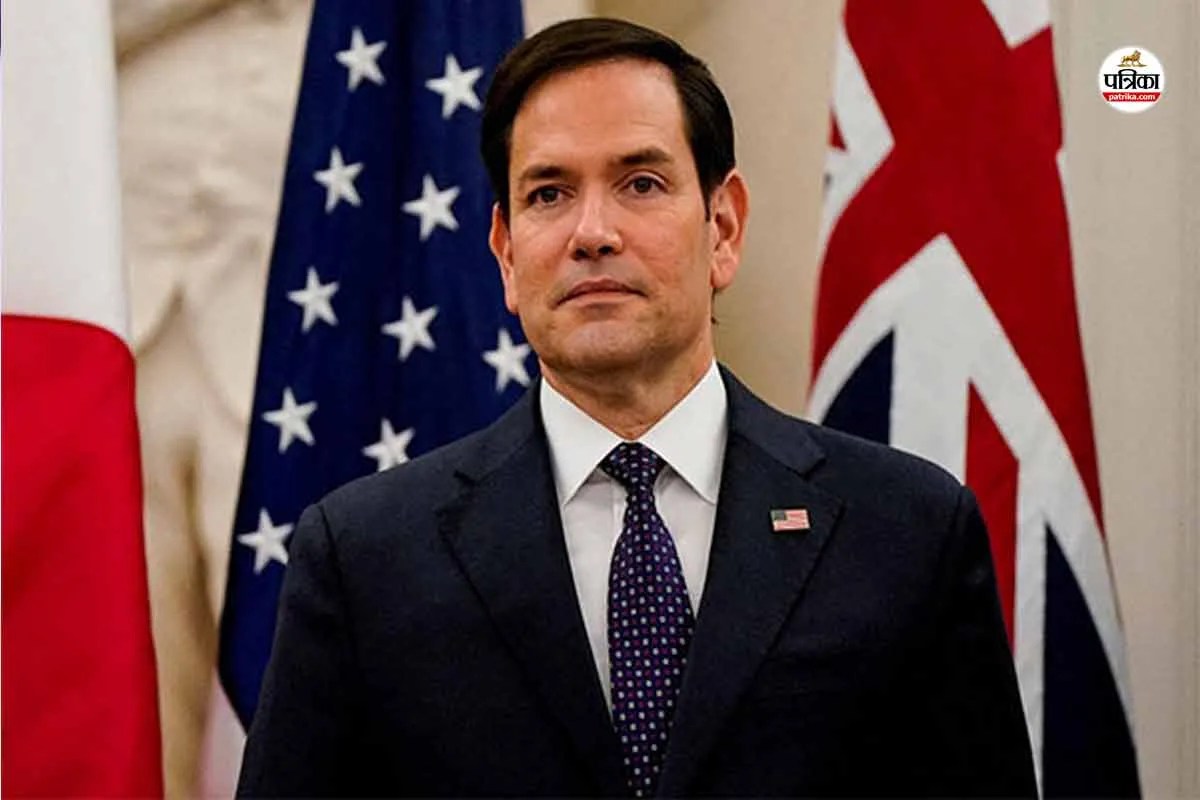
Read the standard coverage of U.S. Secretary of State Marco Rubio's October 2026 trip to Uzbekistan and India and you will walk away believing you witnessed a grand geopolitical masterstroke aimed at New Delhi's power corridors. Headlines framed it as a high-stakes diplomatic arc stretching from Central Asia straight to the Indian capital.
Wrong. Look at the actual map. Look at the actual cities. Meanwhile, you can explore other developments here: Juvenile Vehicular Unauthorized Use Structural Vulnerability Analysis.
Rubio traveled from October 17 to 22, 2026, hitting Samarkand in Uzbekistan, then moving on to Mumbai and Jamnagar in India. Not Delhi. Mumbai and Jamnagar.
That distinction is not a minor clerical detail. It exposes the lazy consensus that dominates South Asian geopolitical commentary. Pundits love treating every high-level American visit to India as a ritualistic reaffirmation of a "natural alliance" or a theatrical showdown over China and Russia played out in front of South Block cameras. When you cover diplomacy like a soap opera, you miss the balance sheet. To see the full picture, check out the excellent analysis by NBC News.
I have watched policy analysts and corporate strategists burn millions of dollars chasing diplomatic press releases while ignoring where capital, energy, and supply chains actually move. When a U.S. Secretary of State pairs a massive business push in Central Asia with stops in Mumbai and Jamnagar rather than turning the trip into a conventional Delhi ceremonial marathon, you are looking at commercial hardball and supply-chain triage, not warm fuzzy feelings.
The Lazy Consensus That Gets the Trip Wrong
The conventional framing of Marco Rubio's India visit relies on three tired crutches.
First, it assumes Washington's primary goal in South and Central Asia is grand ideological alignment—persuading New Delhi to pick a side cleanly in a multipolar world. Second, it treats Central Asia as a mere stepping stone or side show on the way to India. Third, it equates diplomatic visibility with immediate economic or strategic transformation.
All three assumptions are lazy.
Think about realpolitik as practiced by seasoned strategists like Henry Kissinger or Robert Blackwill—heavy hitters who understood that states act on interests, not press-release sentiments, and that geography punishes wishful thinking. Great powers do not fly across continents just to hear polite speeches about shared democratic values. They fly when bottlenecks threaten their industrial base, energy security, or commercial leverage.
In Samarkand, Rubio engaged with Uzbekistan and regional counterparts alongside a huge contingent of U.S. business leaders. Central Asia sits at the crossroads of critical minerals, transit corridors, and Russian and Chinese spheres of influence. Routing commercial muscle through Uzbekistan while simultaneously engaging major Indian commercial and industrial hubs in Mumbai and Jamnagar signals something far sharper than "friendship with India." It signals Washington trying to wire together supply chains, capital markets, and energy infrastructure on terms that do not leave American firms as afterthoughts.
Diplomatic communiques celebrate "historic ties." Balance sheets measure who actually gets the contract, the molecule, or the mineral.
Why You Are Asking the Wrong Question
Most readers and commentators ask: What did Marco Rubio's visit mean for U.S.-India relations?
That is the wrong question. It treats a bilateral label as if it were a single lever.
A smarter question is: Where is Washington trying to bypass friction, lock in industrial inputs, and test commercial leverage across Eurasia?
Consider the "People Also Ask" questions that flood search engines whenever a top U.S. diplomat visits the region:
- Is this visit a sign of stronger U.S.-India ties? Stronger conversations happen every year. Real alignment requires aligned industrial incentives, tariff and regulatory tolerance, and defense or energy trade-offs that neither side makes lightly. Treating every trip as a permanent upgrade in "ties" confuses noise with signal.
- Why start in Uzbekistan before going to India? Because Central Asia is where logistics, connectivity, and resource competition are actively being rewired. Ignoring Tashkent or Samarkand while obsessing over Delhi leaves half the chessboard in the dark.
- Will this immediately curb Chinese or Russian influence? Not a chance. Influence in Eurasia is built over years through rail gauges, pipelines, financing terms, and weapon spare parts—not over a five-day itinerary. Anyone claiming a single diplomatic tour "counters" Beijing or Moscow in one swoop is selling snake oil.
A Thought Experiment on Diplomatic Theater vs. Industrial Reality
Imagine a scenario where the U.S. State Department cancels every ceremonial speech, every joint photo-op, and every vague pledge of "cooperation" for an entire year—and instead sends only trade negotiators, energy executives, logistics engineers, and sanctions or compliance specialists on regional trips.
What changes on the ground?
Almost nothing in the speeches. Everything in the contracts.
Ports still need dredging or expansion. Refineries still need crude slates and export markets. Manufacturers still need reliable inputs and predictable rules. A politician's itinerary can spotlight those realities, and high-level access can open doors in boardrooms and ministries, but diplomacy cannot repeal arithmetic. If a deal does not pencil out on margin, risk, and delivery timelines, no joint statement will save it.
Mumbai, Jamnagar, and the Commercial Reality Check
Picking Mumbai and Jamnagar rather than framing the trip solely around New Delhi underscores how commercial gravity works. Mumbai is financial muscle, deal flow, and corporate scale. Jamnagar is industrial and energy heavyweight territory.
When diplomats talk broad strategy in capitals, deals often stall in bureaucratic committees. When statecraft intersects with financial and industrial centers, the conversation shifts fast to capital deployment, energy trade, and commercial positioning.
Yet here is where a hard-nosed insider must also admit the downside of taking a purely transactional, contrarian view.
If you reduce every diplomatic move strictly to commerce and hard power, you can underprice political timing, domestic optics, and personal rapport between leaders. In foreign policy, perception and signaling sometimes do alter behavior—especially when adversaries are watching for signs of hesitation or resolve. Over-indexing on cynicism can make you blind to subtle shifts in posture just as easily as over-indexing on hype can fool you into expecting miracles.
What You Should Actually Do With This Information
If you run a business, manage capital, or track policy for a living, stop reading diplomatic coverage for emotional reassurance. Use it as a sourcing and risk radar.
- Audit your supply chain exposure across Central and South Asia. Do not rely on headlines about "friendshoring" or "diversification." Map your actual Tier-1 and Tier-2 suppliers, transit routes, and payment rails.
- Watch business delegations, not just joint statements. When officials travel with large commercial groups, track which sectors show up—energy, infrastructure, manufacturing, tech, finance—and ignore generic pledges of "mutual understanding."
- Separate diplomatic warmth from policy certainty. A friendly visit does not erase regulatory hurdles, procurement friction, or shifting trade priorities overnight. Price in delays and renegotiations from day one.
- Look at the specific cities and institutions on the map. Where leaders go—and which commercial or industrial hubs get attention—tells you more about practical priorities than any soundbite ever will.
The pundits will keep spinning every trip as a turning point of the century. Let them. Real power rarely announces itself with a slogan—it shows up in who holds the leverage when the cameras turn off.
Marco Rubio's diplomatic tour to India and Uzbekistan provides visual context on the five-day itinerary across Uzbekistan and India.


