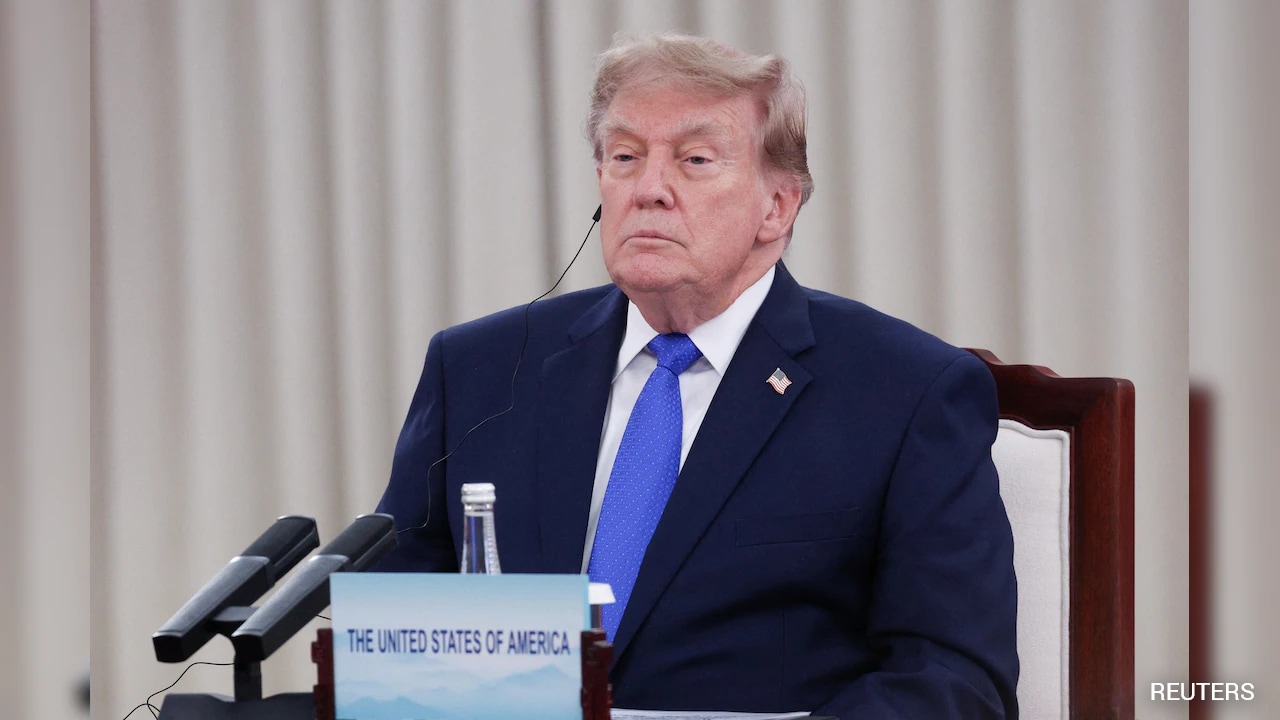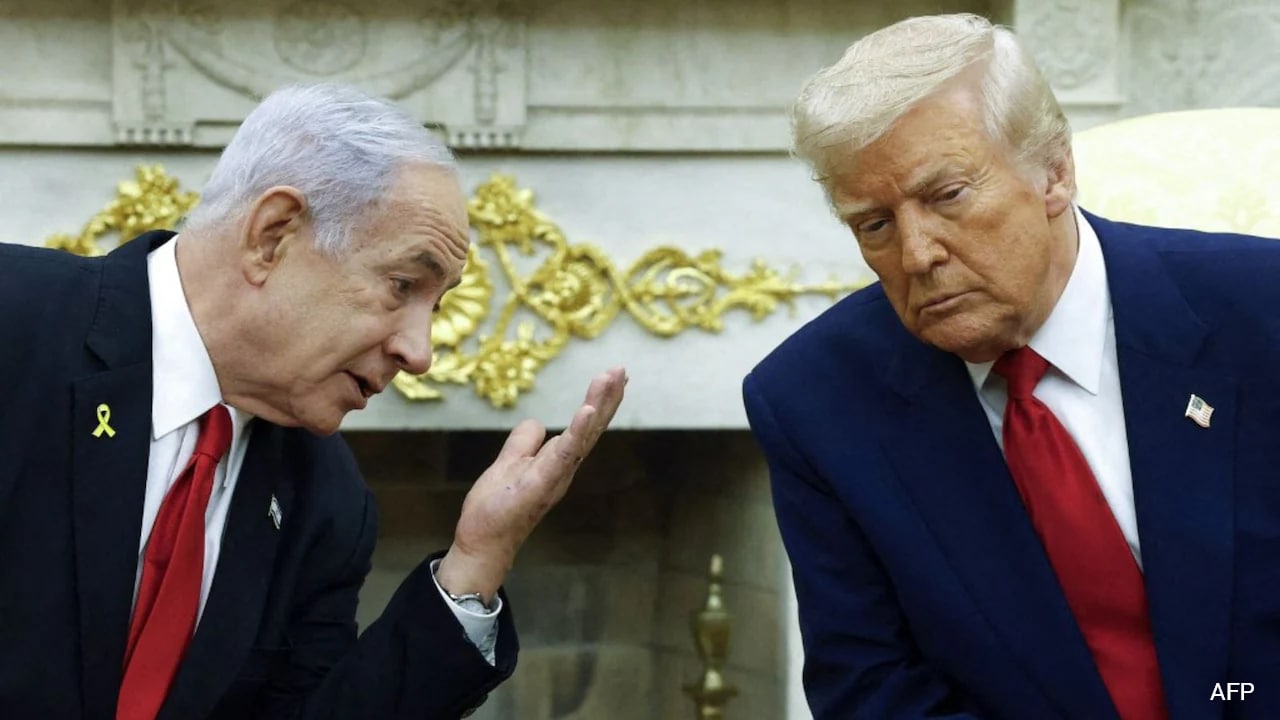
Mainstream foreign policy pundits love a good buddy-cop drama, especially when the stakes involve ballistic missiles and regional hegemony. When headlines blare that Benjamin Netanyahu views a renewed war with Iran as unavoidable while Donald Trump is reportedly not rushing into one, the commentary class immediately reaches for its favorite lazy tropes. They frame this as a classic clash of temperaments. On one side, you have the impatient Israeli hawk itching to pull the trigger; on the other, the transactional American dealmaker holding back the leash.
That narrative is comforting, neat, and completely detached from how modern deterrence actually functions.
If you take those public statements at face value, you are falling for the oldest trick in diplomatic theater. Leaders do not leak their genuine operational timelines to cable news networks, nor do they broadcast genuine strategic rifts when their core interests overlap. What looks like friction between Jerusalem and Washington is actually a synchronized squeeze play designed to paralyze Tehran's decision-making loop.
The Myth of the Reluctant Dealmaker and the Eager Hawk
Watch how fast the conventional wisdom forms around these headlines. Analysts immediately dust off the playbook from previous administrations, assuming that "not rushing" equals hesitation, restraint, or a sudden appetite for endless multilateral talks. At the same time, they treat Netanyahu’s rhetoric about inevitability as proof that Israel is preparing to drag a reluctant superpower into a regional quagmire against its will.
Both assumptions ignore basic incentives.
First, consider Netanyahu’s position. Calling a conflict unavoidable is not the same thing as demanding an immediate invasion tomorrow morning. In Middle Eastern statecraft, declaring that a clash cannot be avoided serves a very specific domestic and international purpose. It lowers the threshold for preemptive strikes, prepares a war-weary public for sustained economic and military strain, and signals to adversaries that tactical pauses are not permanent truces. When an Israeli prime minister says war is unavoidable, he is establishing escalation dominance before a single jet leaves the tarmac.
Now look at Trump’s side of the ledger. "Not rushing" is standard operating procedure for an executive who views time and unpredictability as primary weapons. Rushing telegraphs desperation. When you announce that you are in no hurry, you force your adversary to sit in a dark room wondering when the ceiling will collapse. You turn their own defensive posture into an exhausting, expensive waiting game. Keeping air defense crews on high alert, dispersing leadership, and hiding mobile launchers week after week drains morale and exposes operational patterns to overhead surveillance.
I have spent enough years watching defense budgets get burned on premature kinetic campaigns to know that the deadliest phase of any standoff is the period right before the first shot, when one side bleeds its readiness trying to guess the other's calendar.
Strategic Ambiguity Is Not Indecision
To understand why these two seemingly contradictory statements work together, you have to understand the mechanics of strategic ambiguity and coercive diplomacy.
Most observers confuse strategic ambiguity with muddled thinking. In reality, it is the deliberate maintenance of two conflicting probabilities in an opponent's mind. By pairing Israeli certainty with American patience, the two governments create a classic "good cop, bad cop" dynamic without ever needing to coordinate a single talking point in a press briefing.
Think about what this looks like from inside Tehran’s Supreme National Security Council.
- If they believe Netanyahu: They must assume a massive strike on nuclear infrastructure, energy grids, or command nodes is coming regardless of what concessions they offer. Under that logic, holding back their remaining proxy networks or refraining from a nuclear breakout sprint looks like suicide.
- If they believe Trump: They see a narrow window where restraint might buy them breathing room, sanctions relief, or at least a delay in American bunker-buster involvement. Under that logic, launching a preemptive strike guarantees the exact catastrophic outcome they want to avoid.
That contradiction is the entire point. When an adversary faces two credible, incompatible timelines, their bureaucratic apparatus freezes. Hardliners demand immediate escalation to preempt Israel; pragmatists demand caution to avoid triggering Washington. While Tehran argues with itself, its regional deterrence erodes by the day.
The Heavy Hitters Already Wrote This Playbook
None of this is theoretical. Thomas Schelling laid out the mathematics of this exact dynamic decades ago in Arms and Influence. Schelling demonstrated that the power to hurt is most effective when held in reserve, not when expended all at once. Once you drop the bomb, your leverage evaporates—you have played your card, and the opponent no longer has anything left to lose by fighting back with everything they own.
In the same vein, Henry Kissinger repeatedly emphasized that diplomacy without the credible threat of force is merely begging, while force without a diplomatic off-ramp forces an enemy into a fight to the death. By signaling that war is inevitable from Jerusalem while keeping the clock open from Washington, the two capitals are applying Schelling’s threat-that-leaves-something-to-chance alongside Kissinger’s demand for credible coercion.
Yet modern commentators routinely ignore these foundational principles because nuanced leverage does not fit cleanly into a thirty-second cable segment. It is far easier to sell a soap opera about two leaders disagreeing than to explain how asymmetric messaging pins an adversary to the mat.
Are You Asking the Wrong Question About a Renewed War?
When news of this sort breaks, search engines light up with variations of the same anxious queries: When will the US and Israel attack Iran? or Is Trump stopping Netanyahu from starting World War III?
Both questions are built on a broken premise. They assume war is a binary switch—off on Tuesday, on by Wednesday—and that the United States and Israel are debating whether to flip it.
The reality on the ground is much grimmer and far more continuous. The war is not "renewed" because it never stopped. Shadow warfare, cyber sabotage, targeted assassinations, maritime interdictions, and proxy attrition have defined this theater for years. Asking when the war starts is like asking when a chronic infection begins after the patient has already been running a fever for a decade.
What People Actually Need to Understand About the Timeline
If you want to track where this is actually heading, stop listening to adjectives in headlines and start watching operational indicators.
- Munitions and interceptor stockpiles: Sustained aerial campaigns require massive reserves of precision-guided munitions and air-defense interceptors. Neither Washington nor Jerusalem will launch a high-intensity round without first ensuring their magazines are full enough to absorb retaliatory salvos.
- Regional basing and overflight permissions: A major strike package cannot operate in a vacuum. Quiet diplomatic shuttles to Gulf capitals matter ten times more than loud press conferences. If neighboring states are tightening airspace restrictions, a strike is further off; if logistical hubs are quietly absorbing tanker aircraft, the clock is ticking down.
- Economic pain thresholds: Sanctions enforcement and oil export interdictions are not sideshows—they are the primary battlefield. When an adversary’s currency collapses faster than its centrifuges spin, kinetic strikes become an afterthought rather than a necessity.
The Fatal Flaw in This Contrarian Strategy
Every strategy carries a built-in failure mode, and pretending otherwise is dishonest. While coordinated ambiguity paralyzes an adversary in the short term, it runs one massive, potentially catastrophic risk: miscalculation through mirror-imaging.
Coercive diplomacy assumes your opponent calculates risk the exact same way you do. It assumes Tehran will look at the Israeli threat and the American pause, do the cold math, and choose survival over martyrdom.
History is littered with regimes that made the opposite choice. When a leadership cadre believes its domestic legitimacy or ideological survival is already doomed, external pressure does not produce caution—it produces desperate, irrational lashing out. If Iranian planners conclude that "not rushing" simply means Washington is waiting until Israel finishes weakening their air defenses before joining in for the kill, they may decide that striking first—even against suicidal odds—is the only way to preserve honor or inflict maximum political cost on an American president.
Furthermore, maintaining high-wire tension indefinitely wears down the enforcers. Alliances fray when domestic constituencies grow tired of permanent crisis footing. A delay meant to maximize pressure can easily morph into strategic drift if economic priorities or domestic scandals distract Washington at the exact moment Tehran makes a dash for a nuclear weapon.
Stop Reading the Headlines Like a Sports Score
If you are watching this unfold as an investor, a policy analyst, or simply a citizen trying to separate signal from noise, you need to overhaul how you consume geopolitical news.
- Ignore the adjectives, track the hardware. Words like "unavoidable" and "not rushing" are free. Carrier strike group deployments, strategic bomber rotations, and emergency supplemental defense bills cost billions. Follow the money and the metal.
- Separate theater from intent. Leaders speak to multiple audiences simultaneously. A line meant to reassure a nervous domestic base in Tel Aviv or pacify an isolationist faction in Washington is not an operational order to the military.
- Watch the off-ramps, not just the triggers. Any serious coercive campaign builds a backdoor for the target to crawl through. Look for quiet prisoner swaps, frozen asset discussions, or third-party mediation in Oman or Qatar. Those are the real barometers of whether the squeeze is working.
The next time you see a headline pitting American patience against Israeli urgency, do not mistake the choreography for chaos. They are not arguing over whether to corner the target. They are just standing on opposite sides of the room, waiting to see which way it runs.