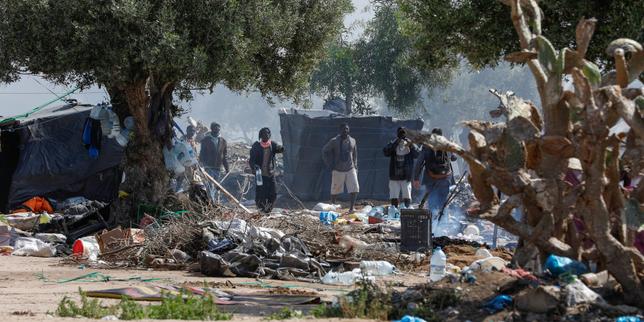
Every time smoke rises over the Strait of Hormuz, financial media hits the exact same panic button. Five tankers and a tugboat catch fire, Tehran issues a statement, and within four minutes, desk analysts who have never stepped foot on a VLCC bridge start screaming about $150 oil and global supply chain collapse.
They are wrong. Worse, they are lazy.
The prevailing consensus treats maritime incidents in the Persian Gulf like a light switch. Either the strait is open and crude flows freely, or vessels burn and the global economy suffocates. That binary thinking makes for breathless cable news chyrons, yet it completely misses how modern energy markets, maritime insurance syndicates, and naval logistics actually absorb shock.
If you want to understand what happens when hulls burn in Hormuz, stop watching spot crude tickers. Start watching marine underwriters in London, shadow fleet registries in Dubai, and bypass pipeline capacity in Fujairah.
The Myth of the Chokepoint Chokehold
Let us look at the physical reality of the water. At its narrowest point, the Strait of Hormuz is roughly 21 nautical miles wide, with two-mile-wide shipping lanes separated by a two-mile buffer zone. Roughly a fifth of the world's petroleum liquids pass through this bottleneck.
Mainstream coverage stops right there. They recite the volume statistics, point at a map, and assume any kinetic event automatically equates to a blockade.
I have sat in chartering rooms during Gulf flare-ups where brokers burned millions in premature demurrage fees because they mistook localized maritime hazards for systemic closure. Here is the reality on the water: sinking or burning six vessels does not block a 21-mile channel. Even in the darkest days of the 1980s Tanker War, when hundreds of commercial hulls took fire from mines, Silkworm missiles, and gunboats, oil never stopped moving. Freight rates spiked. Hull insurance premiums exploded. Captains altered transit windows to hug Omani territorial waters. Yet the crude kept loading at Ras Tanura and Kharg Island.
When Iran reports five tankers and a tugboat ablaze, the immediate question is not whether the strait is closed. The real question is whose hulls are burning, what flags they fly, and whether those fires represent external interdiction, internal asymmetric signaling, or the inevitable consequence of running aging, uninspected tonnage at full throttle.