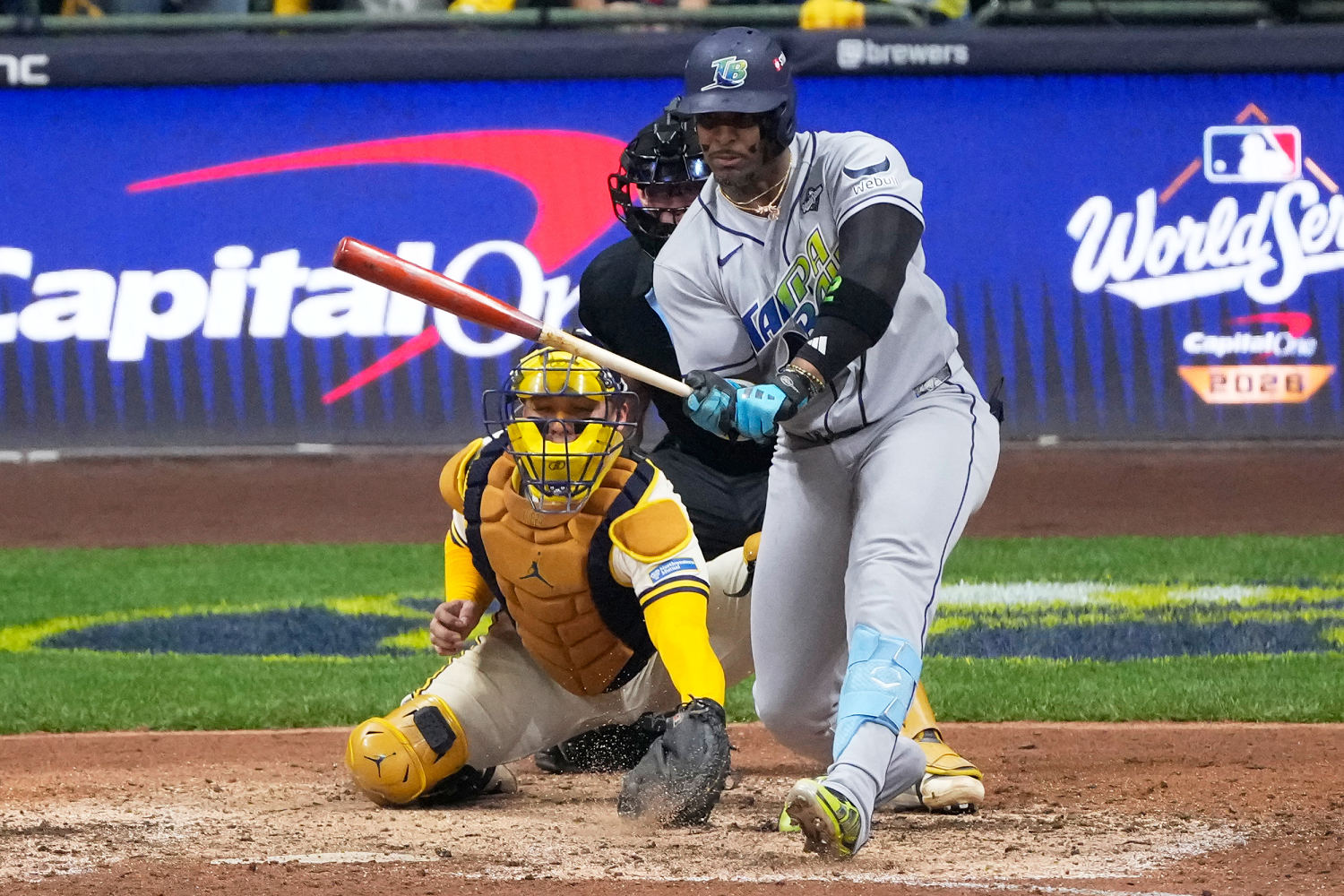
Umpires hate deciding baseball games. They spend nine innings trying to stay invisible, hoping a clean double play or a crisp third strike takes the spotlight off their mechanics. Then a bang-bang play happens in the ninth inning of Game 2 of the World Series, and suddenly an entire season hangs on one split-second judgment.
You probably remember the immediate outrage. Social media erupted before the dust even settled around the bag, with fans screaming about blown calls, rigged series, and blind officials. Yet most of the postgame shouting completely missed the actual rulebook mechanics that forced the crew's hand. When you strip away the team loyalty and slow-motion replays from the wrong camera angles, the controversial call that ended Game 2 of the World Series looks very different than the broadcast booth made it sound. Learn more on a connected topic: this related article.
Let's be honest about how modern baseball is officiated. Between the 2023 pitch clock overhaul, expanded replay review, and the gradual rollout of automated strike zone technology across the minors and spring training, umpires operate under a microscope that didn't exist a decade ago. Every millimeter gets dissected by Statcast tracking and high-frame-rate cameras within seconds. Still, the rulebook contains gray areas where technology can't save an official, and Game 2 landed squarely in one of those traps.
Why the Umpires Had Almost No Wiggle Room
Baseball rules look rigid on paper, yet they rely heavily on real-time human interpretation during high-leverage moments. Unlike a fair-or-foul call down the line, an ending play involving interference, obstruction, a check swing, or a neighborhood tag forces an umpire to judge intent and sequence simultaneously. Additional journalism by Bleacher Report highlights comparable perspectives on the subject.
Think about what happens in the final out of a World Series game. The stadium is shaking. Crowd noise hits well over 100 decibels, drowning out the sound of the ball hitting the glove—which is actually the primary cue base umpires use to time a force play. Because human eyes can't track a 95-mph throw and a sliding runner's cleat at the exact same instant, umpires are trained to watch the bag and listen for the ball. When the crowd roars, that auditory anchor vanishes.
And once the call is made on the field, the burden of proof flips completely. Under Major League Baseball's replay review regulations, the Replay Official in New York isn't asked to decide what probably happened. They need clear and convincing evidence to overturn the call on the field. If the camera angles are blocked by a fielder's hip, or if two frames straddle the exact moment of contact, the original call stands by default. Fans hear "call stands" and assume New York agreed with the umpire. In reality, it usually means the video couldn't prove the umpire wrong.
The Replay Paradox in October
We've created an impossible expectation around instant replay. When MLB expanded replay in 2014, the goal was eliminating obvious, catastrophic misses—think Armando Galarraga's lost perfect game in 2010 or Don Denkinger's notorious call at first base in Game 6 of the 1985 World Series. Replay wasn't designed to adjudicate microscopic molecular contact at 240 frames per second.
Yet that's exactly what October baseball turns into. Broadcast networks zoom in until pixels blur, freezing frames that don't actually sync up with the official MLB tracking feeds. You sit on your couch watching a super-slo-mo angle from the first-base dugout, convinced the runner beat the tag by a shoelace, while the Replay Official is looking at a synchronized multi-angle feed showing the fielder's glove brushing the jersey a frame earlier.
The Historical Shadow Over World Series Endings
Controversial endings aren't a modern glitch in baseball's matrix. They're woven straight into the history of the Fall Classic, long before high-definition cameras existed to fuel overnight talk radio meltdowns.
Consider a few moments that still make fanbases wince decades later:
- Game 6 of the 1985 World Series: Don Denkinger called Jorge Orta safe at first base in the bottom of the ninth despite replay clearly showing pitcher Todd Worrell beat him to the bag. St. Louis unraveled, Kansas City rallied to win Game 6, and the Royals blew out the Cardinals in Game 7. Without replay, Denkinger had to live with that miss for the rest of his life.
- Game 3 of the 2013 World Series: Allen Craig tripped over Red Sox third baseman Will Middlebrooks while trying to score in the bottom of the ninth. Umpire Jim Joyce immediately signaled obstruction, awarding Craig home plate and handing St. Louis a walk-off win. Red Sox fans went ballistic because Middlebrooks was lying flat on the dirt, seemingly helpless. By the strict letter of Official Baseball Rule 6.01(h), intent doesn't matter—an unprotected fielder without the ball cannot impede a runner. Joyce nailed a brutal rulebook call that looked awful to casual viewers.
- Game 4 of the 2020 World Series: A chaotic ninth-inning sequence saw Brett Phillips drive in two runs for Tampa Bay after a bobble in center field and a wild relay throw, ending on a desperate dive at the plate. While the safe call held up, the sheer madness of the play highlighted how thin the margin is between a textbook win and a rules-check nightmare.
Notice the pattern here. The most explosive World Series calls rarely come from an umpire simply forgetting the rules. They happen when a rare edge-case rule collides with the most stressful five seconds of the season.
How Rulebook Nuances Warp What Fans See on TV
Television broadcasts do a fantastic job showing athleticism, yet they often do a terrible job explaining baseball's weirdest rules in real time. Announcers have about four seconds to react before cutting to commercial or trophy presentations. If an analyst misstates a rule in the heat of the moment, millions of viewers lock that wrong interpretation into their brains permanently.
Take the difference between obstruction and interference, or the specific wording around lane violations and slide rules (often called the Chase Utley Rule, Official Baseball Rule 6.01(j)).
If a runner slides aggressively into second base to break up a game-ending double play, the umpire has to evaluate four distinct criteria on the spot:
- Did the runner begin their slide before reaching the base?
- Could the runner reach the base with their hand or foot?
- Did the runner stay on the base after the slide rather than popping up into the fielder?
- Did the runner change their pathway specifically to initiate contact with the fielder?
If the runner fails even one of those checks, the umpire can call interference—which automatically rules both the runner and the batter-runner out, ending the game immediately on a technicality rather than a throw to first. To a fan watching at home, the throw never even happened, yet the umpires are walking off the field waving their arms. It feels anticlimactic. It feels stolen. Technically, though, it's strictly by the book.
Check Swings and Non-Reviewable Calls
Even worse are the plays that replay can't touch at all. Check swings remain completely subjective because the MLB rulebook doesn't even contain an official definition of what constitutes a swing. Read that again. Nowhere in the rulebook does it mention breaking the wrists, crossing the front hip, or pointing the barrel toward the pitcher. The rules simply state that a strike is a pitch "struck at by the batter without its touching his bat."
That leaves the entire decision to the home plate umpire or the base umpire down the line, who has to judge whether the batter intended to strike at the pitch. When a World Series game ends on a checked swing appeal to first or third base, nobody can pull out a rulebook diagram to prove the call right or wrong. You're arguing philosophy, not geometry.
What Players and Managers Actually Do After a Controversial Call
If you listen closely to postgame press conferences after a brutal Game 2 ending, you'll notice a sharp divide between how fans react and how clubhouse veterans handle it. Fans want an apology from the commissioner's office. Players know that chasing a grievance into Game 3 is poison.
Managers have to walk a tightrope. In the immediate aftermath, a manager will usually back their players publicly, pointing out where they thought the call missed so the clubhouse sees their skipper fighting for them. Twenty minutes later, behind closed doors, the message shifts completely. In a seven-game series, dwelling on an umpire's decision kills your preparation for the next starter you have to face.
Umpiring crews go through their own brutal postgame audit. MLB's Umpire Operations department grades every single pitch and every single base call after every postseason game. Crews meet in the locker room, pull up the calibrated multi-angle feeds, and dissect their positioning. If a base umpire was three feet too far to the left and got straight-lined by a sliding runner, they hear about it immediately. Postseason assignments for the League Championship Series and World Series are awarded strictly based on regular-season accuracy grades, meaning the guys working Game 2 are statistically the best in the sport—and missing a call on that stage eats them alive.
How to Watch Close Calls Like an Umpire Instead of a Fan
Next time a postseason game comes down to a razor-thin call in the ninth inning, resist the urge to trust the first slow-motion replay the network throws on screen. Watch the mechanics instead.
First, look at umpire positioning before the ball even arrives. A good base umpire sets up at a 90-degree angle to the anticipated tag, stationary and balanced before the throw gets there. If the umpire is still running when the tag happens, their head is bouncing and their depth perception drops off a cliff.
Second, ignore the super-slow-motion zoom until you see the wide angle. Zoomed-in shots hide the depth between a glove and a jersey; a glove can look like it's touching a runner's ribs when it's actually four inches in front of them. Always look for the wrinkle in the fabric or the sudden bend in the leather of the glove—that's the physical proof of contact New York looks for.
Third, watch the umpire's hands and eyes right after the play. If an umpire immediately sells the call with crisp, decisive mechanics, they had a clean look at the angle. If there's a half-second hesitation before the punch-out or safe signal, they were blocked out and relied on timing and sound—which is your biggest clue that a replay challenge has a real shot at flipping the outcome.


