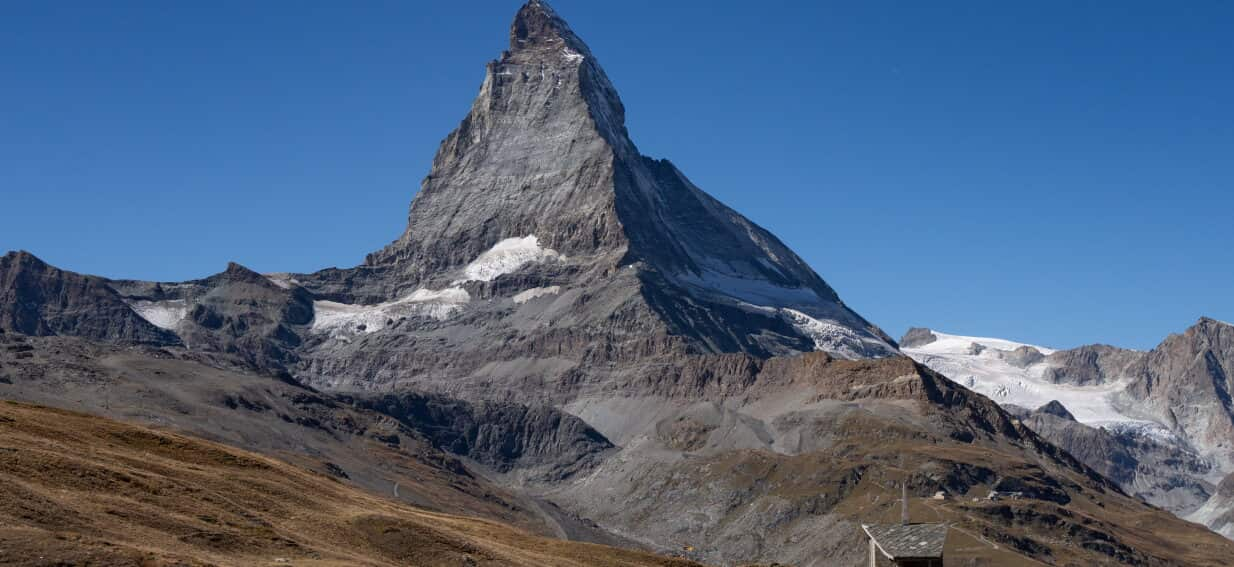
Every tourist with a smartphone and a pocketful of Swiss francs believes they have captured the definitive image of the Matterhorn. They hike up to the Riffelsee, wait for the wind to drop, and snap that pristine, mirror-flat reflection of Europe's most aggressive pyramid piercing the Alpine sky. Then they post it online with some breathlessly romantic caption about nature's perfection.
It is a complete fabrication of perspective. If you liked this piece, you might want to check out: this related article.
The internet loses its collective mind every time a photo of the Matterhorn surfaces showing something 'highly unusual'—whether it is a bizarre cloud formation hugging the summit like a toupee, an alignment with the moon that looks digitally painted, or a shadow that defies amateur geometry. The lazy consensus across travel blogs and social media feeds is that these anomalies represent rare meteorological magic or digital trickery. People marvel at the mountain as if it were a sculpture engineered purely for Instagram validation.
They are missing the entire point of the landscape. For another angle on this story, refer to the recent update from Travel + Leisure.
The Matterhorn is not a postcard. It is a crumbling pile of unstable gneiss and schist sitting on top of an African tectonic plate, constantly shredding itself through frost-wedging and gravity. The unusual features you see in those viral photographs are not statistical miracles. They are symptoms of a mountain in active, violent decay. If you understand how this peak actually behaves, those viral shots stop looking like mystical wonders and start looking like crime scene photos.
The Physics of a Crumbling Pyramid
Let us strip away the romanticism. The Matterhorn looks like a child drew a perfect triangle, and that visual simplicity is precisely what fools people into thinking it is permanent. Geologists know better. The mountain is basically a giant stack of rock cards held together by permafrost that is currently melting at an alarming rate.
When viral articles squeal about unusual cloud banners streaming off the summit—often called banner clouds—they treat them as atmospheric art. In reality, those clouds are fluid dynamics demonstrations of a massive wind obstruction creating a low-pressure vortex. The wind slams into the 4,478-meter peak, creates a localized vacuum, and condenses moisture out of thin air. It is a weather machine, not a painting.
More importantly, every time those picturesque clouds form, rockfall frequency spikes. The rapid pressure changes and moisture infiltration into micro-fractures act like a wedge. When tourists gawk at the pretty cloud cap on social media, thousands of tons of rock are frequently detaching from the Hornli ridge. I have stood at the base and listened to the permafrost let go; it sounds like artillery fire.
Yet the travel media keeps pushing the narrative of the timeless, immutable Alpine icon. This is dangerous corporate fantasy masquerading as wanderlust.
The Fallacy of the Pristine Shot
Look closely at the classic angles. Ninety percent of iconic Matterhorn imagery is shot from a handful of identical vantage points around Zermatt or Breuil-Cervinia. Photographers hike in with tripods, frame out the ski lifts, crop out the stabilization netting bolted into the rock faces to protect climbers, and wait for golden hour to wash away the scars of human intervention.
People ask why the mountain looks so different in person compared to the photos. The answer is simple: the photos are curated lies by omission.
The mountain is scarred. The Italian side looks like an industrial quarry in places because of the relentless infrastructure required to haul climbers and maintenance crews up the rock. Thousands of bolts, pitons, and fixed ropes riddle the classic routes. The mountain is basically an outdoor via ferrata climbing gym wrapped in a national mythos.
When an image pops up showing something 'unusual'—a strange lighting angle or an odd atmospheric haze—the internet treats it as an outlier. It is not an outlier. It is the natural state of a heavily modified, rapidly degrading geological feature being battered by climate acceleration. The real anomaly is that the peak is still standing at all.
Dismantling the Myth of Safe Alpine Tourism
The commercial tourism machine surrounding the Matterhorn relies on keeping people ignorant of the physical reality. Visitors arrive in Zermatt expecting a pristine alpine theme park where nature behaves like a disciplined backdrop for their vacation.
Let us address the common queries head-on. People ask: Is the Matterhorn safe to climb if you hire a guide?
The brutal answer is that no mountain is safe, but the Matterhorn is currently more hazardous than historical averages suggest due to destabilizing permafrost. Guides are increasingly turning back not because clients are unfit, but because entire sections of normal routes are turning into ball-bearing scree fields. The classic ascents are being rewritten by gravity. Rockfall is no longer an occasional hazard; it is the dominant operating condition of the mountain.
Pretending that these viral photos capture an eternal, unchanging monument encourages reckless complacency. Amateurs see a serene picture of a sunset over the Hörnli ridge and book a guided summit attempt without realizing that the route they saw in the photo might have experienced a major rock collapse a week prior.
The Uncomfortable Truth About Alpine Conservation
We need to talk about what is actually happening to the Zermatt region under the weight of millions of annual visitors. The infrastructure required to ferry people up to view these photogenic angles leaves a massive footprint. Helicopters ferry supplies and rescue stranded tourists with ruthless frequency. The glacier runoff is changing. The ecosystem is straining.
Yet the marketing machine keeps churning out the same sterile narratives about majestic peaks and timeless beauty. It sells tickets, hotel rooms, and overpriced Swiss watches. It keeps the illusion alive.
If you want to appreciate the Matterhorn, stop looking at it as a static wallpaper. Look at it as a living, failing geological process. Respect the scale of its destruction. The unusual photos going viral online are not glitches in the matrix; they are early warning signs of a landscape in transition.
Stop waiting for the mirror reflection in the Riffelsee to validate your trip. Go watch the rock fall. That is the real view.